
Heat Acclimation: How Your Body Can Unlock a “Superpower” for Exercise
New research suggests that consistently training in warm conditions can lead to significant physiological adaptations, improving endurance and thermoregulation, but experts caution against extreme exposure.
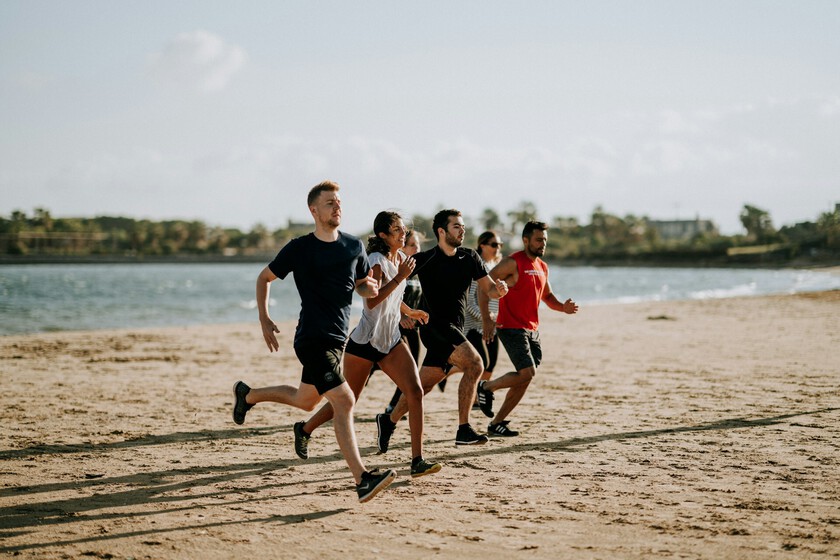
While many athletes actively avoid exercising in the heat, scientific research indicates that this avoidance might mean missing out on a significant physiological advantage. The human body, when exposed to warm conditions progressively, can adapt in ways that enhance exercise performance and improve its ability to regulate temperature. This adaptation, known as heat acclimation, transforms the body’s response to exertion in warmer environments.
The Physiological Challenge of Heat
When engaging in physical activity, muscles convert only about 20-25% of energy into mechanical movement, with the remainder released as heat. In a hot environment, the body faces a dual thermoregulatory challenge. To dissipate this excess heat, the body directs a substantial flow of blood to the skin to facilitate sweating. This diversion means less blood is available for active muscles and the heart, leading to an increased heart rate and earlier fatigue. A comprehensive review from 2021 detailed how thermal stress impacts this blood flow, highlighting the strain on the cardiovascular system.
Unlocking the “Superpower” Through Acclimation
Fortunately, the human body is remarkably adaptable. Through consistent, progressive exposure to heat, individuals can activate heat acclimation. A study published in 2024 quantified these adaptations, finding that participants who underwent a period of repeated heat exposure showed a reduction in resting core temperature by 0.19°C and a decrease in heart rate by 6 beats per minute.
This adaptation process typically requires 8 to 14 days of training in warm conditions to consistently improve performance and thermoregulation. Noticeable cardiac adaptations begin to emerge around the fifth day of consistent exposure.
Understanding the Physiological Changes
In the initial week of heat training, the body tends to retain more water and sodium. This is a mechanism to increase blood volume, supporting improved cardiac output and ensuring adequate oxygen supply to muscles. Over the long term, sustained thermal stimulus prompts the body to produce more hemoglobin. Hemoglobin, the protein responsible for oxygen transport in the blood, becomes more abundant, making the entire system more efficient at delivering oxygen to muscles during exercise.
Practical Considerations for Training in Heat
While heat acclimation offers distinct physiological advantages, it does not negate the risks associated with extreme heat exposure, such as heatstroke. Experts emphasize that exposure to heat should be gradual. This involves starting with shorter, lower-intensity sessions and progressively increasing duration over approximately two weeks.
Maintaining proper hydration is crucial, as dehydration exceeding 2% of body weight can quickly nullify acclimation benefits and dangerously elevate internal body temperature. Ultimately, training in the heat is demanding but achievable with common sense. This includes adjusting training schedules to cooler parts of the day when possible.
Key Facts
| Aspect | Finding |
|---|---|
| Heat Acclimation | Progressive exposure to heat leads to physiological adaptations. |
| Performance Gains | Reduced core temperature and heart rate, improved blood volume, and increased hemoglobin production. |
| Adaptation Period | 8-14 days of consistent exposure typically needed for significant benefits. |
| Risks | Extreme heat can lead to heatstroke; gradual, informed exposure is essential. |
| Hydration Importance | Dehydration can negate acclimation benefits and increase health risks. |
The findings underscore that instead of viewing heat solely as an obstacle to exercise, it can be leveraged as a tool for physiological enhancement. For athletes and fitness enthusiasts, understanding and implementing heat acclimation protocols can unlock new levels of endurance and resilience, provided safety and gradual progression are prioritized.
Source: Llevamos años huyendo del calor para hacer deporte. La ciencia ha descubierto que estábamos perdiendo un superpoder – Xataka (https://www.xataka.com/medicina-y-salud/llevamos-anos-huyendo-calor-para-hacer-deporte-ciencia-ha-descubierto-que-estabamos-perdiendo-superpoder)
Source
Xataka IA Publicacion original: 2026-07-11T11:31:57+00:00
Related articles

IBM CEO Puts a Number on the Open-Weight AI Value Proposition: 90% of the Performance at 10% of the Token Cost
IBM CEO Arvind Krishna told analysts that open-weight models now deliver about 90% of frontier-model effectiveness while costing between 10% and 25%…
Read article
OCU Finds Spanish Homeowner Communities Overpaying Up to €1,500 on Electricity and €3,515 on Gas—Can AI Tools Optimize Shared Energy Bills?
A new OCU analysis of Spanish homeowner community bills reveals widespread overpayment due to non-competitive tariffs and excess contracted power. Could AI-driven…
Read article
Mayotte fiber dispute does not meet ReviewArticle’s AI news brief
Le Monde reports that France’s competition authority has ordered Orange to suspend part of its fiber-optic rollout in Mayotte. The dispute is…
Read article
DiffEEG Model Uses Diffusion Pre-Training to Improve Seizure Detection from Minimal Labeled Data
Researchers have introduced DiffEEG, a 9.6-million-parameter foundation model that combines denoising diffusion pre-training with reinforcement learning fine-tuning to detect seizure events from…
Read articleWiki relacionada

AI Model API Pricing and Context Window Comparison: Current Rates and Limits
Compare the latest API pricing, context windows, and capabilities of leading AI model providers including OpenAI, Anthropic, Google, and Mistral. Practical guidance…
Read article
AI Agent Evaluation Frameworks: How to Benchmark Agentic Systems
A practical guide to evaluating AI agents — from task completion metrics to safety, cost, and robustness. Covers major frameworks, primary sources,…
Read article
LLM Benchmarks Decoded: What MMLU, HumanEval, and GSM8K Actually Measure for Developers
A developer-focused breakdown of the most-cited LLM benchmarks — MMLU, HumanEval, GSM8K, MATH, Chatbot Arena — including what they test, their hidden…
Read article
What Is RAG? A Practical Guide to Retrieval-Augmented Generation in 2025
Retrieval-Augmented Generation (RAG) grounds LLM outputs in external data, reducing hallucinations and enabling enterprise use cases. This guide covers how RAG works,…
Read article