
Supermarkets Now Competing with Restaurants, Shifting Food Landscape
Retail expert Bernardo Rodilla explains how supermarkets like Mercadona are increasingly vying with restaurants and fast-food chains for consumer food spending, blurring traditional market lines.
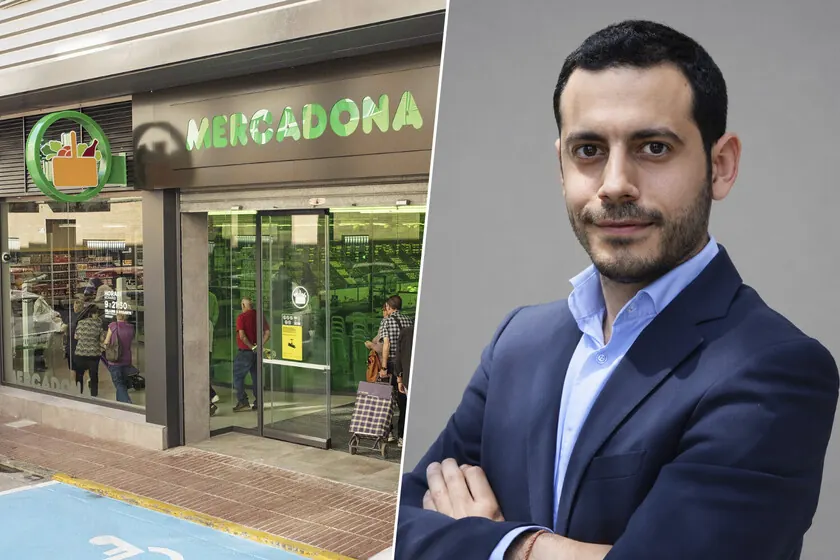
The traditional definition of a supermarket is rapidly becoming outdated as these retailers expand their offerings beyond basic groceries to compete directly with restaurants and fast-food chains. This shift is reshaping the food landscape, forcing analysts to reconsider how market share is measured.
Bernardo Rodilla, Retail Business Director at Worldpanel by Numerator, a firm specializing in market data, articulated this change. He stated, “Mercadona is no longer competing only with Carrefour; it is also competing with the corner restaurant and McDonald’s. Ultimately, everyone is fighting for the same need, and it’s becoming increasingly intertwined.”
This evolution means supermarkets are no longer solely grocery providers but are aiming to become the primary destination for food consumption. This strategy involves direct competition with the hospitality sector, including local eateries and major international fast-food brands.
Market Share Reconfiguration
Worldpanel’s research indicates a significant overlap in consumer spending between supermarkets and the food service industry. A recent report highlighted that Mercadona holds a substantial value share of nearly 20% in food and beverage consumption. This figure rivals or surpasses the combined share of traditional food service establishments, such as bars, cafes, and independent restaurants, which together accounted for approximately 19.8% in Worldpanel’s analysis.
In comparison, other major retailers like Carrefour and Lidl hold smaller shares of this broader food consumption market, at 6% and 5.1% respectively. This data suggests that supermarkets are capturing a significant portion of expenditure previously allocated to dining out or ordering takeaway.
The rise of prepared meal sections within supermarkets is a key driver of this trend. Services like Mercadona’s ‘Listo para comer’ (Ready to eat), launched in 2018, offer a wide range of pre-prepared dishes that consumers can purchase and consume on-site or take home. This business line has experienced rapid growth, generating hundreds of millions in revenue and directly challenging fast-food chains.
Rodilla noted that ‘Listo para comer’ is a growing trend not just in Spain but globally, reflecting a consumer desire to minimize time spent on cooking. This phenomenon extends beyond Mercadona, with other retailers like Carrefour, Alcampo, and Masymas also developing their own prepared food offerings. The emergence of the term ‘mercaurantes’ (a portmanteau of supermarket and restaurant) signifies this convergence.
Industry Impact and Future Outlook
This competitive shift has not gone unnoticed by traditional restaurateurs. In Barcelona, some local business owners have reportedly filed complaints against supermarkets, citing unfair competition.
The strategy employed by supermarkets involves offering affordable, appealing, and convenient meal solutions that save consumers time. Some industry figures, including Juan Roig, president of Mercadona, have speculated that this trend could eventually make home kitchens less essential. Rodilla, however, views this as a potential shift towards cooking becoming more of a “leisure” activity rather than a domestic necessity.
Beyond prepared meals, other trends influencing the retail sector include Mercadona’s continued expansion, the success of private label brands, and the resilience of regional supermarkets. Rodilla observes that organized retail, in general, has grown significantly over the past 25 years, with chains like Mercadona and Lidl alone increasing their market share substantially. This growth has occurred at the expense of traditional specialty food stores, such as independent butchers, fishmongers, and greengrocers.
Regional supermarkets, in particular, have found a niche by offering proximity, customer familiarity, and an expanding product catalog, often stepping in to fill the void left by closing specialty shops. These stores have become a “next step” for consumers transitioning away from specialized stores.
Key facts
| Aspect | Detail |
|---|---|
| Expert | Bernardo Rodilla, Worldpanel by Numerator |
| Key Trend | Supermarkets competing with restaurants for food spending |
| Mercadona’s Share | Nearly 20% of food and beverage consumption value share |
| Competitors | Restaurants, fast-food chains (McDonald’s, Burger King) |
| Contributing Factor | Growth of prepared meal sections (‘Listo para comer’) |
| Impact | Reshaping food market, challenging traditional hospitality sector |
This development is significant for ReviewArticle readers as it highlights how AI and data analytics are not just confined to technology sectors but are influencing fundamental consumer behaviors and business strategies in everyday industries like food retail. The ability of companies like Mercadona to leverage data for market analysis and operational efficiency, as evidenced by their success in capturing market share and understanding consumer convenience needs, points to a broader application of advanced capabilities across various economic sectors.
Source: Bernardo Rodilla, experto en retail: “Mercadona ya no compite solo con Carrefour, lo hace con el restaurante de la esquina y McDonald´s”, Xataka, https://www.xataka.com/magnet/bernardo-rodilla-experto-retail-mercadona-no-compite-solo-carrefour-hace-restaurante-esquina-mcdonald-s
Source
Xataka IA Publicacion original: 2026-07-11T12:31:56+00:00
Related articles

Nepal’s “Flood-Proof” Google Maps Landmark Is Not a Verified Safety Rating
A house that survived a destructive Himalayan flood reportedly appeared on Google Maps as a “flood-proof” attraction. The viral label should not…
Read article
Perplexity Deploys GPT-6 Astra for End-to-End Production and Communication Systems
Perplexity has integrated OpenAI’s GPT-6 Astra to handle communications, software changes, and production monitoring, reducing the need for frequent human check-ins compared…
Read article
Privacy Reports Put AI Smart Glasses Under Scrutiny in France
French association e-Enfance says it has received more than 20 reports involving women allegedly recorded without their knowledge by connected glasses, bringing…
Read article
Snowflake Publishes GTM Blueprint for Closing the AI-to-Revenue Gap
Snowflake’s sales and marketing teams share a repeatable RAMP framework and four revenue leaks they fixed to turn AI pilots into measurable…
Read articleWiki relacionada

AI Model API Pricing and Context Window Comparison: Current Rates and Limits
Compare the latest API pricing, context windows, and capabilities of leading AI model providers including OpenAI, Anthropic, Google, and Mistral. Practical guidance…
Read article
AI Agent Evaluation Frameworks: How to Benchmark Agentic Systems
A practical guide to evaluating AI agents — from task completion metrics to safety, cost, and robustness. Covers major frameworks, primary sources,…
Read article
LLM Benchmarks Decoded: What MMLU, HumanEval, and GSM8K Actually Measure for Developers
A developer-focused breakdown of the most-cited LLM benchmarks — MMLU, HumanEval, GSM8K, MATH, Chatbot Arena — including what they test, their hidden…
Read article
What Is RAG? A Practical Guide to Retrieval-Augmented Generation in 2025
Retrieval-Augmented Generation (RAG) grounds LLM outputs in external data, reducing hallucinations and enabling enterprise use cases. This guide covers how RAG works,…
Read article