
Spanish Municipal Workers Unearth Civil War Remnants During Fire Prevention Efforts
Routine clearing work in Oviedo, Spain, unexpectedly revealed a hidden military structure from the Spanish Civil War, highlighting the ongoing challenge of cataloging and preserving historical remnants amidst modern land management needs.
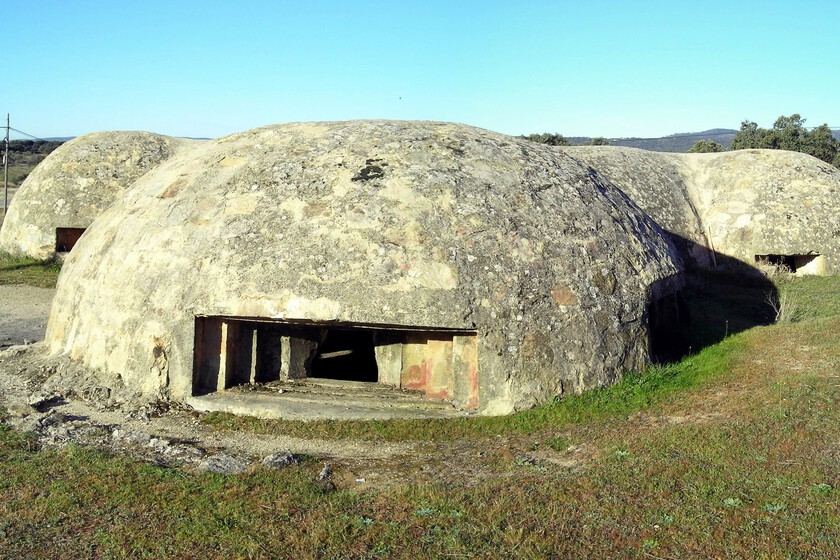
Municipal workers in Oviedo, Spain, performing routine land clearing to mitigate wildfire risks, have inadvertently uncovered a significant historical artifact: a military fortification dating back to the Spanish Civil War. The discovery, made in the El Campón area, underscores the persistent presence of historical remnants beneath Spain’s landscape and the challenges of balancing modern safety requirements with historical preservation.
Unexpected find during clearing
The incident occurred as a municipal crew was clearing vegetation. Their machinery encountered reinforced concrete, leading to the unearthing of what has been identified as a military emplacement from 1937. The structure had remained hidden for decades, concealed by undergrowth. This discovery serves as a stark reminder that many sites from the conflict are still undiscovered, even in areas previously thought to be well-cataloged.
Historical context of the Naranco area
The Monte Naranco, where the discovery was made, holds historical significance related to the Spanish Civil War. Archives indicate that Oviedo endured a Republican siege in 1936. Following the siege’s breakdown, the Naranco region became a strategic defensive line, with numerous trenches and positions established to monitor routes towards Grado. Reports suggest thirteen such positions in El Rebollal and thirty-one in Campo Cimero, forming a substantial defensive network. The unearthed fortification in El Campón is one such example, with similar Republican-era structures documented in nearby areas like Ayones.
Widespread remnants of the Civil War
The Spanish Civil War left an indelible mark on the country’s geography, with countless fortifications and defensive structures scattered across its territory. While precise figures are elusive, the BunkerAtlas portal has geolocalized approximately 192 such positions, though this is considered a partial inventory. Madrid, Catalonia, Navarra, and Aragon are among the regions with the highest concentration of recorded sites. It is estimated that a significant majority of these structures were erected during the conflict by both Nationalist and Republican forces. The “Línea P,” a defensive line planned by the Franco regime along the Pyrenees, envisioned thousands of bunkers, with thousands more constructed before the project was halted. Many of these remain undiscovered, hidden by natural overgrowth.
Preservation efforts and resource challenges
Spain has legislative frameworks, including the Historical Memory Law of 2007 and the Democratic Memory Law of 2022, aimed at identifying and protecting these historical remnants. However, the practical implementation faces considerable hurdles, primarily due to limited resources. Cataloging and preserving thousands of kilometers of trenches and numerous fortifications require substantial funding, often beyond the reach of local authorities or historical associations. Consequently, the recovery and preservation of these sites frequently depend on accidental discoveries made during routine maintenance or by dedicated local groups.
Balancing preservation with urgent needs
The discovery in Oviedo occurred in the context of urgent fire prevention measures. Spain is experiencing increasingly severe wildfire seasons, with 2026 already marked as a difficult year for fire outbreaks. The clearing of vegetation is a critical measure to prevent the spread of fires. Importantly, environmental regulations do not prohibit necessary land clearing; in fact, they often mandate it as part of annual management plans. The article emphasizes that historical preservation and fire prevention are not mutually exclusive. The protocol, as suggested by the source, involves notifying heritage authorities, allowing the historical site to be temporarily exposed, and then making informed decisions about its future.
The Spanish Civil War’s legacy continues to be unearthed, often unexpectedly, as communities strive to manage their present-day needs while acknowledging the deep historical layers beneath their feet. The challenge lies in integrating these historical discoveries into ongoing land management and safety protocols.
Key facts
| Detail | Information |
|---|---|
| Discovery Location | El Campón, Oviedo, Spain |
| Nature of Discovery | Military fortification from the Spanish Civil War |
| Date of Fortification | 1937 |
| Immediate Context | Routine vegetation clearing for wildfire prevention |
| Relevant Legislation | Historical Memory Law (2007), Democratic Memory Law (2022) |
Source: Xataka IA, “Queriendo evitar incendios en Oviedo, los limpiadores han tropezado con otro problema: la Guerra Civil”, https://www.xataka.com/magnet/queriendo-evitar-incendios-oviedo-limpiadores-han-tropezado-otro-problema-guerra-civil
Source
Xataka IA Publicacion original: 2026-07-15T09:31:55+00:00
Related articles

Blizzard Unveils WoW Forever, a Third World of Warcraft Built on the 2004 Classic
At BlizzCon 2026, Blizzard announced WoW Forever, a third standalone version of World of Warcraft. Set to launch November 5, Forever reuses…
Read article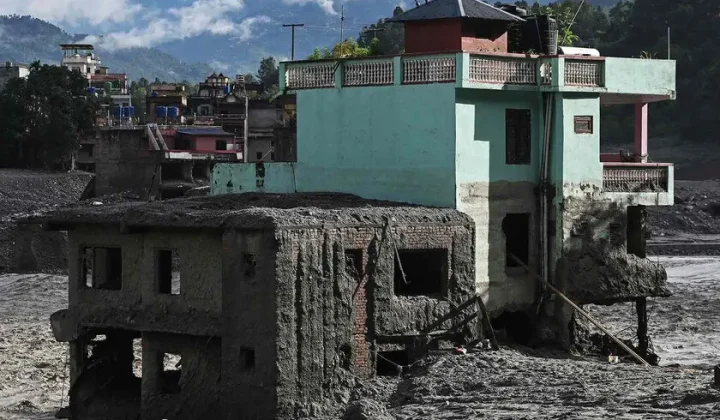
Nepal’s “Flood-Proof” Google Maps Landmark Is Not a Verified Safety Rating
A house that survived a destructive Himalayan flood reportedly appeared on Google Maps as a “flood-proof” attraction. The viral label should not…
Read article
Perplexity Deploys GPT-6 Astra for End-to-End Production and Communication Systems
Perplexity has integrated OpenAI’s GPT-6 Astra to handle communications, software changes, and production monitoring, reducing the need for frequent human check-ins compared…
Read article
Privacy Reports Put AI Smart Glasses Under Scrutiny in France
French association e-Enfance says it has received more than 20 reports involving women allegedly recorded without their knowledge by connected glasses, bringing…
Read articleWiki relacionada

AI Model API Pricing and Context Window Comparison: Current Rates and Limits
Compare the latest API pricing, context windows, and capabilities of leading AI model providers including OpenAI, Anthropic, Google, and Mistral. Practical guidance…
Read article
AI Agent Evaluation Frameworks: How to Benchmark Agentic Systems
A practical guide to evaluating AI agents — from task completion metrics to safety, cost, and robustness. Covers major frameworks, primary sources,…
Read article
LLM Benchmarks Decoded: What MMLU, HumanEval, and GSM8K Actually Measure for Developers
A developer-focused breakdown of the most-cited LLM benchmarks — MMLU, HumanEval, GSM8K, MATH, Chatbot Arena — including what they test, their hidden…
Read article
What Is RAG? A Practical Guide to Retrieval-Augmented Generation in 2025
Retrieval-Augmented Generation (RAG) grounds LLM outputs in external data, reducing hallucinations and enabling enterprise use cases. This guide covers how RAG works,…
Read article