
Russia’s Largest Wind Farm Opens With Nearly All Domestic Parts — A Sign of Tech Autarky That May Reshape AI Hardware Supply Chains
Russia’s 300 MW Novolakskaya wind farm in Dagestan is the country’s largest, built with almost entirely homegrown components. The push for localisation, driven by sanctions, mirrors strategies in AI hardware production and could tighten global supply chains for rare-earth metals and control systems used in AI data cent
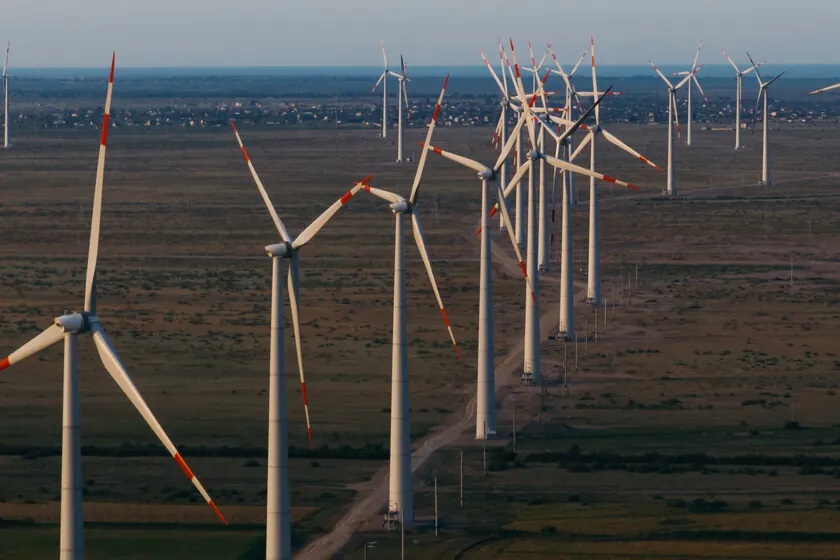
Russia has switched on its most powerful wind farm to date — the Novolakskaya plant in the Republic of Dagestan, reaching its full capacity of 300 MW after the second phase went live. The project, built by Rosatom’s renewable energy division, is notable not just for its size but for a record level of domestically manufactured components: turbines, nacelles, generators and blades all produced within Russia. The push for self-sufficiency, accelerated by Western sanctions, mirrors similar moves in AI hardware production and could tighten global supply chains for rare-earth metals and industrial control systems used in AI data centres.
Background: Dagestan’s chronic power deficit
Dagestan has long suffered from electricity shortages, with frequent blackouts hitting homes and businesses. The new wind farm covers about 9% of the republic’s electricity consumption, according to the Russian Energy Ministry. For local residents and enterprises, this means more stable power — a basic requirement for any region aiming to attract tech investment, including data centres and AI startups.
Key numbers
The park consists of 120 turbines, each rated at 2.5 MW, split across two construction phases (152.5 MW and 147.5 MW). Each turbine is roughly as tall as a 50-storey building and weighs more than 320 tonnes. The project was completed in under two years and is expected to generate an average of 879 million kWh annually — enough for about 240,000 households.
| Metric | Value |
|---|---|
| Total capacity | 300 MW |
| Number of turbines | 120 |
| Turbine rating | 5 MW each |
| Construction phases | 5 MW + 147.5 MW |
| Height per turbine | ~50-storey building |
| Weight per turbine | >320 tonnes |
| Annual generation | 879 million kWh |
| Households supplied | ~240,000 |
| Completion time | <2 years |
Localisation strategy and sanctions context
Grigory Nazarov, CEO of Rosatom Renewable Energy, said this is the company’s tenth wind farm and the first with a “record of localisation” — the vast majority of components produced by Rosatom’s own enterprises. This aligns with Russia’s broader strategy to reduce dependence on foreign technology amid international sanctions.
For the AI industry, the implications are indirect but significant. Russia is a major producer of rare-earth metals (e.g., neodymium, praseodymium) essential for permanent magnets in high-efficiency motors and generators. The same metals are used in hard-disk drives (still relevant for AI storage) and in some advanced cooling solutions. If Russia continues to localise its industrial base, global supply of these materials could become tighter, affecting costs for AI hardware makers. Additionally, the control systems and power electronics in large wind farms are similar to those used in backup power systems for AI data centres — a market where Russian components could gain share if sanctions ease.
Infrastructure impact on the region
The construction has brought new access roads, substations and transmission lines. Dagestan’s acting leader, Fyodor Shchukin, called the plant “proof that the republic is ready to execute large-scale technological projects.” The project also created local jobs and increased tax revenue, potentially making the region more attractive for future tech investments.
What remains unclear
How much of the component supply chain is truly domestic. Rosatom’s claim of a “record of localisation” lacks independent verification. Some parts, such as semiconductor-based controllers and advanced bearings, may still rely on imported chips or materials. Also, the wind farm’s output is expected to displace fossil-fuel generation, but no carbon-reduction targets were cited.
Future plans and AI supply chain connections
Rosatom has already signed agreements for more than 1.3 GW of wind capacity across ten plants, with a goal of 2 GW by 2028. That would make it one of Russia’s largest renewable players. For AI industry observers, the scale matters: as Russia builds out its renewable base, it will likely increase demand for power management chips, inverters and monitoring systems — many of which are currently made by European and Chinese firms. Any push to domesticate those components could further fragment the global electronics supply chain.
Source: Original story on Xataka — https://www.xataka.com/energia/rusia-acaba-encender-su-mayor-parque-eolico-ha-hecho-piezas-fabricadas-casi-enteramente-casa. Additional context on rare-earth metals and AI hardware from industry reports on material supply chains.
Source
Xataka IA Publicacion original: 2026-07-29T08:01:37+00:00
Related articles

Nadella Warns AI Boom Needs Broad Economic Growth or ‘This Scenario Will Not End Well’
Microsoft CEO Satya Nadella, in a podcast interview with Fareed Zakaria, said the AI industry must prove broad macroeconomic productivity gains. Without…
Read article
PlayStation Plus August 2026 Lineup: Dying Light 2, Big Walk, and Signalis Free for Subscribers
Sony announced three free PlayStation Plus games for August 2026: Dying Light 2: Stay Human, Big Walk, and Signalis. Available from August…
Read article
Wired AI Feed Flags Non-AI Content: A Braun Promo Code in the Machine
A July 2026 article about Braun grooming discounts appeared under Wired’s AI section, raising questions about editorial curation and automated content feeds.…
Read article
EU AI Act after 1 August: what to verify in AI tool disclosures
If you are reviewing coding assistants, chatbots, or automation platforms after 1 August, the safest approach is to verify how each tool…
Read articleWiki relacionada

What Is RAG? A Practical Guide to Retrieval-Augmented Generation in 2025
Retrieval-Augmented Generation (RAG) grounds LLM outputs in external data, reducing hallucinations and enabling enterprise use cases. This guide covers how RAG works,…
Read article
Retrieval-Augmented Generation (RAG) – How It Works, Why It Matters, and Where It Falls Short
A practical guide to Retrieval-Augmented Generation (RAG): how it reduces LLM hallucinations, the components needed, real-world developer workflows, and key limitations to…
Read article
Mistral AI Models and API: A Developer Overview
Mistral AI offers a family of open-weight and proprietary models for developers, from Mistral 7B to Mistral Large. This guide covers model…
Read article
What Is Retrieval-Augmented Generation (RAG)? A Developer’s Guide
Retrieval-augmented generation (RAG) combines LLMs with external knowledge retrieval to reduce hallucinations, keep facts current, and enable enterprise-grade AI workflows. This guide…
Read article