
Only 5% of GenAI Projects Pay Off. These 8 Companies Show the Difference
An MIT study puts the genAI success rate at about 5%. A Forbes analysis of Walmart, Mercado Libre, IKEA, UPS and others shows the problem-first pattern behind measurable AI ROI.


The gap between AI investment and AI returns is wide, and the public numbers make it look wider. An MIT study cited in Forbes found that only 5% of generative AI projects deliver real returns. Gartner predicts 40% of projects will be canceled by 2027 because business value remains unclear, while BCG estimates that only 5% of companies worldwide consistently generate substantial value from AI.
Against that backdrop, Forbes contributor Bernard Marr published an August 10, 2026 review of eight companies reporting measurable gains from AI. The individual results are useful, but the shared pattern behind them is the more practical takeaway: each firm started with a defined business problem, not with a model.
The eight companies and their reported numbers
Marr’s roundup covers Walmart, Octopus Energy, Mercado Libre, DoorDash, Bank of America, IKEA, Radisson and UPS. The table below summarizes the claims that stand out.
| Company | AI deployment | Reported result |
|---|---|---|
| Walmart | Generative AI for product catalog data | Created or updated 850 million data points; the manual route would have required a tenfold team expansion |
| Octopus Energy | Arlo agentic platform within the Kraken system | Customer satisfaction rose from 73% to 76%; Kraken was credited with £422 million in 2025 revenue |
| Mercado Libre | GPT-4-based screening of product listings | Fraud detection accuracy near 99%; cataloging speed up 100x over two years |
| DoorDash | AWS-built voice self-service portal | 49% fewer calls transferred to human agents; $3 million in year-on-year operational savings |
| IKEA | Billie AI customer assistant | 47% of incoming queries resolved autonomously; $1.4 billion in new sales after retraining 8,500 agents as interior design consultants |
Bank of America’s Erica chatbot, launched in 2018, passed 3 billion client interactions in 2025 and cut service desk calls by 50%, according to the article. Radisson says AI-generated ad creative cut production time by 50%, drove a 22% increase in ad-driven revenue and improved return on ad spend by 35%. UPS announced in June 2026 that agentic AI in its brokerage and documentation systems raised the share of small packages clearing customs in one day without manual intervention from 21% to 97%.
Why the pattern matters
None of these companies treated AI as a general-purpose add-on. Walmart needed to fix a product catalog. DoorDash needed to reduce the load on customer support. Mercado Libre needed faster fraud detection. UPS needed to handle suddenly more complex customs rules.
In each case, the AI was chosen after the problem was defined, and success was measured in concrete terms: revenue, cost savings, productivity, satisfaction or speed. That sequence is the opposite of the common approach where a team pilots a model and then searches for a use case. The article argues this problem-first ordering is the main reason these projects avoided the failure rate seen elsewhere.
What remains unclear
The Forbes piece is business commentary built on company-reported data, not an independent audit. It does not disclose the cost of each AI deployment, the baseline period used for before-and-after comparisons, or the timeframe in which savings and revenue were measured.
Terms such as “autonomous” also need scrutiny. IKEA’s Billie resolved 47% of queries, but the article does not say what share of those resolutions still required human review. UPS’s 97% figure refers to small packages cleared in one day without manual intervention, not to overall customs volumes. Until companies publish methodology, the numbers should be treated as directional claims rather than audited facts.
Questions to ask before adopting the pattern
For enterprise buyers and developers evaluating similar AI proposals, four questions separate a real business case from a pilot in search of a purpose:
- What exact problem is the AI bought to solve? If the answer is “improve productivity” without a metric, the project has no finish line.
- What is the baseline? A 49% reduction in transferred calls means different things if the starting point is 10,000 calls a month or 10 million.
- What is excluded from the savings claim? Operational savings are rarely net of compute, integration, retraining and human oversight costs.
- Who is reporting the number? Company announcements and vendor case studies have lower verification value than audited filings or third-party benchmarks.
The Forbes cases are useful as models of how to frame AI investments. They are not proof that every similarly framed project will succeed.
Source: https://www.forbes.com/sites/bernardmarr/2026/08/10/8-companies-proving-ai-can-deliver-real-roi/
Source
forbes.com Publicacion original: 2026-08-10T05:09:48+00:00
Related articles
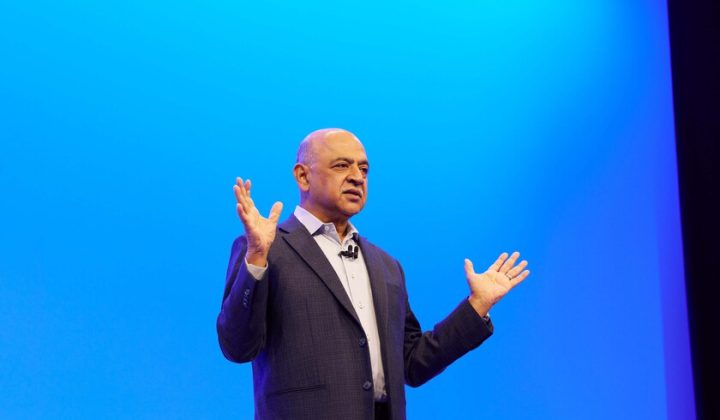
IBM CEO Puts a Number on the Open-Weight AI Value Proposition: 90% of the Performance at 10% of the Token Cost
IBM CEO Arvind Krishna told analysts that open-weight models now deliver about 90% of frontier-model effectiveness while costing between 10% and 25%…
Read article
OCU Finds Spanish Homeowner Communities Overpaying Up to €1,500 on Electricity and €3,515 on Gas—Can AI Tools Optimize Shared Energy Bills?
A new OCU analysis of Spanish homeowner community bills reveals widespread overpayment due to non-competitive tariffs and excess contracted power. Could AI-driven…
Read article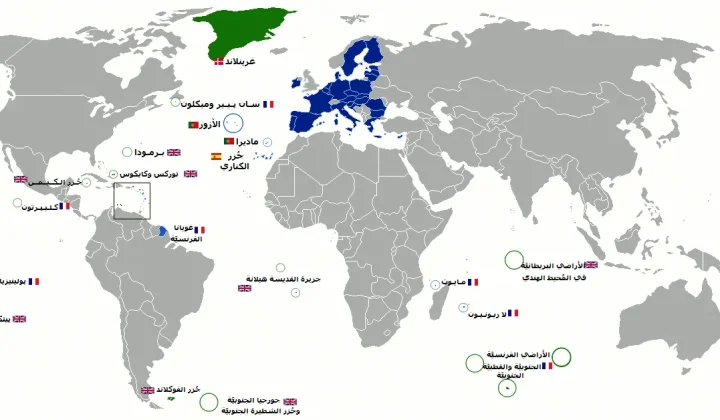
Mayotte fiber dispute does not meet ReviewArticle’s AI news brief
Le Monde reports that France’s competition authority has ordered Orange to suspend part of its fiber-optic rollout in Mayotte. The dispute is…
Read article
DiffEEG Model Uses Diffusion Pre-Training to Improve Seizure Detection from Minimal Labeled Data
Researchers have introduced DiffEEG, a 9.6-million-parameter foundation model that combines denoising diffusion pre-training with reinforcement learning fine-tuning to detect seizure events from…
Read articleWiki relacionada

AI Model API Pricing and Context Window Comparison: Current Rates and Limits
Compare the latest API pricing, context windows, and capabilities of leading AI model providers including OpenAI, Anthropic, Google, and Mistral. Practical guidance…
Read article
AI Agent Evaluation Frameworks: How to Benchmark Agentic Systems
A practical guide to evaluating AI agents — from task completion metrics to safety, cost, and robustness. Covers major frameworks, primary sources,…
Read article
LLM Benchmarks Decoded: What MMLU, HumanEval, and GSM8K Actually Measure for Developers
A developer-focused breakdown of the most-cited LLM benchmarks — MMLU, HumanEval, GSM8K, MATH, Chatbot Arena — including what they test, their hidden…
Read article
What Is RAG? A Practical Guide to Retrieval-Augmented Generation in 2025
Retrieval-Augmented Generation (RAG) grounds LLM outputs in external data, reducing hallucinations and enabling enterprise use cases. This guide covers how RAG works,…
Read article