
China Mandates AI Education for Teachers and Students in National Strategy
China's latest five-year plan outlines a comprehensive strategy to integrate AI into its education system, requiring specialized training for educators and establishing AI literacy as a core component for all students.
China Mandates AI Education for Teachers and Students in National Strategy
SLUG: china-mandates-ai-education-teachers-students-national-strategy
EXCERPT: China’s latest five-year plan outlines a comprehensive strategy to integrate AI into its education system, requiring specialized training for educators and establishing AI literacy as a core component for all students.
CATEGORY: ai-news
TAGS: China, AI education, teacher training, AI literacy, national strategy, education policy, AI workforce
SEO_TITLE: China’s AI Education Mandate: Teachers and Students to Receive Specialized Training
SEO_DESCRIPTION: Discover China’s ambitious plan to integrate AI into its education system, requiring mandatory AI training for teachers and making AI literacy a core subject for students across all levels.
MEDIA_QUERY: Chinese Ministry of Education building exterior, symbolizing national education policy
IMAGE_ALT: Exterior of the Chinese Ministry of Education building in Beijing.
China’s commitment to becoming a global leader in artificial intelligence is extending into its educational infrastructure, with a new national plan mandating AI training for teachers and establishing AI literacy as a fundamental part of the curriculum for students. This initiative, detailed within the country’s 2026-2030 Five-Year Plan, aims to equip the future workforce with essential AI knowledge and skills, ensuring national sovereignty and competitiveness in the rapidly evolving technological landscape.
The “AI+ Education Action Plan,” launched in April by the Ministry of Education with support from other governmental bodies, is designed to foster a “lifelong AI literacy system” across all educational levels. The plan recognizes that a fundamental shift in teaching and learning methodologies is necessary to prepare students for a world increasingly shaped by AI. This involves not only students acquiring AI knowledge but also educators being equipped to effectively impart this knowledge and integrate AI tools into their teaching practices.
Teacher Training and Curriculum Integration
A key component of China’s strategy is the direct involvement of educators. The Ministry of Education has indicated that AI-related examinations will be incorporated into teacher qualification assessments. This is not an entirely new direction, as the Ministry previously released guidelines in 2025 on the use of AI and generative AI for primary and secondary schools. In the same year, the Administration organized specific AI training sessions for principals of these institutions, emphasizing the critical need to enhance teachers’ digital and AI competencies.
The overarching goal is to cultivate a world-class education system by 2035. The “AI literacy” mandate extends beyond traditional classroom settings, encompassing extracurricular activities, vocational training, and higher education. In these contexts, AI is set to become a general foundational course, with programs and degrees aligned with the industrial transformation driven by AI advancements.
The practical application of AI in teaching is expected to involve automating tasks such as tutoring, question answering, and grading, thereby reducing educators’ workload and allowing them more time for direct instruction and mentorship. The Ministry of Education’s stance is that AI should serve as a supervised support tool, rather than a means for students to complete assignments.
Key facts
- Initiative Name: AI+ Education Action Plan
- Timeline: 2026-2030 (Five-Year Plan)
- Core Objectives: National AI sovereignty, AI literacy for all, teacher AI training
- Educational Levels: Primary, secondary, vocational training, higher education, extracurricular activities, lifelong learning
- Teacher Requirements: AI proficiency exams for qualification, integration of AI tools in teaching
Implications for Workflows
This comprehensive approach to AI education in China has significant implications for educational workflows:
- Curriculum Development: Educational institutions will need to revise existing curricula and develop new materials to incorporate AI concepts and applications across various subjects.
- Teacher Professional Development: A robust system for training and certifying teachers in AI will be essential, ensuring they are equipped with the knowledge and pedagogical skills to teach AI effectively.
- AI Tool Integration: Schools will likely see increased adoption of AI-powered educational tools for administrative tasks, personalized learning, and student support.
- Student Skill Development: Students will be expected to develop critical thinking skills related to AI, including evaluating AI-generated content and understanding its limitations.
- Future Workforce Preparation: The initiative aims to create a generation of graduates who are not only consumers but also creators and informed users of AI technology, ready for an AI-driven economy.
Challenges and Equity Concerns
Despite the ambitious nature of the plan, challenges and equity concerns have been raised. The Ministry of Education has had to address the misuse of AI by students for completing assignments, reinforcing the policy that AI should be a supervised educational aid.
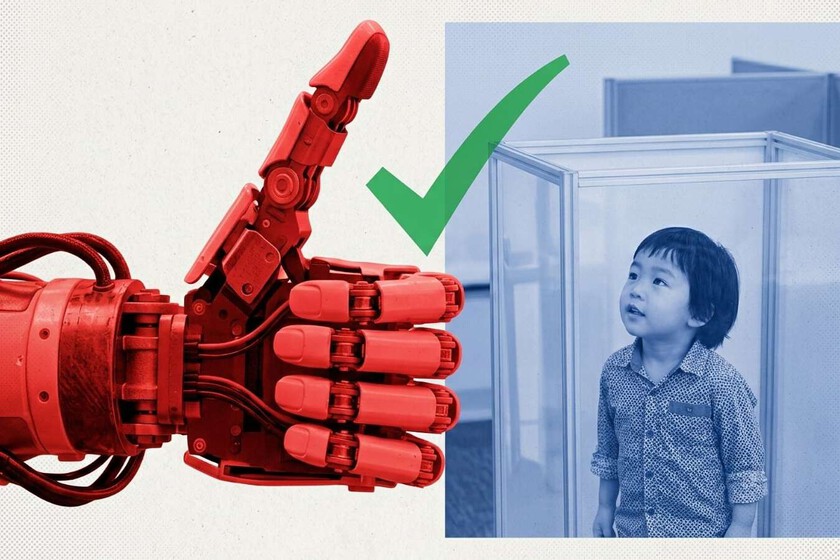
A significant concern revolves around the potential for AI to exacerbate social inequalities. In urban areas with greater access to resources and higher parental education levels, families and schools can more effectively implement AI training, enabling children to use AI tools and critically assess their outputs. However, in rural regions characterized by lower educational attainment, lower incomes, and parents working longer hours, students may face a different reality. There are emerging reports of “AI cubicles” appearing in some localities, where children interact with a tablet that provides tests and supervises responses but lacks actual teaching or explanatory capabilities. This raises questions about whether such systems will truly foster understanding or simply create a superficial engagement with technology, potentially widening the digital and knowledge divide.
The rapid transition from policy documents to classroom implementation is also a point of observation, highlighting the speed at which China is moving to integrate AI into its societal fabric.
Source: China ha resuelto el dilema de la IA en la educación: asignatura troncal y profesores con formación especializada – Xataka
Source
Xataka IA Publicacion original: 2026-05-25T07:01:34+00:00
Related articles
Mayotte fiber dispute does not meet ReviewArticle’s AI news brief
Le Monde reports that France’s competition authority has ordered Orange to suspend part of its fiber-optic rollout in Mayotte. The dispute is…
Read article
DiffEEG Model Uses Diffusion Pre-Training to Improve Seizure Detection from Minimal Labeled Data
Researchers have introduced DiffEEG, a 9.6-million-parameter foundation model that combines denoising diffusion pre-training with reinforcement learning fine-tuning to detect seizure events from…
Read article
The Technology Trap: Why AI Cannot Escape the Unchanging Fundamentals of War
A new Foreign Affairs essay by former Pentagon official Mara Karlin warns that over-reliance on AI and advanced tech in military planning…
Read article
Supabase Releases .NET SDK for C# Developers Across ASP.NET, Unity, and Mobile
Supabase has launched a .NET SDK for C# developers, extending its backend-as-a-service platform to ASP.NET Core, console apps, desktop, Unity, and mobile…
Read articleWiki relacionada

AI Model API Pricing and Context Window Comparison: Current Rates and Limits
Compare the latest API pricing, context windows, and capabilities of leading AI model providers including OpenAI, Anthropic, Google, and Mistral. Practical guidance…
Read article
AI Agent Evaluation Frameworks: How to Benchmark Agentic Systems
A practical guide to evaluating AI agents — from task completion metrics to safety, cost, and robustness. Covers major frameworks, primary sources,…
Read article
LLM Benchmarks Decoded: What MMLU, HumanEval, and GSM8K Actually Measure for Developers
A developer-focused breakdown of the most-cited LLM benchmarks — MMLU, HumanEval, GSM8K, MATH, Chatbot Arena — including what they test, their hidden…
Read article
What Is RAG? A Practical Guide to Retrieval-Augmented Generation in 2025
Retrieval-Augmented Generation (RAG) grounds LLM outputs in external data, reducing hallucinations and enabling enterprise use cases. This guide covers how RAG works,…
Read article