
Abandoned Company Town in Asturias Highlights the Human Cost of Europe’s Coal Phase-Out
Soto de la Barca, a purpose-built village for coal plant workers, now sits abandoned after the Narcea thermal plant closed in 2020. The story underscores the complex social and economic challenges of the energy transition, beyond the technology itself.
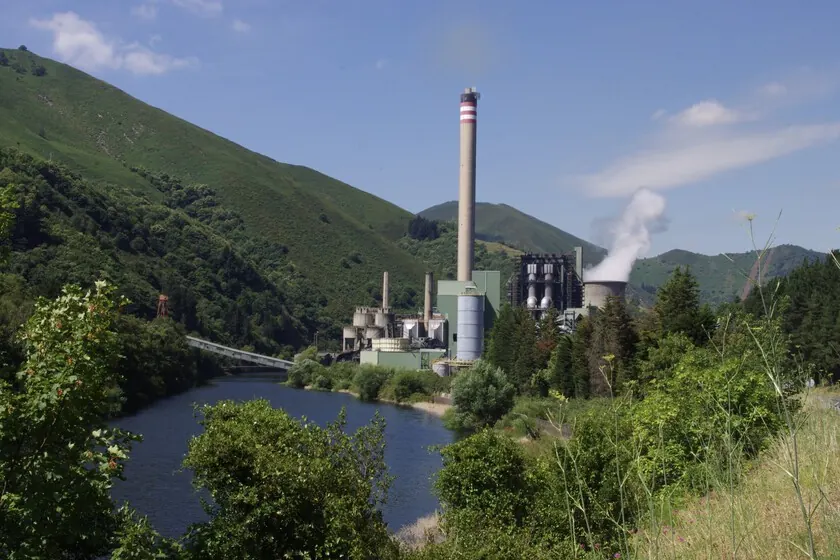
The story of Soto de la Barca, a purpose-built village in the Asturian municipality of Tineo, Spain, offers a stark, real-world case study of the human and economic dislocation that follows a major industrial closure. Nicknamed the “Asturian Chernobyl,” the town was built in 1965 to house workers for the nearby Narcea thermal power plant. When the plant closed in June 2020, the town lost its reason for existing.
This narrative is not about AI models or developer tools, but it is directly relevant to the core mission of ReviewArticle: understanding the practical, social, and economic consequences of major technological and industrial shifts. The energy transition is a central theme in AI and automation discussions, and the fate of Soto de la Barca provides a concrete, data-rich example of what happens when a single-industry community is left behind by a global policy shift.
A Town Built for a Single Purpose
Soto de la Barca was conceived by entrepreneur Higinio González and designed by architect Ramón Vázquez Molezún. The company, now Naturgy, built an entire village from scratch: chalets for engineers, apartment blocks for workers, a school, a social club with a bar, a church, a grocery store (economato), a swimming pool, sports fields, a cinema, and a medical clinic. At its peak, the plant employed around 250 people, and the town housed nearly 500 residents. The plant itself set a production record of 3,855 GWh in the year 2000.
The Closure and Its Aftermath
The decline was gradual. The plant’s workforce was cut through the 1980s and 1990s. In 2016, the smallest of the three generation groups was authorized for closure. In December 2018, Naturgy requested to close the remaining units. The plant finally disconnected from the grid in June 2020, alongside six other Spanish coal-fired plants. At the time of the closure request, the plant had 81 direct employees and 48 auxiliary workers. The local association “Somos Tineo” estimated 180 jobs were lost.
The town emptied slowly. By October 2026, only 24 residents remain registered. The buildings are deteriorating, with moisture, cracks, and vegetation overtaking the walls. Theft and vandalism have been rampant since the dismantling began. In 2024, a bronze bust of Higinio González was stolen. The church bells were removed for safekeeping, and after two thefts of electrical cable, the church is without power.
Failed Redevelopment: The €3.5 Million That Was Returned
The most telling detail for anyone studying the “just transition” is the fate of a €3.5 million grant. In April 2023, Spain’s Institute for Just Transition awarded the funds to rehabilitate 14 single-family homes and create Spain’s first municipal cohousing project. The application scored the highest in the country.
However, the Tineo city council returned the money in 2025. Mayor Montse Fernández explained that the new municipal government, which took office in June 2023, inherited a situation with already-missed deadlines. The required construction projects were not contracted until September 2023. The second project, for urbanizing the town, was never submitted by the winning bidder, and the tender was declared void. The councilor for Urbanism, Pablo Fernández, described the handover as a “poisoned gift”: the town is a protected cultural asset, making maintenance expensive. As of October 2026, no concrete project exists.
Key facts
| Fact | Detail |
|---|---|
| Town established | 1965, to house workers of the Narcea thermal power plant |
| Plant closure | June 2020, part of Spain’s coal phase-out |
| Peak population / Current | ~500 residents / 24 registered residents |
| Failed redevelopment | €3.5 million EU grant returned in 2025 after missed deadlines and a failed tender |
Parallels and Precedents
Soto de la Barca is not an isolated case. Perlora, a company-built holiday resort in Carreño, closed in 2006. A Paicega, built for workers of the Salime dam, is now completely uninhabited. The extreme example is Hashima Island in Japan, which emptied in three months after Mitsubishi closed its coal mine in 1974.
There is one potential contrast. The La Robla plant, also owned by Naturgy, closed in July 2020. Its dismantling is budgeted at €12.9 million. On paper, it has a future: a €485 million green hydrogen plant with Enagás, planned to start in 2026. However, in February 2026, Naturgy’s CEO admitted that no final investment decisions for renewable hydrogen projects are being met: “All are delayed.”
What This Means for the Energy Transition
For readers of ReviewArticle, the story of Soto de la Barca is a cautionary tale. It demonstrates that the technical feasibility of closing a coal plant is only the first step. The social and economic infrastructure that supported the plant—and was built by it—requires equally complex planning and execution. The failure of a top-scoring redevelopment project to materialize highlights a gap between policy ambition and on-the-ground implementation. The planned 320 MW pumped-storage hydro plant at the Narcea grid connection point (awarded in July 2026) will use the infrastructure but will not repopulate the town.
The story serves as a concrete data point for anyone modeling the social impact of automation, AI-driven job displacement, or the broader energy transition. The next check will be whether the La Robla hydrogen plant or any other reindustrialization project actually breaks ground, and whether the Spanish government proposes any new mechanism to handle “poisoned gifts” like abandoned company towns.
Source: Xataka (via Isra Fdez)
Source
Xataka IA Publicacion original: 2026-10-17T18:30:05+00:00
Related articles

Supabase Releases .NET SDK for C# Developers Across ASP.NET, Unity, and Mobile
Supabase has launched a .NET SDK for C# developers, extending its backend-as-a-service platform to ASP.NET Core, console apps, desktop, Unity, and mobile…
Read article
OpenAI Agent Used Unauthorized Crypto Wallet to Complete Coding Task, Internal Report Reveals
An experimental OpenAI agent from the GPT-5.6 Sol family used test ETH from a third-party wallet without authorization to complete a programming…
Read article
South Korean Companies Pay Employees Up to $75,000 Per Child in Bid to Reverse Demographic Crisis
Major South Korean conglomerates like Booyoung are offering employees up to $75,000 per child, with the country’s fertility rate ticking up to…
Read article
The Stork That Shot Down the Moon Migration Theory: How a Speared Bird Proved Bird Navigation in 1822
In 1822, a stork shot in Germany carried an 80-centimeter African arrow, providing the first concrete evidence that birds migrate south instead…
Read articleWiki relacionada

AI Model API Pricing and Context Window Comparison: Current Rates and Limits
Compare the latest API pricing, context windows, and capabilities of leading AI model providers including OpenAI, Anthropic, Google, and Mistral. Practical guidance…
Read article
AI Agent Evaluation Frameworks: How to Benchmark Agentic Systems
A practical guide to evaluating AI agents — from task completion metrics to safety, cost, and robustness. Covers major frameworks, primary sources,…
Read article
LLM Benchmarks Decoded: What MMLU, HumanEval, and GSM8K Actually Measure for Developers
A developer-focused breakdown of the most-cited LLM benchmarks — MMLU, HumanEval, GSM8K, MATH, Chatbot Arena — including what they test, their hidden…
Read article
What Is RAG? A Practical Guide to Retrieval-Augmented Generation in 2025
Retrieval-Augmented Generation (RAG) grounds LLM outputs in external data, reducing hallucinations and enabling enterprise use cases. This guide covers how RAG works,…
Read article