
AI Agent: Definition, Capabilities, and Applications
Explore the fundamental concepts of AI agents, their core functionalities, and how they are transforming various industries. This guide provides a comprehensive overview for developers, founders, and AI enthusiasts.
Last checked: 2026-05-26
Intro definition
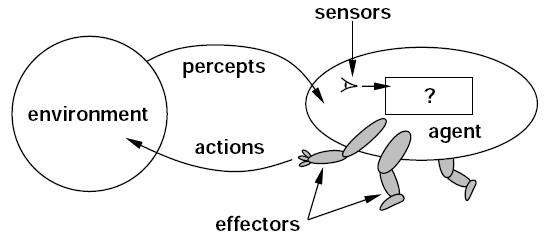
An AI agent is a system situated within an environment that perceives its surroundings through sensors and acts upon that environment through actuators. In simpler terms, it’s a software program or a computational entity designed to perceive its environment, make decisions, and take actions autonomously to achieve specific goals. These agents can range from simple programs that perform a single task to complex systems capable of learning, adapting, and collaborating.
What it is
At its core, an AI agent is characterized by its ability to sense, think, and act. This cycle of perception, reasoning, and action is fundamental to its operation.
– Perception: Agents gather information about their environment using sensors. This could be anything from camera feeds for a robot to data streams for a software agent.
– Reasoning/Decision Making: Based on its perceptions and internal knowledge, the agent processes information to decide on the best course of action. This often involves algorithms, machine learning models, or predefined rules.
– Action: The agent then executes its decision by manipulating its environment through actuators. For a software agent, this might mean sending an email, updating a database, or executing a command.
Why it matters
AI agents represent a significant advancement in artificial intelligence, moving beyond passive data processing to active, goal-oriented behavior. They are crucial for automating complex tasks, enabling new forms of human-computer interaction, and driving innovation across various sectors. Their ability to operate autonomously and adapt to changing conditions makes them indispensable for tasks that are too complex, dangerous, or time-consuming for humans to perform directly.
Who it is for
This guide is intended for a broad audience including:
– Software Developers and Engineers: Those looking to build or integrate AI agents into their applications.
– AI Researchers and Students: Individuals studying the principles and applications of artificial intelligence.
– Product Managers and Founders: Professionals seeking to leverage AI agents for business innovation and automation.
– Technical Editors and Project Managers: Those involved in overseeing AI development projects.
– AI Power Users: Individuals who want to understand the underlying technology behind advanced AI tools.
How it is used in real workflows
AI agents are increasingly integrated into real-world workflows across diverse domains:
Software Development
– Code Generation and Refinement: Agents can suggest code snippets, identify bugs, and even refactor existing code.
– Automated Testing: Agents can design and execute test cases to ensure software quality.
– DevOps Automation: Managing cloud infrastructure, deploying applications, and monitoring system performance.
Business Operations
– Customer Service: Chatbots and virtual assistants that handle inquiries, provide support, and guide users.
– Data Analysis and Reporting: Agents that can process large datasets, identify trends, and generate reports.
– Process Automation: Streamlining repetitive tasks in areas like finance, HR, and supply chain management.
Research and Science
– Experimentation: Designing and conducting scientific experiments, analyzing results, and formulating hypotheses.
– Drug Discovery: Simulating molecular interactions and identifying potential drug candidates.
Personal Productivity
– Smart Assistants: Managing schedules, sending reminders, and controlling smart home devices.
– Information Retrieval: Agents that can search, synthesize, and present information from various sources.
Capabilities and limits
AI agents possess a wide range of capabilities, but also have inherent limitations:
Capabilities
– Autonomy: Ability to operate independently without constant human supervision.
– Adaptability: Learning from experience and modifying behavior to improve performance.
– Goal Achievement: Focused on reaching predefined objectives.
– Perception: Interpreting complex sensory data.
– Decision Making: Choosing optimal actions based on context and goals.
Limits
– Generalization: Difficulty applying knowledge from one domain to a completely different one.
– Common Sense Reasoning: Lacking the intuitive understanding of the world that humans possess.
– Explainability: The decision-making process can sometimes be opaque (“black box”).
– Ethical Considerations: Potential for bias, misuse, and unforeseen consequences.
– Resource Intensive: Complex agents can require significant computational power and data.
Access, pricing or availability caveats when relevant
The accessibility and cost of AI agents vary significantly. Many are available as cloud-based services with tiered pricing based on usage, features, or performance. Open-source frameworks and libraries allow developers to build custom agents, but require technical expertise and infrastructure. Enterprise solutions often come with dedicated support and advanced security features, typically at a premium.
Privacy, data, copyright, security or enterprise caveats when relevant
– Data Privacy: Agents that process personal information must comply with regulations like GDPR and CCPA. Understanding how an agent collects, stores, and uses data is critical.
– Copyright: Agents trained on copyrighted material may raise legal questions regarding the output they generate.
– Security: Agents can be targets for adversarial attacks, requiring robust security measures to prevent unauthorized access or manipulation.
– Enterprise Controls: For business applications, features like access control, audit logs, and compliance certifications are vital.
Alternatives or close comparisons
- Reflex Agents: React directly to current perceptions; no memory of past states. | Simple, repetitive tasks (e.g., thermostat) | No learning or context beyond immediate input.
- Model-Based Agents: Maintain an internal model of the world to track state and predict future. | Navigation, complex environmental interaction | More sophisticated world understanding than reflex agents.
- Goal-Based Agents: Act to achieve explicit goals, planning sequences of actions. | Planning complex tasks, optimization problems | Focus on achieving a specific outcome, considers future states.
- Utility-Based Agents: Maximize a utility function, balancing goals and efficiency. | Resource allocation, complex decision-making | Optimizes for satisfaction/efficiency rather than just goal achievement.
- Learning Agents: Improve performance over time through experience. | Adaptable systems, personalized recommendations | Can evolve and enhance their capabilities without explicit reprogramming.
Practical checklist
Developing or Selecting an AI Agent
– [ ] Clearly define the goals and objectives.
– [ ] Identify the environment the agent will operate in.
– [ ] Determine the necessary sensors and actuators.
– [ ] Choose an appropriate agent architecture (reflex, model-based, goal-based, etc.).
– [ ] Select or develop the underlying AI models and algorithms.
– [ ] Plan for data collection, training, and validation.
– [ ] Implement robust error handling and fallback mechanisms.
– [ ] Consider ethical implications and potential biases.
– [ ] Establish security protocols and data privacy measures.
– [ ] Plan for monitoring, maintenance, and updates.
Related ReviewArticle pages or internal link suggestions
– AI Model Architectures
– Introduction to Reinforcement Learning
– Cloud AI Platforms
– Prompt Engineering Guide
Sources and caveats
This page provides a foundational overview of AI agents. The field is rapidly evolving, with new architectures and capabilities emerging frequently. Specific implementations and capabilities will vary widely depending on the agent’s design and the underlying technologies used. Claims regarding performance, cost, or specific features should always be verified against the official documentation and specifications of the agent or framework in question.
Update log
– 2026-05-26: Initial draft created.
– 2026-05-27: Added practical checklist and internal link suggestions.
Sources
Historial de cambios
Ultima revision y actualizacion: 10 June 2026.
Latest related articles

Trump Announces Deal for Russia to Resume Diesel Sales to US as Zelensky Warns of ‘Gift to Putin’
The US Treasury’s OFAC issued a temporary license allowing Russian diesel imports through April 2027. President Trump claims the deal will lower…
Read article
Why the 24-Hour Day Is a Convenient Fiction, Not a Scientific Fact
The 24-hour day is an average, not a constant. Earth’s elliptical orbit and axial tilt mean most days are slightly shorter or…
Read article
Lightweight AI Framework Turns Smartphone Photos of Paper ECGs Into Heart Attack Screenings
A new compute-light framework called ECGLight can digitize paper ECG printouts from a smartphone photo and screen for myocardial infarction in under…
Read article
AWS CEO Warns Over 100 US Data Center Moratoriums Risk “Potentially Irreparable” Damage to AI Leadership
Amazon Web Services CEO Matt Garman warns that more than 100 local moratoriums on data center construction across the US threaten the…
Read article