
AI Boom Drives DRAM Prices Skyward, Chinese Chipmakers Emerge as Potential Stabilizers
The insatiable demand for AI-powered systems has led to a significant surge in DRAM chip prices, impacting consumer electronics. Chinese manufacturers like YMTC and CXMT are stepping in, offering competitive pricing and potentially stabilizing the market for end-users.
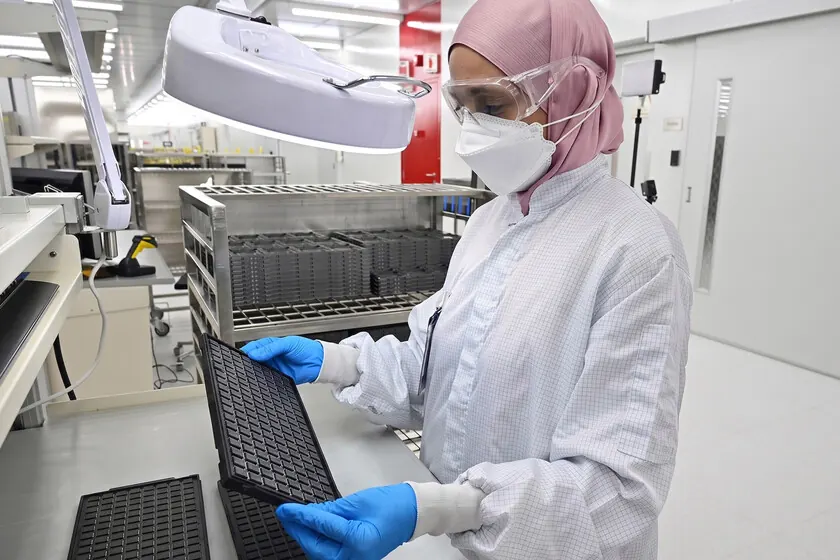
The global memory chip market is undergoing a significant structural transformation, with the burgeoning demand for artificial intelligence (AI) applications driving a dramatic increase in the price of DRAM (Dynamic Random-Access Memory). Industry analysts predict substantial price hikes for conventional DRAM throughout 2026, a trend that is directly impacting the cost of consumer electronics.
High Bandwidth Memory Surge
The primary catalyst for this market shift is the reallocation of production lines by the world’s top three memory chip manufacturers: South Korea’s SK Hynix and Samsung Electronics, and the US-based Micron Technology. These companies have reportedly redirected approximately 70% of their manufacturing capacity towards High Bandwidth Memory (HBM). HBM is a specialized type of DRAM designed to meet the extreme data processing requirements of AI data centers and high-performance computing.
The insatiable appetite for AI training and inference has created an unprecedented demand for HBM, compelling these major players to prioritize its production. This strategic shift, while crucial for the advancement of AI infrastructure, has led to a significant reduction in the supply of standard DDR4 and DDR5 memory modules, which are the workhorses for most personal computers, laptops, and other consumer devices.
Consumer Impact and Price Escalation
The scarcity of standard DRAM has predictably resulted in a sharp rise in prices. According to insights from consulting firm Gartner, the proportion of RAM costs within the total expense of a laptop has climbed from 16% to 23%. This escalation is expected to continue in the coming months, posing a challenge for consumers looking to purchase or upgrade their devices.
Emergence of Chinese Chipmakers
Amidst this market turbulence, Chinese semiconductor manufacturers are emerging as a critical stabilizing force. Companies like Yangtze Memory Technologies Co. (YMTC) and Changxin Memory Technologies (CXMT) are increasingly playing a vital role in supplying memory chips, particularly within China, and are beginning to make inroads into the global market.
YMTC, a significant player in NAND flash memory with an estimated 13% global market share, competes directly with established giants. Its strong presence in the Chinese market is partly due to US sanctions that restrict American and South Korean firms from selling their most advanced integrated circuits to Chinese clients.
CXMT, another key Chinese memory chip producer, has adopted an aggressive pricing strategy to capture market share. The company has reportedly increased its DRAM production capacity nearly fivefold over the past four years, leading to a global market share of approximately 7.6%. This competitive pricing model allows Chinese manufacturers to cater to domestic demand while remaining less susceptible to the premium pricing that global AI-driven demand is enabling for the larger foreign manufacturers.
Global Expansion and Consumer Benefits
While major foreign manufacturers focus on high-margin AI-specific memory, Chinese firms are prioritizing broader market supply. This has helped maintain relatively stable memory chip prices and availability within China. Now, Chinese memory module brands such as Gloway and KingBank are releasing new DDR5 modules that explicitly utilize SDRAM chips manufactured in China. These modules, often featuring eight chips per module, can achieve capacities of 24GB, with kits reaching 48GB or 96GB.
The influence of Chinese-made DRAM is extending beyond China’s borders. Companies like Corsair have already begun incorporating CXMT chips into some of their Vengeance memory kits. Furthermore, major PC manufacturers like HP and Dell are in the process of approving modules containing CXMT chips for their product lines. This development is significant for end-users, potentially offering more affordable memory solutions as the AI boom continues to strain global supply chains.
While the long-term widespread adoption of CXMT DRAM as a response to AI-induced shortages remains to be seen, the market’s demand for new suppliers is clear. If YMTC and CXMT can effectively fill the supply gaps left by Samsung, Micron, and SK Hynix, their role in stabilizing the global memory market could become increasingly prominent.
Key facts
| Aspect | Detail |
|---|---|
| Market Driver | Insatiable demand for AI applications and data centers. |
| Major Manufacturers | SK Hynix, Samsung Electronics, Micron Technology reallocating capacity to HBM. |
| Consumer Impact | Soaring prices and scarcity of standard DDR4/DDR5 DRAM. |
| Stabilizing Influence | Chinese manufacturers YMTC and CXMT offering competitive pricing and increased production. |
| Emerging Brands | Gloway, KingBank, Corsair, HP, and Dell integrating Chinese-made memory chips. |
Source: De la debacle del mercado de las memorias emerge una salvación inesperada para el usuario final: los chips chinos – Xataka (https://www.xataka.com/empresas-y-economia/debacle-mercado-memorias-emerge-salvacion-inesperada-para-usuario-final-chips-chinos)
Source
Xataka IA Publicacion original: 2026-06-18T10:30:17+00:00
Related articles
IBM CEO Puts a Number on the Open-Weight AI Value Proposition: 90% of the Performance at 10% of the Token Cost
IBM CEO Arvind Krishna told analysts that open-weight models now deliver about 90% of frontier-model effectiveness while costing between 10% and 25%…
Read article
OCU Finds Spanish Homeowner Communities Overpaying Up to €1,500 on Electricity and €3,515 on Gas—Can AI Tools Optimize Shared Energy Bills?
A new OCU analysis of Spanish homeowner community bills reveals widespread overpayment due to non-competitive tariffs and excess contracted power. Could AI-driven…
Read article
Mayotte fiber dispute does not meet ReviewArticle’s AI news brief
Le Monde reports that France’s competition authority has ordered Orange to suspend part of its fiber-optic rollout in Mayotte. The dispute is…
Read article
DiffEEG Model Uses Diffusion Pre-Training to Improve Seizure Detection from Minimal Labeled Data
Researchers have introduced DiffEEG, a 9.6-million-parameter foundation model that combines denoising diffusion pre-training with reinforcement learning fine-tuning to detect seizure events from…
Read articleWiki relacionada

AI Model API Pricing and Context Window Comparison: Current Rates and Limits
Compare the latest API pricing, context windows, and capabilities of leading AI model providers including OpenAI, Anthropic, Google, and Mistral. Practical guidance…
Read article
AI Agent Evaluation Frameworks: How to Benchmark Agentic Systems
A practical guide to evaluating AI agents — from task completion metrics to safety, cost, and robustness. Covers major frameworks, primary sources,…
Read article
LLM Benchmarks Decoded: What MMLU, HumanEval, and GSM8K Actually Measure for Developers
A developer-focused breakdown of the most-cited LLM benchmarks — MMLU, HumanEval, GSM8K, MATH, Chatbot Arena — including what they test, their hidden…
Read article
What Is RAG? A Practical Guide to Retrieval-Augmented Generation in 2025
Retrieval-Augmented Generation (RAG) grounds LLM outputs in external data, reducing hallucinations and enabling enterprise use cases. This guide covers how RAG works,…
Read article