
Ancient Australian Rocks Challenge Continent Formation Theories, Suggesting Early Plate Tectonics
New analysis of 4.4-billion-year-old zircons from Western Australia suggests that subduction, a key mechanism of plate tectonics, was active much earlier than previously believed, potentially reshaping our understanding of early Earth and the origins of life.
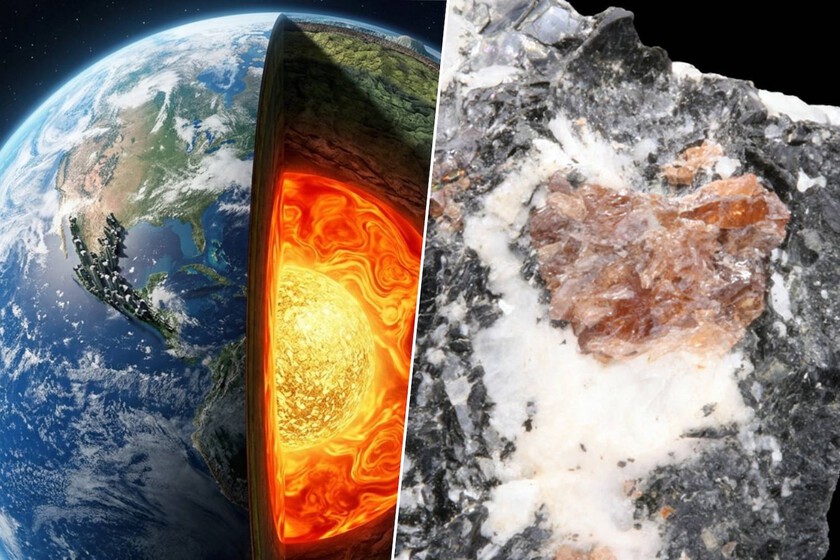
New findings from the analysis of ancient zircon crystals unearthed in Western Australia are prompting a significant reevaluation of how Earth’s continents first formed and the timeline for the onset of plate tectonics. The study, which examined zircons dating back as far as 4.4 billion years, suggests that the process of subduction—where one tectonic plate slides beneath another—may have been active on Earth far earlier than the widely accepted geological consensus. This discovery has profound implications for understanding the planet’s early conditions and the potential for life to emerge.
The Earth’s dynamic surface is largely characterized by plate tectonics, a fundamental geological process involving the movement, collision, and subduction of massive tectonic plates. A long-standing question in geosciences has been the precise timing of when this system became operational. The scarcity of well-preserved rock formations older than 4.03 billion years, such as the Acasta Gneiss in Canada, has made reconstructing this early period challenging.
For decades, scientists have relied on zircons, exceptionally durable crystals that can survive the disintegration of their host rocks, acting as geological time capsules. The oldest known zircons, found in the Jack Hills of Western Australia, are up to 4.4 billion years old. These ancient crystals have now become the focus of a new international research effort.
The Hallazgo: Differentiating Tectonic Regimes
A research team, led by John W. Valley from the University of Wisconsin-Madison, conducted a detailed chemical analysis of these Australian zircons. They compared their composition with zircons of similar age found in Barberton, South Africa. The results revealed a striking divergence: zircons from South Africa provided evidence of a stable, immobile Earth’s crust, while those from Australia indicated active subduction was occurring in that region.
This suggests that as early as 4.4 billion years ago, different parts of the Earth were operating under distinct tectonic mechanisms simultaneously. Some areas likely experienced processes akin to modern plate tectonics, involving subduction, while others maintained a more rigid, stagnant crust.
Key facts
- Age of Zircons: Up to 4.4 billion years old
- Location of Zircons: Jack Hills, Western Australia; Barberton, South Africa
- Key Finding: Evidence of subduction in Australia 4.4 billion years ago
- Implication: Plate tectonics may have begun much earlier and more heterogeneously than thought
Why This Matters for Earth’s History and Life
The prevailing geological narrative posits that Earth transitioned from an immobile crust to active plate tectonics around 3.8 billion years ago, a shift generally considered to be widespread and relatively synchronous. This new study challenges that timeline, suggesting that subduction was already a feature of some regions 600 million years earlier.
This earlier onset of subduction implies that the formation of continents may have commenced significantly sooner than previously assumed. Furthermore, it indicates the potential for seismic activity during this very early period of Earth’s history.
The implications extend to the origin of life. Subduction processes are crucial for generating granite and stable continental crust, which in turn form landmasses, supply oceans with essential minerals, and create the environments conducive to life’s development. Existing evidence suggests life began to emerge between 3.7 and 4.1 billion years ago. If subduction was active earlier, then the necessary conditions for life may have also been present much earlier.
Existing Debates and Interpretations
The debate surrounding the onset of plate tectonics is not new. Some studies have argued for its initiation in the early Hadean eon, while others propose that the early crust was a single, static lid through which heat escaped via mantle plumes, rather than through plate movement.
The zircons from Jack Hills have been central to these discussions, with different research groups interpreting them to support opposing viewpoints. Previous studies using Barberton zircons have also pointed to a tectonic regime shift around 3.8 billion years ago. This latest work adds a layer of complexity by highlighting that while Barberton might show a later shift, the Jack Hills zircons point to a different, more ancient tectonic history in Australia.
Methodology: Unlocking Zircon Secrets
The researchers employed secondary ion mass spectrometry (SIMS) to precisely measure the concentrations of specific chemical elements within the zircons—namely scandium, ytterbium, niobium, and uranium. The ratios of these elements are sensitive indicators of the geological environment in which the zircon formed. Zircons originating from subduction zones exhibit distinct chemical signatures compared to those formed in a rigid lid environment.
In addition to chemical analysis, the team determined the age of the zircons and analyzed their hafnium and oxygen isotopes. These isotopic analyses provide insights into the origin of the zircons’ components, such as whether they derived from the mantle and if water played a role in their formation. Combining these four data points—elemental composition, age, hafnium isotopes, and oxygen isotopes—allows for a more comprehensive reconstruction of the geological setting.
Limitations and Caveats
A significant limitation of this study, as acknowledged by the researchers, is that the analyzed zircons are loose grains transported by erosion, not samples found in their original rock formations. This means their precise origin is unknown, and they could have traveled considerable distances.
Another critical caveat is that the method used to identify tectonic environments was calibrated using modern rocks, as no Hadean-era rocks are available for direct comparison. This necessitates an assumption that the geological and chemical processes of that ancient period were similar to those of today—an assumption that cannot be definitively guaranteed.
The implications of this research for workflows are significant for geologists and planetary scientists. It necessitates a revision of models for early Earth evolution and could influence hypotheses about the conditions under which life first arose. For those studying planetary formation and habitability, this work underscores the complexity and diversity of early planetary crustal dynamics.
Source: Las rocas más antiguas de la Tierra están en Australia y obligan a replantearse cómo se formaron los continentes, Xataka, https://www.xataka.com/ecologia-y-naturaleza/rocas-antiguas-tierra-estan-australia-obligan-a-replantearse-como-se-formaron-continentes
Source
Xataka IA Publicacion original: 2026-05-24T16:01:34+00:00
Related articles
Mayotte fiber dispute does not meet ReviewArticle’s AI news brief
Le Monde reports that France’s competition authority has ordered Orange to suspend part of its fiber-optic rollout in Mayotte. The dispute is…
Read article
DiffEEG Model Uses Diffusion Pre-Training to Improve Seizure Detection from Minimal Labeled Data
Researchers have introduced DiffEEG, a 9.6-million-parameter foundation model that combines denoising diffusion pre-training with reinforcement learning fine-tuning to detect seizure events from…
Read article
The Technology Trap: Why AI Cannot Escape the Unchanging Fundamentals of War
A new Foreign Affairs essay by former Pentagon official Mara Karlin warns that over-reliance on AI and advanced tech in military planning…
Read article
Supabase Releases .NET SDK for C# Developers Across ASP.NET, Unity, and Mobile
Supabase has launched a .NET SDK for C# developers, extending its backend-as-a-service platform to ASP.NET Core, console apps, desktop, Unity, and mobile…
Read articleWiki relacionada

AI Model API Pricing and Context Window Comparison: Current Rates and Limits
Compare the latest API pricing, context windows, and capabilities of leading AI model providers including OpenAI, Anthropic, Google, and Mistral. Practical guidance…
Read article
AI Agent Evaluation Frameworks: How to Benchmark Agentic Systems
A practical guide to evaluating AI agents — from task completion metrics to safety, cost, and robustness. Covers major frameworks, primary sources,…
Read article
LLM Benchmarks Decoded: What MMLU, HumanEval, and GSM8K Actually Measure for Developers
A developer-focused breakdown of the most-cited LLM benchmarks — MMLU, HumanEval, GSM8K, MATH, Chatbot Arena — including what they test, their hidden…
Read article
What Is RAG? A Practical Guide to Retrieval-Augmented Generation in 2025
Retrieval-Augmented Generation (RAG) grounds LLM outputs in external data, reducing hallucinations and enabling enterprise use cases. This guide covers how RAG works,…
Read article