
ASML Offers €20,000 Stock Bonus to Retain Workers as AI Boom Splits Tech Labor Market
ASML is offering all employees a €20,000 stock package if they stay until 2030, while major tech companies cut thousands of jobs to fund AI investments. The contrast highlights the semiconductor talent war driving the AI infrastructure buildout.
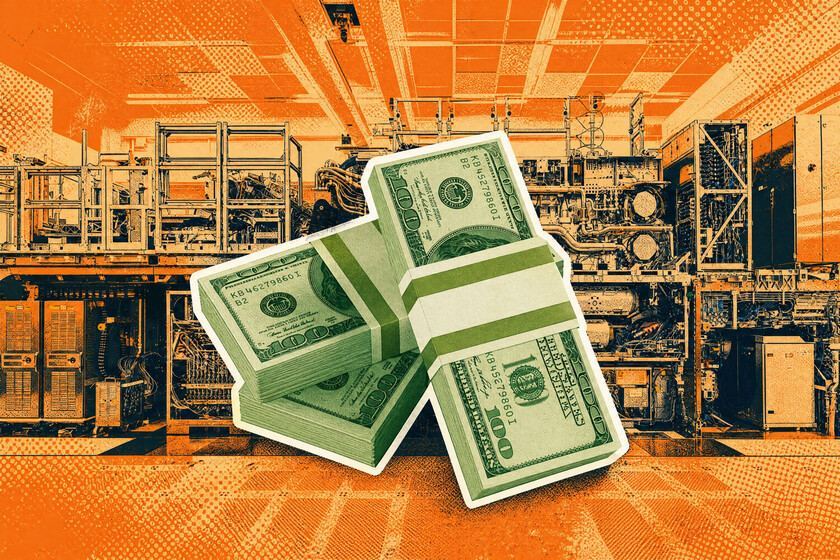
The artificial intelligence boom is producing two sharply different labor market outcomes. While Meta, Microsoft, Oracle and Amazon have collectively laid off at least 92,000 workers in the first four months of 2026 largely to reallocate resources toward AI development, semiconductor equipment maker ASML is moving in the opposite direction: it is offering every employee a €20,000 stock bonus to remain with the company through 2030.
The package, first reported by Eindhovens Dagblad, covers all 44,500 ASML employees worldwide. The stock units become available from January 1, 2027, but the condition to cash them is continuing employment on January 1, 2030. If every worker stays, the total cost would be approximately €890 million. ASML generated €9.3 billion in revenue in the last quarter alone, with net profit of €2.92 billion, so the company can comfortably absorb the expense.
Key facts
| Detail | Value |
|---|---|
| Retention bonus per employee | €20,000 in stock |
| Total employees | 44,500 (23,500 in Veldhoven) |
| Condition for payout | Still employed on January 1, 2030 |
| Maximum potential cost | €890 million |
| ASML Q1 2026 revenue | €9.3 billion |
| Q1 2026 net profit | €2.92 billion |
Why ASML is paying to keep talent
ASML is the world’s sole supplier of extreme ultraviolet (EUV) lithography machines, essential for manufacturing advanced AI chips from companies like NVIDIA, AMD, and Apple. The surge in AI infrastructure spending has created unprecedented demand for semiconductor manufacturing equipment, and ASML’s specialized engineers are difficult to replace quickly.
The company is not alone in this approach. Samsung earlier this year agreed to pay semiconductor division employees an average bonus of $340,000 after workers threatened a strike that could have halted production lines. The Samsung deal, however, created internal tensions: employees in other divisions, such as consumer devices, received bonuses as low as $4,000. SK Hynix, another major memory chip maker, has also been offering retention packages to key personnel as it ramps up high-bandwidth memory (HBM) production for AI accelerators.
The big tech layoff wave continues
In contrast, the largest technology companies are cutting staff aggressively. Meta laid off around 8,000 employees in May 2026. Microsoft offered early retirement packages to thousands of workers. Oracle reportedly dismissed several thousand employees, though the exact number has not been confirmed. Amazon has also conducted multiple rounds of reductions this year.
The common justification cited by these companies is the need to redirect resources toward AI infrastructure and product development. The layoffs are not primarily driven by financial distress — most of these firms are reporting strong earnings — but by a strategic shift to reallocate headcount from legacy product teams to AI-focused units. This has created a paradoxical situation: more AI investment leads to fewer total jobs at the biggest tech firms, while the hardware suppliers that enable AI are desperate for more workers.
What this means for the AI industry
For engineers and investors watching the AI supply chain, the ASML bonus signals that the semiconductor equipment sector faces a critical talent shortage. The company’s stock has been among the best-performing in Europe, and its market capitalization leads the continent. The retention offer is effectively a bet that the AI chip boom will continue for at least four more years.
The contrast also raises questions about the long-term sustainability of big tech’s hiring strategy. If the largest AI consumers are shedding experienced workers, and the companies that build the underlying hardware are hoarding them, the labor market may become increasingly fragmented. The next few years will reveal whether the layoffs represent a temporary restructuring or a permanent shift in how AI companies organize their workforces.
Remaining uncertainties
While the ASML bonus details are confirmed by local Dutch media, the exact vesting mechanics and tax implications for employees outside the Netherlands have not been fully disclosed. The Samsung bonus figures come from Korean labor negotiations and may vary by role and seniority. The total layoff numbers for 2026 are based on industry estimates compiled by tracking firms; individual company announcements may differ in methodology.
Source: Xataka IA (original Spanish) with additional reporting from Eindhovens Dagblad. https://www.xataka.com/empresas-y-economia/sector-tecnologico-se-desangra-despidos-asml-camina-direccion-opuesta-20-000-euros-quedarse
Source
Xataka IA Publicacion original: 2026-07-24T16:00:40+00:00
Related articles
IBM CEO Puts a Number on the Open-Weight AI Value Proposition: 90% of the Performance at 10% of the Token Cost
IBM CEO Arvind Krishna told analysts that open-weight models now deliver about 90% of frontier-model effectiveness while costing between 10% and 25%…
Read article
OCU Finds Spanish Homeowner Communities Overpaying Up to €1,500 on Electricity and €3,515 on Gas—Can AI Tools Optimize Shared Energy Bills?
A new OCU analysis of Spanish homeowner community bills reveals widespread overpayment due to non-competitive tariffs and excess contracted power. Could AI-driven…
Read article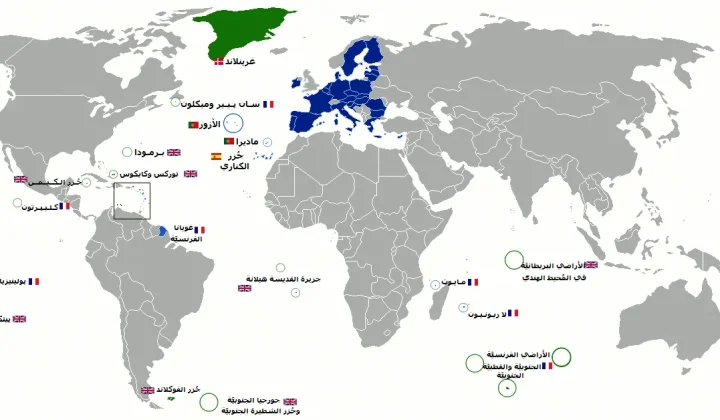
Mayotte fiber dispute does not meet ReviewArticle’s AI news brief
Le Monde reports that France’s competition authority has ordered Orange to suspend part of its fiber-optic rollout in Mayotte. The dispute is…
Read article
DiffEEG Model Uses Diffusion Pre-Training to Improve Seizure Detection from Minimal Labeled Data
Researchers have introduced DiffEEG, a 9.6-million-parameter foundation model that combines denoising diffusion pre-training with reinforcement learning fine-tuning to detect seizure events from…
Read articleWiki relacionada

AI Model API Pricing and Context Window Comparison: Current Rates and Limits
Compare the latest API pricing, context windows, and capabilities of leading AI model providers including OpenAI, Anthropic, Google, and Mistral. Practical guidance…
Read article
AI Agent Evaluation Frameworks: How to Benchmark Agentic Systems
A practical guide to evaluating AI agents — from task completion metrics to safety, cost, and robustness. Covers major frameworks, primary sources,…
Read article
LLM Benchmarks Decoded: What MMLU, HumanEval, and GSM8K Actually Measure for Developers
A developer-focused breakdown of the most-cited LLM benchmarks — MMLU, HumanEval, GSM8K, MATH, Chatbot Arena — including what they test, their hidden…
Read article
What Is RAG? A Practical Guide to Retrieval-Augmented Generation in 2025
Retrieval-Augmented Generation (RAG) grounds LLM outputs in external data, reducing hallucinations and enabling enterprise use cases. This guide covers how RAG works,…
Read article