
Chinese DRAM Makers Raise Prices and Prioritize AI Server Deals, Reshaping Global Supply
Chinese DRAM manufacturers CXMT and YMTC, once seen as relief for the global RAM shortage, are now raising prices and signing multi-billion-dollar AI server contracts with ByteDance and Tencent, while cutting Huawei’s access.
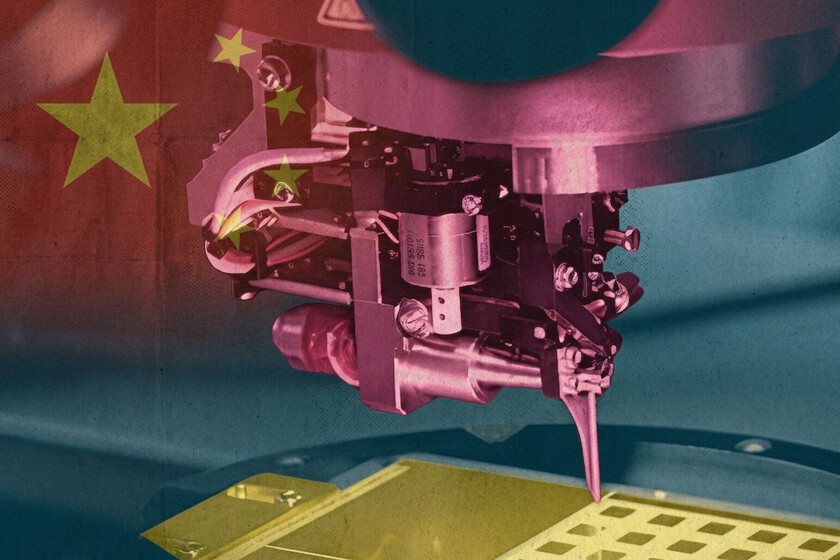
Chinese DRAM manufacturers CXMT and YMTC, initially viewed as a potential relief valve for the global RAM shortage, are now operating with the same profit-driven strategy as the established market leaders. According to a report by Reuters, relayed by Xataka, both companies have raised prices on customers, including Huawei, and signed multi-billion-dollar contracts to supply DRAM for AI server data centers. The shift upends earlier expectations that Chinese chipmakers would offer aggressive discounts and ease the supply crunch for consumer hardware.
Key facts
| Detail | Status |
|——–|——–|
| Chinese DRAM makers | CXMT (fourth largest globally) and YMTC (flash memory counterpart) |
| Major AI server deals | ByteDance >$7B, Tencent >$3B for DRAM chips |
| Huawei response | CXMT refused price relief; Huawei exploring own DRAM fab |
| US scrutiny | YMTC on Entity List; Micron lobbying for stricter controls on CXMT |
Por que importa
The Shift in Strategy
The global memory market has long been dominated by Samsung, SK Hynix, and Micron, which have directed most of their production toward AI server chips, leaving consumer DRAM scarce and expensive. When CXMT and YMTC began scaling up, many analysts predicted they would undercut incumbents with government-subsidized pricing. Instead, both companies have raised prices as demand surged, choosing to follow the same market dynamics rather than disrupt them.
AI Server Deals Take Priority
CXMT has signed two major agreements to supply DRAM for AI server data centers: one with ByteDance valued at more than $7 billion, and another with Tencent worth over $3 billion, according to Reuters. These deals dwarf the volume of consumer-oriented contracts and highlight the company’s focus on the fastest-growing segment of the memory market. With hyperscalers competing for limited HBM and server DRAM, CXMT’s production is increasingly allocated to AI workloads rather than smartphones or PCs.
Contexto
Huawei Under Pressure
The most striking example of the new pricing power is CXMT’s relationship with Huawei. Reuters reports that CXMT has been raising RAM prices to Huawei for months. When Huawei requested relief, CXMT did not grant it. The friction has escalated to the point where CXMT reportedly ordered its engineers to leave cleanrooms shared with Huawei partners such as SiCarrier. The tensions have pushed Huawei to explore building its own DRAM fabrication plant, a move that signals the lengths the company is willing to go to secure supply.
Geopolitical Stakes
The United States is closely watching the growth of CXMT and YMTC. YMTC already appears on the U.S. Entity List, restricting its access to American technology. Micron, one of the three dominant incumbents, is urging the U.S. Congress to impose stricter controls on CXMT, citing national security concerns. Apple, which needs DRAM for its devices, is lobbying against tighter restrictions because CXMT represents a viable alternative to the Korean and American suppliers. The split between U.S. government and industry interests adds another layer of uncertainty to the supply chain.
What This Means for AI Hardware
For AI developers and data center operators, the trend confirms that the high cost of DRAM is unlikely to ease in the near term. SK Hynix has warned that the next year will be the worst in semiconductor history, and Lenovo has stated that prices will never return to pre-crisis levels. The majority of new memory production will continue to be absorbed by hyperscalers and AI server builders, leaving consumer and small-scale AI hardware facing elevated costs. Companies that rely on affordable DRAM for inference, training, or edge devices may need to plan for sustained price pressure.
Outlook
The Chinese DRAM makers have proven that they are not a savior for the global market but rather a new competitor playing by the same rules. With massive AI server deals locked in and pricing power firmly in place, the near-term outlook for DRAM availability in consumer and mid-range AI products remains constrained. Any further escalation of U.S. export controls could shift the landscape again, but for now, the market is adjusting to a reality where no major player is willing to sell cheap.
Source: Xataka, citing Reuters, “Pensábamos que los fabricantes chinos de RAM llegaban para aliviar el mercado. Resulta que están jugando al mismo juego que las demás” (https://www.xataka.com/empresas-y-economia/pensabamos-que-fabricantes-chinos-ram-llegaban-para-aliviar-mercado-resulta-que-estan-jugando-al-juego-que-demas)
Datos clave
| Punto | Detalle |
|---|---|
| Fuente | Xataka IA |
| Fecha | 2026-07-27T08:31:36+00:00 |
| Tema | Pensábamos que los fabricantes chinos de RAM llegaban para aliviar el mercado. Resulta que están jugando al mismo juego |
Source
Xataka IA Publicacion original: 2026-07-27T08:31:36+00:00
Related articles
IBM CEO Puts a Number on the Open-Weight AI Value Proposition: 90% of the Performance at 10% of the Token Cost
IBM CEO Arvind Krishna told analysts that open-weight models now deliver about 90% of frontier-model effectiveness while costing between 10% and 25%…
Read article
OCU Finds Spanish Homeowner Communities Overpaying Up to €1,500 on Electricity and €3,515 on Gas—Can AI Tools Optimize Shared Energy Bills?
A new OCU analysis of Spanish homeowner community bills reveals widespread overpayment due to non-competitive tariffs and excess contracted power. Could AI-driven…
Read article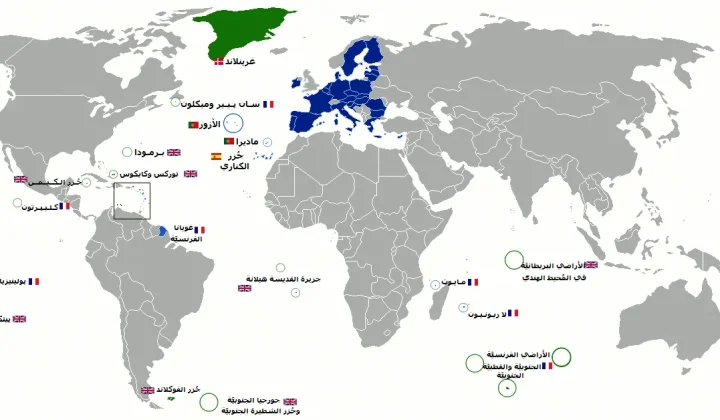
Mayotte fiber dispute does not meet ReviewArticle’s AI news brief
Le Monde reports that France’s competition authority has ordered Orange to suspend part of its fiber-optic rollout in Mayotte. The dispute is…
Read article
DiffEEG Model Uses Diffusion Pre-Training to Improve Seizure Detection from Minimal Labeled Data
Researchers have introduced DiffEEG, a 9.6-million-parameter foundation model that combines denoising diffusion pre-training with reinforcement learning fine-tuning to detect seizure events from…
Read articleWiki relacionada

AI Model API Pricing and Context Window Comparison: Current Rates and Limits
Compare the latest API pricing, context windows, and capabilities of leading AI model providers including OpenAI, Anthropic, Google, and Mistral. Practical guidance…
Read article
AI Agent Evaluation Frameworks: How to Benchmark Agentic Systems
A practical guide to evaluating AI agents — from task completion metrics to safety, cost, and robustness. Covers major frameworks, primary sources,…
Read article
LLM Benchmarks Decoded: What MMLU, HumanEval, and GSM8K Actually Measure for Developers
A developer-focused breakdown of the most-cited LLM benchmarks — MMLU, HumanEval, GSM8K, MATH, Chatbot Arena — including what they test, their hidden…
Read article
What Is RAG? A Practical Guide to Retrieval-Augmented Generation in 2025
Retrieval-Augmented Generation (RAG) grounds LLM outputs in external data, reducing hallucinations and enabling enterprise use cases. This guide covers how RAG works,…
Read article