
Freezing Bread: Convenience Factor vs. Health Claims Debunked
While freezing bread offers convenience and cost savings, recent analysis questions the widely circulated health benefits, particularly regarding resistant starch formation.
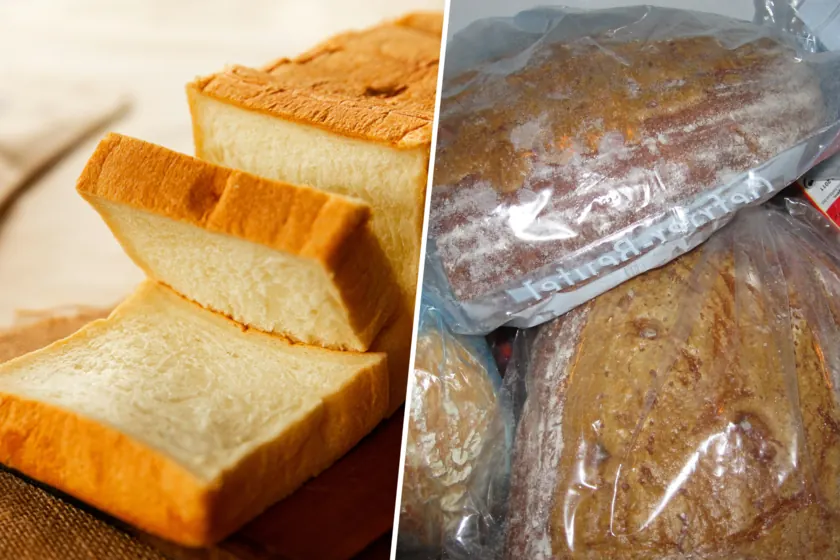
The common practice of freezing bread for convenience and cost-effectiveness is widespread. However, the perceived health benefits, often linked to the formation of resistant starch upon thawing, are now being critically examined, with experts suggesting these advantages may be overstated for the average consumer.
The appeal of freezing bread is undeniable. It allows consumers to purchase bread in larger quantities, reducing waste and ensuring a readily available supply. This practice aligns with a broader shift away from daily bread purchases, reflecting changing consumer habits and a decline in traditional bread culture.
Nutritional Integrity Preserved
Concerns about nutritional loss during freezing are largely unfounded. According to dietitians, the freezing process itself does not significantly deplete the nutritional properties of bread. While texture and flavor can sometimes be affected, the core nutritional value remains intact. This means that frozen bread can still be a source of essential nutrients.
Choosing the Right Bread for Freezing
Not all breads are equally suited for freezing. Experts recommend opting for loaves that are less toasted, as these tend to maintain a better balance of moisture between the crust and the crumb. Larger loaves and those made with whole grain or rye flour are also considered better candidates for successful freezing due to their composition and structure.
Optimal Freezing and Thawing Techniques
Proper technique is crucial for maximizing the benefits of frozen bread. The process involves three key steps:
1. Start with fresh bread at room temperature. Avoid freezing bread that is already stale or not fully cooled.
2. Slice the bread into portions before freezing. This facilitates easier and more even thawing.
3. Package the bread hermetically to prevent freezer burn and moisture exchange. Properly sealed bread can remain frozen for up to six months.
Thawing also requires attention. The most effective method is to allow the bread to thaw at room temperature, ideally on a wire rack to prevent moisture buildup. For those short on time, bread can be reheated in an oven at around 160 degrees Celsius (320 degrees Fahrenheit) for 10-15 minutes, wrapped in foil, or directly toasted if sliced.
The Resistant Starch Debate
A significant portion of the health claims surrounding frozen bread centers on the concept of resistant starch. This type of carbohydrate is not fully digested in the small intestine and acts similarly to dietary fiber. Some sources suggest that upon thawing, a portion of the bread’s carbohydrates convert into prebiotically beneficial fiber, which can benefit gut microbiota and regulate blood glucose levels.
However, this claim is being met with skepticism. While resistant starch formation is a known phenomenon, its practical impact on bread after freezing and thawing is questionable. Studies have shown that freezing and subsequent toasting may reduce the glycemic index of bread, but these findings are often based on small studies and do not significantly increase resistant starch content.
Experts emphasize that for the average individual, the effects of freezing bread on resistant starch are likely negligible. The overall impact on health is far more influenced by the total diet and daily habits than by this specific preparation method.
Key Facts
| Aspect | Details |
|---|---|
| Nutritional Value | Largely preserved during freezing. |
| Best Loaves to Freeze | Less toasted, larger, whole grain, or rye breads. |
| Freezing Process | Use fresh, room-temp bread, slice, and package hermetically. |
| Thawing Methods | Room temperature (preferred), oven reheat, or direct toasting. |
| Health Claim (Resistant Starch) | Limited scientific evidence for significant health benefits in practice. |
The primary takeaway for consumers is that freezing bread is an excellent strategy for convenience and reducing food waste. While it’s a practical method for preserving bread, the purported significant health advantages related to resistant starch are not strongly supported by current evidence for typical consumption patterns. The focus should remain on a balanced diet and healthy lifestyle choices for overall well-being.
Source: Sabíamos que el congelar el pan era cómodo, barato y estaba de moda. Lo que no tenemos claro es que sea “tan bueno” para la salud – Xataka, https://www.xataka.com/medicina-y-salud/sabiamos-que-congelar-pan-era-comodo-barato-estaba-moda-que-no-tenemos-claro-que-sea-bueno-para-salud
Source
Xataka IA Publicacion original: 2026-06-17T07:00:17+00:00
Related articles

IBM CEO Puts a Number on the Open-Weight AI Value Proposition: 90% of the Performance at 10% of the Token Cost
IBM CEO Arvind Krishna told analysts that open-weight models now deliver about 90% of frontier-model effectiveness while costing between 10% and 25%…
Read article
OCU Finds Spanish Homeowner Communities Overpaying Up to €1,500 on Electricity and €3,515 on Gas—Can AI Tools Optimize Shared Energy Bills?
A new OCU analysis of Spanish homeowner community bills reveals widespread overpayment due to non-competitive tariffs and excess contracted power. Could AI-driven…
Read article
Mayotte fiber dispute does not meet ReviewArticle’s AI news brief
Le Monde reports that France’s competition authority has ordered Orange to suspend part of its fiber-optic rollout in Mayotte. The dispute is…
Read article
DiffEEG Model Uses Diffusion Pre-Training to Improve Seizure Detection from Minimal Labeled Data
Researchers have introduced DiffEEG, a 9.6-million-parameter foundation model that combines denoising diffusion pre-training with reinforcement learning fine-tuning to detect seizure events from…
Read articleWiki relacionada

AI Model API Pricing and Context Window Comparison: Current Rates and Limits
Compare the latest API pricing, context windows, and capabilities of leading AI model providers including OpenAI, Anthropic, Google, and Mistral. Practical guidance…
Read article
AI Agent Evaluation Frameworks: How to Benchmark Agentic Systems
A practical guide to evaluating AI agents — from task completion metrics to safety, cost, and robustness. Covers major frameworks, primary sources,…
Read article
LLM Benchmarks Decoded: What MMLU, HumanEval, and GSM8K Actually Measure for Developers
A developer-focused breakdown of the most-cited LLM benchmarks — MMLU, HumanEval, GSM8K, MATH, Chatbot Arena — including what they test, their hidden…
Read article
What Is RAG? A Practical Guide to Retrieval-Augmented Generation in 2025
Retrieval-Augmented Generation (RAG) grounds LLM outputs in external data, reducing hallucinations and enabling enterprise use cases. This guide covers how RAG works,…
Read article