
Japanese Researchers Develop Quantum Chip Promising 1,000x Speed Increase and Reduced Heat
A University of Tokyo research team has created a non-volatile quantum switching device that utilizes electron magnetism for data processing, potentially offering a thousand-fold speed boost over current CPUs and significantly reducing thermal issues.
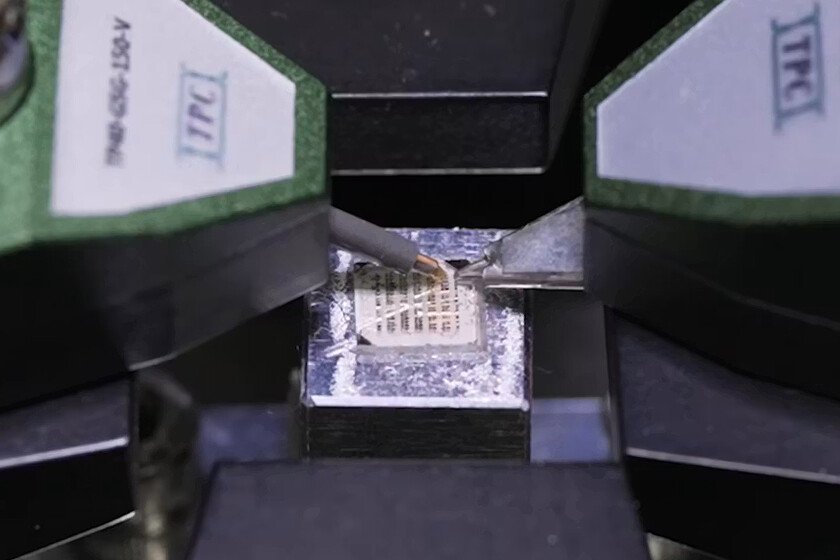
A significant advancement in semiconductor technology has emerged from Japan, with researchers at the University of Tokyo developing a novel quantum switching device. This new technology promises to process information up to 1,000 times faster than the most advanced current CPUs and operates with drastically reduced heat generation, a common bottleneck in high-performance computing.
The breakthrough, reported by Nikkei and detailed by the research team, centers on a non-volatile quantum switching device. Unlike conventional integrated circuits that rely on the flow of electricity to represent bits, this new device leverages the magnetic properties of electrons. This fundamental shift in approach is key to its enhanced performance and thermal efficiency.
Current semiconductor technology takes approximately one nanosecond to register a single bit, often encountering critical overheating issues. The University of Tokyo’s device, however, can process a bit of information in as little as 40 picoseconds. This represents a thousand-fold reduction in processing time for each bit compared to conventional methods. The chip’s composition also diverges from standard silicon, incorporating tantalum and manganin to convert electrical signals into magnetic information.
Key facts
- Speed Increase: Up to 1,000 times faster than current CPUs
- Processing Time per Bit: 40 picoseconds
- Technology: Non-volatile quantum switching device
- Data Representation: Magnetic properties of electrons
- Materials: Tantalium and Manganin
- Projected Prototype: 2030
Overcoming Heat Limitations
The research team’s laboratory tests have yielded remarkable results. In their device, an electrical signal passes through a layer of tantalum, which then registers the signal as the direction of a minuscule magnetic force in the manganin layer below. This magnetic direction represents a single bit without requiring a continuous flow of electric current, thus circumventing the heat issues associated with electrical resistance.
During initial testing, the prototype demonstrated stable operation even after processing over 100 billion pieces of information. A notable observation from the researchers is that the device’s performance improves as its components become physically smaller. This suggests that future iterations could lead to significant reductions in energy consumption, potentially by as much as 99% for information processing tasks.
In contrast, a contemporary CPU or GPU would likely have overheated after only 10 million clock cycles if operating at a comparable speed. The ability of this quantum device to handle 100 billion operations without error highlights its potential.
Challenges in Scalability
While the underlying physics of this quantum switching device have been proven by the Japanese scientists, the transition from laboratory prototype to mass manufacturing presents substantial engineering challenges. Producing such advanced devices at a scale suitable for industrial chip fabrication is a complex undertaking, distinct from the creation of a single university lab experiment.
However, history shows that disruptive technologies often originate in such experimental settings. Despite the uncertainties surrounding its future development, there is a distinct possibility that this innovation could eventually move from the lab to production lines. The researchers have indicated a projected prototype release around 2030, offering a glimpse into its potential timeline.
Practical Implications for Workflows
The development of this quantum switching chip, if successfully commercialized, could fundamentally alter a wide range of computing workflows. For AI researchers and developers, the dramatic increase in processing speed could accelerate the training of complex models, enable real-time analysis of massive datasets, and facilitate more sophisticated AI simulations.
In data-intensive fields such as scientific research, finance, and climate modeling, the ability to process information orders of magnitude faster could unlock new avenues of discovery and prediction. For cloud providers and enterprise IT departments, the potential for significantly reduced energy consumption translates directly into lower operational costs and a smaller environmental footprint.
For hardware engineers and chip designers, this represents a paradigm shift away from incremental improvements in silicon-based architectures towards entirely new methods of computation. The challenge of scaling this technology will likely spur innovation in manufacturing techniques and materials science. End-users might eventually benefit from devices that are not only faster but also more energy-efficient, leading to longer battery life in portable electronics and more powerful computing capabilities in smaller form factors.
The path from laboratory proof-of-concept to widespread adoption is often long and arduous, involving significant investment in research, development, and manufacturing infrastructure. The University of Tokyo’s quantum switching device is a testament to the ongoing pursuit of groundbreaking computing solutions that push the boundaries of current technological limitations. The successful scaling of this technology could usher in a new era of high-performance, energy-efficient computing.
Source: El chip del futuro llega desde Japón: es 1.000 veces más rápido que los semiconductores actuales y no se calienta – Xataka https://www.xataka.com/investigacion/chip-futuro-llega-japon-1-000-veces-rapido-que-semiconductores-actuales-no-se-calienta
Source
Xataka IA Publicacion original: 2026-05-26T13:45:34+00:00
Related articles
Mayotte fiber dispute does not meet ReviewArticle’s AI news brief
Le Monde reports that France’s competition authority has ordered Orange to suspend part of its fiber-optic rollout in Mayotte. The dispute is…
Read article
DiffEEG Model Uses Diffusion Pre-Training to Improve Seizure Detection from Minimal Labeled Data
Researchers have introduced DiffEEG, a 9.6-million-parameter foundation model that combines denoising diffusion pre-training with reinforcement learning fine-tuning to detect seizure events from…
Read article
The Technology Trap: Why AI Cannot Escape the Unchanging Fundamentals of War
A new Foreign Affairs essay by former Pentagon official Mara Karlin warns that over-reliance on AI and advanced tech in military planning…
Read article
Supabase Releases .NET SDK for C# Developers Across ASP.NET, Unity, and Mobile
Supabase has launched a .NET SDK for C# developers, extending its backend-as-a-service platform to ASP.NET Core, console apps, desktop, Unity, and mobile…
Read articleWiki relacionada

AI Model API Pricing and Context Window Comparison: Current Rates and Limits
Compare the latest API pricing, context windows, and capabilities of leading AI model providers including OpenAI, Anthropic, Google, and Mistral. Practical guidance…
Read article
AI Agent Evaluation Frameworks: How to Benchmark Agentic Systems
A practical guide to evaluating AI agents — from task completion metrics to safety, cost, and robustness. Covers major frameworks, primary sources,…
Read article
LLM Benchmarks Decoded: What MMLU, HumanEval, and GSM8K Actually Measure for Developers
A developer-focused breakdown of the most-cited LLM benchmarks — MMLU, HumanEval, GSM8K, MATH, Chatbot Arena — including what they test, their hidden…
Read article
What Is RAG? A Practical Guide to Retrieval-Augmented Generation in 2025
Retrieval-Augmented Generation (RAG) grounds LLM outputs in external data, reducing hallucinations and enabling enterprise use cases. This guide covers how RAG works,…
Read article