
Japanese Smart Toilets Do Not Have a Confirmed AI News Angle
Xataka’s report examines the technology, pricing and adoption barriers behind Japanese smart toilets, but it does not establish a substantive AI, developer-tool, automation or cloud-computing story for ReviewArticle.
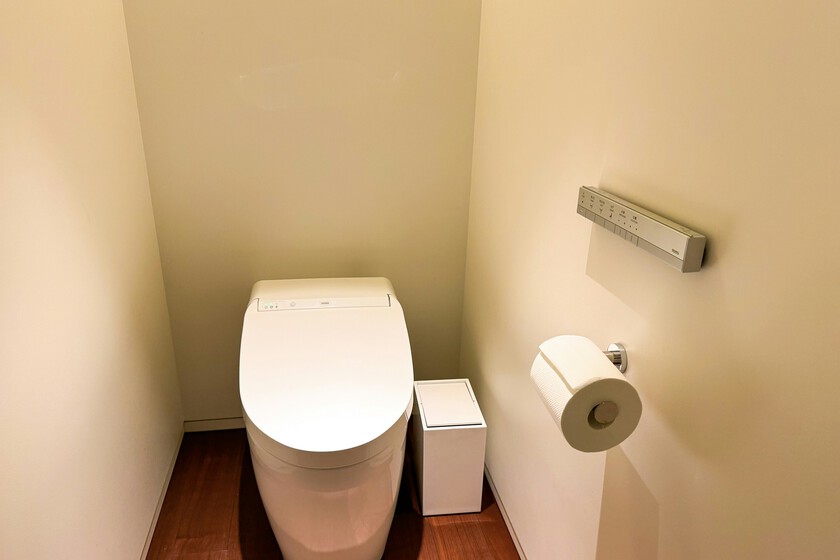
The supplied report from Xataka examines why Japanese smart toilets have not become mainstream outside Japan. It discusses integrated bidets, heated seats, drying systems, proximity sensors, water-saving flushes, health-related sensors, pricing and differences in bathroom infrastructure.
That subject does not currently fit ReviewArticle’s editorial focus. The report mentions that some newer toilets may include voice assistants and sensors, but those features are peripheral to the story. It does not identify a specific AI model, software platform, developer tool, automation system, cloud service, benchmark, agent or AI business development.
What the source actually covers
The article focuses on consumer hardware and adoption barriers. Its main explanations include incompatible electrical systems, the lack of power outlets near toilets in some countries, installation differences, high prices and resistance to changing established bathroom habits.
It also reports that Toto had sold more than 70 million Washlets worldwide by November 2025, with more than 30% of sales outside Japan. Those figures are presented in the source article, but they do not by themselves create an AI-related news angle.
| Reported element | Relevance to ReviewArticle | Source status |
|---|---|---|
| Washlet bidet and drying functions | Consumer bathroom hardware | Covered by Xataka |
| Proximity sensors and automated lids | Basic device automation | Mentioned, but not central |
| Health-related toilet sensors | Connected-device feature | Claims attributed to manufacturers |
| Voice assistants | Possible smart-home integration | Briefly mentioned without product or AI details |
| Adoption and pricing barriers | Consumer-market analysis | Main focus of the report |
Why the story should not be reframed as AI news
Calling these products “AI toilets” would go beyond the available evidence. Sensors, automatic lids, programmable water jets and voice controls are not sufficient to establish the use of artificial intelligence. The source does not describe what models are used, what tasks they perform, whether data is processed locally or in the cloud, or whether any manufacturer has announced an AI product strategy.
A separate article could become relevant to ReviewArticle if it documented a specific AI-enabled bathroom product, a machine-learning health-monitoring system, a voice-agent integration, or a developer platform for connected sanitary devices. None of those developments is established in the supplied material.
What remains unclear
The report does not provide technical documentation for the health-monitoring functions it mentions. It also does not explain whether voice-controlled features rely on speech recognition, a general-purpose assistant, an on-device model or a cloud service. Those distinctions would be necessary before treating the subject as AI product news.
Source: https://www.xataka.com/internet-of-things/misterioso-motivo-que-avanzadisimos-retretes-japoneses-no-han-triunfado-resto-mundo
Source
Xataka IA Publicacion original: 2026-11-07T20:31:07+00:00
Related articles

Anthropic reportedly splits Claude Fable and Mythos access by risk level
Xataka reports that Anthropic has introduced two Claude 5.2 variants with different safeguards and access rules. The claims, pricing and benchmark figures…
Read article
AI Companions Become Daily Tools for Conversation and Emotional Support
A documentary follows people who use AI companions in daily routines, showing how chatbot interactions can feel meaningful even when users understand…
Read article
ArXiv Authors Challenge Core Results in Optimally-Transported GMM Paper
A new arXiv comment identifies counterexamples affecting consistency, asymptotic normality and testing claims in a recent econometrics method. The work may interest…
Read article
Why a 1998 Nintendo game still matters for AI world-building and spatial design
Le Monde Pixels revisits how The Legend of Zelda: Ocarina of Time changed 3D game design in the late 1990s. The explainer…
Read articleWiki relacionada

AI Model API Pricing and Context Window Comparison: Current Rates and Limits
Compare the latest API pricing, context windows, and capabilities of leading AI model providers including OpenAI, Anthropic, Google, and Mistral. Practical guidance…
Read article
AI Agent Evaluation Frameworks: How to Benchmark Agentic Systems
A practical guide to evaluating AI agents — from task completion metrics to safety, cost, and robustness. Covers major frameworks, primary sources,…
Read article
LLM Benchmarks Decoded: What MMLU, HumanEval, and GSM8K Actually Measure for Developers
A developer-focused breakdown of the most-cited LLM benchmarks — MMLU, HumanEval, GSM8K, MATH, Chatbot Arena — including what they test, their hidden…
Read article
What Is RAG? A Practical Guide to Retrieval-Augmented Generation in 2025
Retrieval-Augmented Generation (RAG) grounds LLM outputs in external data, reducing hallucinations and enabling enterprise use cases. This guide covers how RAG works,…
Read article