
Landmaxxing: The Billionaire Obsession with Buying Up Entire Neighborhoods
The ultra-wealthy are no longer content with owning the biggest mansion on the block. A new trend called "landmaxxing" – inspired by internet optimization culture – has billionaires buying multiple adjacent properties to create private compounds, reshaping luxury real estate from Miami to Palo Alto.
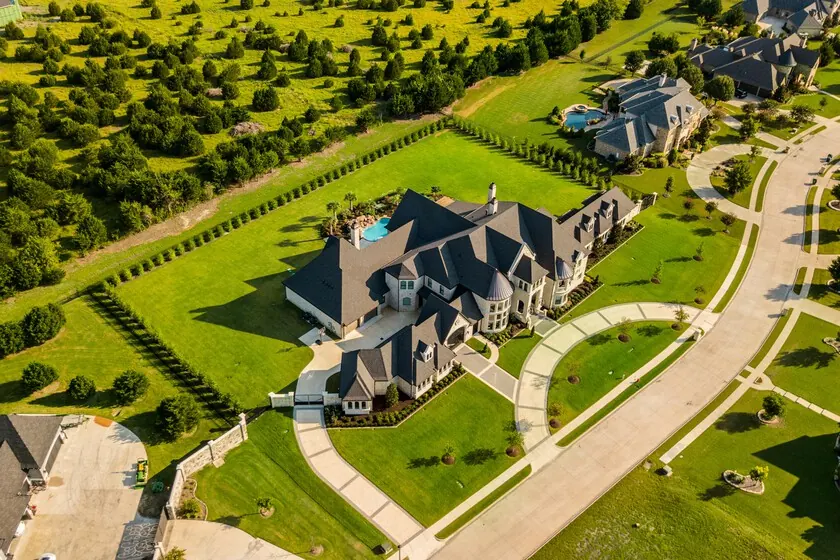
The “maxxing” suffix, popularized by internet subcultures seeking to optimize everything from physical appearance (lookmaxxing) to social status, has found a new application in the real estate world. Landmaxxing, a term coined by real estate consultancy Coldwell Banker in its mid-2026 report, describes the growing practice of ultra-wealthy individuals buying not just a single mansion, but all the surrounding properties to create a private, fortified compound.
According to the Wall Street Journal, which first reported the trend, this goes beyond the usual desire for a large home. It is a systematic acquisition of entire blocks or neighborhoods to achieve maximum privacy and control over the landscape. While the concept may seem like an extreme expression of wealth, it is rooted in the same optimization mindset that drives tech entrepreneurs to refine algorithms and code.
What is landmaxxing?
The term draws a direct parallel to “lookmaxxing,” an online trend focused on optimizing physical appearance through diet, exercise, and sometimes cosmetic procedures. Landmaxxing applies the same principle to physical space: the goal is to optimize the land around one’s property, eliminating neighbors and creating a buffer zone. Coldwell Banker’s report frames it as a real estate strategy, but the underlying psychology is pure internet-era optimization culture.
The data behind the trend
Coldwell Banker’s data reveals a sharp increase in demand for large land parcels. Searches for buildable land in the United States rose 97% year-over-year, while interest in exclusive properties such as private islands and large estates doubled in the first five months of 2026. The report notes that a single large compound is now more coveted than a 40,000-square-foot mansion.
“This is more coveted than a 3,700-square-meter house. For some, it represents privacy and security. For others, it’s a hedge against inflation,” Danny Hertzberg, a Coldwell Banker agent in Miami, told the Wall Street Journal.
The price of neighborless privacy
The expansionist strategy comes with a significant cost. When a neighboring homeowner refuses to sell, the price tag can escalate sharply. Agents in high-demand areas like Florida describe a “neighbor premium” that can push the purchase price up to 20% above market value. That premium is the price of removing neighbors entirely.
Real estate agents interviewed by Robb Report emphasize that your home “is not just the walls; it’s the entire neighborhood experience.” Some buyers purchase adjacent lots with no intention of building, simply to control who lives nearby. Others cite wildfire risk as a motivation, using the extra land as a firebreak.
Case studies: Bezos, Zuckerberg, and Ellison
The trend is most visible among tech billionaires. Jeff Bezos has been assembling a compound on Indian Creek Island in Miami, often called “Billionaire Bunker.” He paid $68 million for a waterfront home, then $79 million for the adjacent property, and later $90 million for a third, totaling over $230 million. His plan is to demolish the existing houses and build a single mega-mansion.
Mark Zuckerberg started in 2011 with a five-bedroom house in Palo Alto’s Crescent Park. Over 14 years, he has acquired at least 11 properties in the same neighborhood for roughly $110 million, merging lots to expand his estate. Underground, he has built massive basements that neighbors call “the billionaire batcave.” Eight years of construction, cameras everywhere, and private security patrolling the street have not always been popular. According to Fortune, when the noise becomes too much, Zuckerberg sends noise-canceling headphones, champagne baskets, and donuts to appease residents.
Ken Griffin, founder of Citadel, has been buying land in Palm Beach since 2012, accumulating over 10 hectares and spending more than $450 million on land alone. When complete, his property is expected to be the most expensive private home ever built.
Nearby, Larry Ellison and David MacNeil (co-founder of an automotive accessories firm) reportedly split a parcel that separated their mansions. They paid $67 million to the owner of the middle lot, each expanding their own compound. “It’s always good to have a little extra space for my three Golden Retrievers to run,” MacNeil said in a text to Realtor.com.
What remains unclear
While the data from Coldwell Banker is clear, the long-term impact on neighborhoods and local housing markets is not yet documented. The practice of landmaxxing could further inflate prices in already expensive areas, and it remains to be seen whether local governments will impose restrictions on such aggregated purchases. Additionally, the term “landmaxxing” is still new, and its adoption outside of luxury real estate circles is uncertain.
Source: Original reporting by Xataka (https://www.xataka.com/empresas-y-economia/millonarios-han-descubierto-landmaxxing-no-basta-comprar-mansion-tambien-necesitan-sus-vecinos) with additional details from the Wall Street Journal, Coldwell Banker, and Robb Report.
Datos clave
| Punto | Detalle |
|---|---|
| Fuente | Xataka IA |
| Fecha | 2026-07-24T15:30:39+00:00 |
| Tema | Los millonarios han descubierto el "landmaxxing": no basta con comprar una mansión, también necesitan las de sus vecinos |
Source
Xataka IA Publicacion original: 2026-07-24T15:30:39+00:00
Related articles
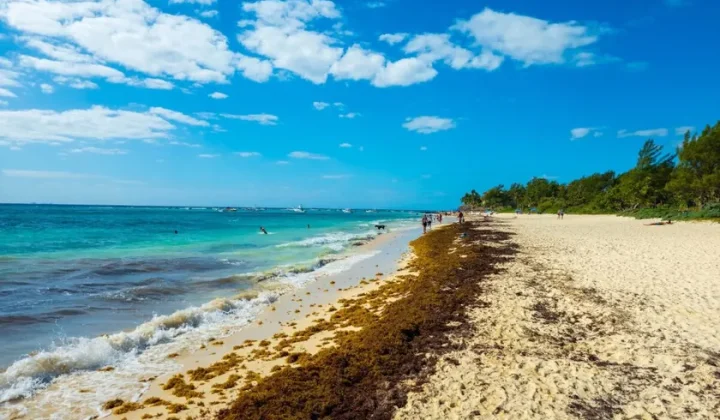
Mexico Reclassifies Sargassum as a Resource, Spurring AI-Optimized Circular Economy Startups
Mexico has reclassified sargassum from waste to a resource, enabling startups to turn the algae into sandals, cosmetics, and bioplastics. The move…
Read article
AI Error Near Strait of Hormuz Raises Questions About Military Automation Risks
A reported AI mistake that nearly triggered an attack on a Chinese vessel near the Strait of Hormuz has brought new scrutiny…
Read article
Google Rebuilds Experimental AI Agent CC to Manage Family Life, Up to Six Users per Household
Google is rebuilding its experimental AI agent CC to coordinate schedules, tasks and communications for up to six family members in the…
Read article
HierSTT Reports 32% Lower Forecast Error Across Portugal’s Emergency Departments
The HierSTT research model generates linked hospital, regional and national demand forecasts. Its authors report 32% lower average WAPE than the strongest…
Read articleWiki relacionada

AI Model API Pricing and Context Window Comparison: Current Rates and Limits
Compare the latest API pricing, context windows, and capabilities of leading AI model providers including OpenAI, Anthropic, Google, and Mistral. Practical guidance…
Read article
AI Agent Evaluation Frameworks: How to Benchmark Agentic Systems
A practical guide to evaluating AI agents — from task completion metrics to safety, cost, and robustness. Covers major frameworks, primary sources,…
Read article
LLM Benchmarks Decoded: What MMLU, HumanEval, and GSM8K Actually Measure for Developers
A developer-focused breakdown of the most-cited LLM benchmarks — MMLU, HumanEval, GSM8K, MATH, Chatbot Arena — including what they test, their hidden…
Read article
What Is RAG? A Practical Guide to Retrieval-Augmented Generation in 2025
Retrieval-Augmented Generation (RAG) grounds LLM outputs in external data, reducing hallucinations and enabling enterprise use cases. This guide covers how RAG works,…
Read article