Llama 3: Meta’s Latest Open-Source LLM Promises Enhanced Capabilities
Meta has released Llama 3, its newest generation of open-source large language models, featuring significant improvements in reasoning, coding, and multilingual performance. Available in 8B and 70B parameter models, Llama 3 aims to democratize access to advanced AI.


Llama 3: Meta’s Latest Open-Source LLM Promises Enhanced Capabilities
Meta has officially launched Llama 3, the latest iteration of its family of open-source large language models (LLMs). This new generation marks a significant leap forward, boasting substantial improvements in areas critical for AI development and application, including reasoning, coding, and multilingual capabilities. Meta is releasing Llama 3 in two initial sizes: an 8-billion (8B) parameter model and a 70-billion (70B) parameter model, with larger, more advanced models currently in training.
What is Llama 3?
Llama 3 represents Meta’s commitment to advancing open-source AI. The models are designed to be more powerful and versatile than their predecessors, aiming to provide developers and researchers with cutting-edge tools without the proprietary restrictions often found in commercial LLMs. This open approach fosters collaboration and innovation within the AI community.
Why it matters
The release of Llama 3 is significant for several reasons. Firstly, its enhanced reasoning and coding abilities make it a more capable tool for complex tasks, from software development to data analysis. Secondly, the improved multilingual performance, with initial support for languages beyond English, broadens its applicability across global markets. By making these advanced models openly available, Meta democratizes access to powerful AI, potentially accelerating the pace of discovery and application across various industries.
Who it is for
Llama 3 is primarily targeted at developers, researchers, and AI enthusiasts who wish to build AI-powered applications or further explore the capabilities of LLMs. Its open-source nature makes it accessible for experimentation, fine-tuning, and integration into a wide range of projects, from chatbots and content generation tools to sophisticated analytical systems.
How it is used in real workflows
Developers can leverage Llama 3 by integrating it into applications via APIs or by downloading and fine-tuning the models for specific use cases. For example, a company could fine-tune the 8B model to power a customer support chatbot tailored to their product catalog, or a research team could use the 70B model for advanced natural language understanding tasks in a scientific paper analysis tool. The coding improvements mean it can also assist in code generation, debugging, and refactoring.
Capabilities and Limits
Llama 3’s key capabilities include:
* Improved Reasoning: Enhanced ability to understand complex prompts and generate logical responses.
* Advanced Coding: Better performance in generating, explaining, and debugging code across multiple programming languages.
* Multilingual Support: Initial support for multiple languages, with more planned.
* Efficiency: Optimized for performance and efficiency, making it suitable for a range of hardware.
However, like all LLMs, Llama 3 has limitations. It can still generate plausible-sounding but incorrect information (hallucinations), and its knowledge is limited to its training data cutoff. It may also exhibit biases present in the training data. Meta emphasizes that responsible deployment and ongoing safety research are crucial.
Access, Pricing, or Availability Caveats
Llama 3 models are available for download via Meta’s AI website and through leading cloud providers and platforms such as Hugging Face, Microsoft Azure, and Amazon Web Services. As an open-source model, the core weights are free to use under a permissive license, though usage terms and conditions apply. Cloud provider access will incur their standard compute and service fees.
Privacy, Data, Copyright, Security, or Enterprise Caveats
Meta has stated that Llama 3 has undergone extensive safety fine-tuning and ethical reviews. However, users are responsible for ensuring their specific applications comply with privacy regulations and ethical guidelines. The licensing terms should be reviewed carefully, especially for commercial use, to understand any restrictions or obligations regarding data usage and copyright. Enterprise-grade features and extensive security controls are expected to be part of future, larger model releases.
Alternatives or Close Comparisons
Key alternatives to Llama 3 include other prominent open-source LLMs such as Mistral AI’s models (e.g., Mistral 7B, Mixtral 8x7B), Google’s Gemma, and Stability AI’s StableLM. Proprietary models like OpenAI’s GPT-4 and Anthropic’s Claude 3 also offer advanced capabilities, but typically come with API access fees and different usage policies.
Practical Checklist for Adopting Llama 3
| Task | Consideration | Status/Action |
|---|---|---|
| Model Selection | Choose between 8B and 70B parameters based on task complexity and resources. | [ ] Done / [ ] To Do |
| Environment Setup | Ensure necessary hardware and software (e.g., Python, PyTorch/TensorFlow). | [ ] Done / [ ] To Do |
| Download Model | Obtain model weights from Meta AI or a trusted platform. | [ ] Done / [ ] To Do |
| Fine-tuning | If needed, prepare a dataset and fine-tune the model for specific tasks. | [ ] Done / [ ] To Do |
| Integration | Integrate the model into your application via API or direct deployment. | [ ] Done / [ ] To Do |
| Testing & Safety | Rigorously test for performance, accuracy, and safety before deployment. | [ ] Done / [ ] To Do |
| Compliance Review | Verify licensing terms and ensure adherence to privacy and ethical standards. | [ ] Done / [ ] To Do |
Related ReviewArticle Pages or Internal Link Suggestions
- Review of popular open-source LLMs
- Understanding Large Language Models
- Prompt Engineering Best Practices
Sources and Caveats
Meta AI Official Llama 3 Announcement: https://ai.meta.com/blog/meta-ai-llama-3/
Meta AI Llama 3 Model Card: (Official model cards are typically found on platforms like Hugging Face or Meta’s AI site upon release.)
The information presented here is based on Meta’s official announcements and initial release details. Specific performance metrics, availability on all platforms, and advanced features of future model iterations may vary. Users should always refer to the official documentation for the most up-to-date and precise information.
Update Log
- April 24, 2024: Initial draft publication based on Meta’s Llama 3 announcement.
Related articles
IBM CEO Puts a Number on the Open-Weight AI Value Proposition: 90% of the Performance at 10% of the Token Cost
IBM CEO Arvind Krishna told analysts that open-weight models now deliver about 90% of frontier-model effectiveness while costing between 10% and 25%…
Read article
OCU Finds Spanish Homeowner Communities Overpaying Up to €1,500 on Electricity and €3,515 on Gas—Can AI Tools Optimize Shared Energy Bills?
A new OCU analysis of Spanish homeowner community bills reveals widespread overpayment due to non-competitive tariffs and excess contracted power. Could AI-driven…
Read article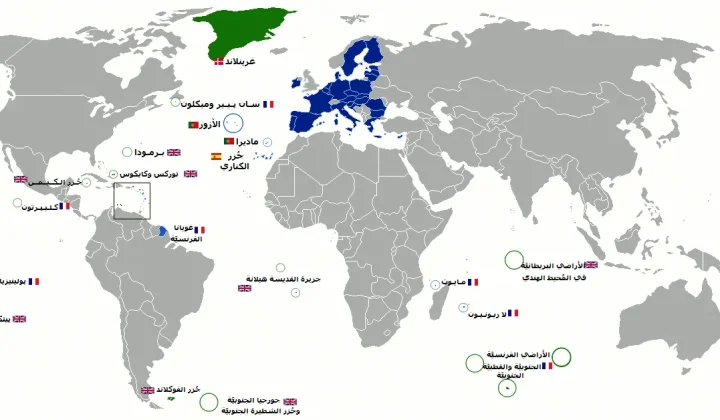
Mayotte fiber dispute does not meet ReviewArticle’s AI news brief
Le Monde reports that France’s competition authority has ordered Orange to suspend part of its fiber-optic rollout in Mayotte. The dispute is…
Read article
DiffEEG Model Uses Diffusion Pre-Training to Improve Seizure Detection from Minimal Labeled Data
Researchers have introduced DiffEEG, a 9.6-million-parameter foundation model that combines denoising diffusion pre-training with reinforcement learning fine-tuning to detect seizure events from…
Read articleWiki relacionada

AI Model API Pricing and Context Window Comparison: Current Rates and Limits
Compare the latest API pricing, context windows, and capabilities of leading AI model providers including OpenAI, Anthropic, Google, and Mistral. Practical guidance…
Read article
AI Agent Evaluation Frameworks: How to Benchmark Agentic Systems
A practical guide to evaluating AI agents — from task completion metrics to safety, cost, and robustness. Covers major frameworks, primary sources,…
Read article
LLM Benchmarks Decoded: What MMLU, HumanEval, and GSM8K Actually Measure for Developers
A developer-focused breakdown of the most-cited LLM benchmarks — MMLU, HumanEval, GSM8K, MATH, Chatbot Arena — including what they test, their hidden…
Read article
What Is RAG? A Practical Guide to Retrieval-Augmented Generation in 2025
Retrieval-Augmented Generation (RAG) grounds LLM outputs in external data, reducing hallucinations and enabling enterprise use cases. This guide covers how RAG works,…
Read article