
Llama 3 Released: Meta’s New Open-Source LLM Pushes Performance Boundaries
Meta has launched Llama 3, its latest generation of open-source large language models, featuring significant performance improvements and new capabilities. This release includes models trained on a massive dataset, aiming to set new benchmarks for open-source AI.


Llama 3 Released: Meta’s New Open-Source LLM Pushes Performance Boundaries
Meta AI has officially unveiled Llama 3, the newest iteration of its family of open-source large language models (LLMs). This release marks a significant advancement in open-source AI, featuring models that demonstrate substantial improvements in reasoning, coding, and instruction following capabilities. Llama 3 aims to provide developers and researchers with state-of-the-art tools for building and deploying AI applications.
What is Llama 3?
Llama 3 represents Meta’s commitment to advancing open AI development. The initial release includes two pre-trained models: Llama 3 8B and Llama 3 70B. These models are designed to be highly efficient and performant, trained on a massive dataset exceeding 15 trillion tokens – a dataset approximately seven times larger than that used for Llama 2. This extensive training data, curated for quality and diversity, allows Llama 3 to exhibit enhanced understanding and generation capabilities across a wide range of tasks.
Why it Matters
The release of powerful open-source LLMs like Llama 3 democratizes access to advanced AI technology. By making these models openly available, Meta empowers a broader community of developers, startups, and researchers to innovate without the prohibitive costs associated with proprietary models. This fosters a more competitive and collaborative AI ecosystem, accelerating the pace of discovery and application development. The performance gains in Llama 3 are particularly noteworthy, with the 70B model reportedly outperforming several leading proprietary models on various industry benchmarks.
Who it is for
Llama 3 is primarily targeted at developers, AI researchers, and businesses looking to integrate cutting-edge AI capabilities into their products and services. Its open-source nature makes it an attractive option for those who require flexibility, customization, and control over their AI deployments. This includes individuals working on chatbots, content generation tools, code assistants, and complex problem-solving applications.
How it is used in real workflows
Developers can leverage Llama 3 through various means. For rapid prototyping and experimentation, Meta offers optimized versions through cloud platforms like AWS, Google Cloud, and Microsoft Azure, as well as direct access via Hugging Face. For those requiring more control, the models can be downloaded and run locally or on private infrastructure. The models’ improved coding capabilities also make them suitable for assisting in software development, code completion, and debugging tasks.
Capabilities and Limits
Llama 3’s capabilities include enhanced natural language understanding, generation of human-like text, translation, summarization, and sophisticated reasoning. Its coding abilities have also seen significant improvements, with better performance in generating and understanding code across multiple programming languages.
However, like all LLMs, Llama 3 has limitations. While Meta has implemented safety measures and filtering processes, the models can still generate inaccurate, biased, or nonsensical outputs. Users must remain vigilant and implement their own safety checks and human oversight, especially for critical applications. The models are also not sentient and do not possess genuine understanding or consciousness.
Access, Pricing, or Availability Caveats
The Llama 3 models are available for free under a permissive license, allowing for both research and commercial use, with some restrictions for very large-scale commercial deployments. The pre-trained models are accessible via Hugging Face, cloud providers, and direct download. Fine-tuned versions and instruction-tuned models are also being released to cater to specific use cases.
Privacy, Data, Copyright, Security or Enterprise Caveats
Meta has emphasized safety and responsibility in Llama 3’s development. The training data underwent extensive filtering and safety tuning. However, users must be aware of potential data privacy concerns when deploying LLMs, particularly if handling sensitive information. The copyright status of AI-generated content is an evolving legal area, and users should consult legal counsel for specific guidance. Enterprise-grade security features and controls may require further implementation by the user on top of the base models.
Alternatives or Close Comparisons
Llama 3 competes with other leading LLMs, both open-source and proprietary. Competitors include OpenAI’s GPT series (GPT-3.5, GPT-4), Google’s Gemini, Anthropic’s Claude, and other open-source models like Mistral AI’s offerings. Llama 3’s key differentiator remains its strong performance combined with an open-source model, offering a compelling alternative for developers prioritizing flexibility and cost-effectiveness.
Practical Checklist for Adopting Llama 3
- Identify Use Case: Clearly define the problem you want to solve with Llama 3.
- Choose Model Size: Select between 8B and 70B (or future larger models) based on performance needs and computational resources.
- Deployment Strategy: Decide whether to use cloud APIs, hosted services, or self-hosted deployments.
- Integration Plan: Develop an API or SDK integration plan for your application.
- Testing and Evaluation: Rigorously test the model’s performance, safety, and bias for your specific use case.
- Fine-tuning (Optional): Consider fine-tuning the model on your own data for specialized tasks.
- Safety Implementation: Integrate robust safety filters and human oversight mechanisms.
- Monitor and Iterate: Continuously monitor performance and update as new versions or techniques become available.
Sources and Caveats
The information presented in this draft is based on Meta AI’s official announcements and public information regarding Llama 3. Specific performance metrics and capabilities are subject to ongoing evaluation and may vary in real-world applications. Users are encouraged to consult the official Llama 3 documentation and research papers for the most detailed and up-to-date information. The performance claims are based on Meta’s internal benchmarks and comparisons; independent verification is ongoing.
Update Log
- April 2024: Initial release of Llama 3 (8B and 70B models). Announcement of future larger models and multimodal capabilities.
Related articles
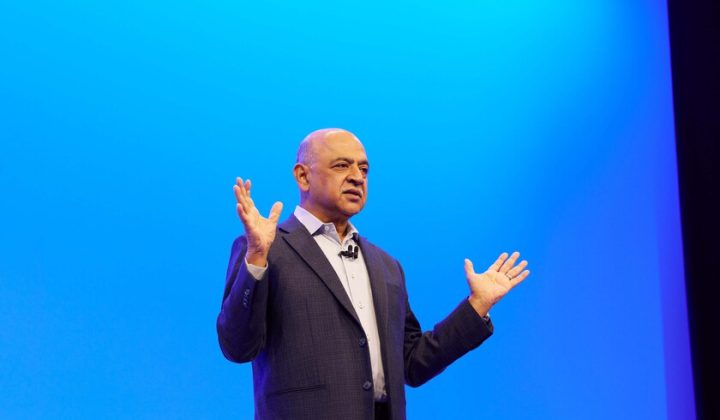
IBM CEO Puts a Number on the Open-Weight AI Value Proposition: 90% of the Performance at 10% of the Token Cost
IBM CEO Arvind Krishna told analysts that open-weight models now deliver about 90% of frontier-model effectiveness while costing between 10% and 25%…
Read article
OCU Finds Spanish Homeowner Communities Overpaying Up to €1,500 on Electricity and €3,515 on Gas—Can AI Tools Optimize Shared Energy Bills?
A new OCU analysis of Spanish homeowner community bills reveals widespread overpayment due to non-competitive tariffs and excess contracted power. Could AI-driven…
Read article
Mayotte fiber dispute does not meet ReviewArticle’s AI news brief
Le Monde reports that France’s competition authority has ordered Orange to suspend part of its fiber-optic rollout in Mayotte. The dispute is…
Read article
DiffEEG Model Uses Diffusion Pre-Training to Improve Seizure Detection from Minimal Labeled Data
Researchers have introduced DiffEEG, a 9.6-million-parameter foundation model that combines denoising diffusion pre-training with reinforcement learning fine-tuning to detect seizure events from…
Read articleWiki relacionada

AI Model API Pricing and Context Window Comparison: Current Rates and Limits
Compare the latest API pricing, context windows, and capabilities of leading AI model providers including OpenAI, Anthropic, Google, and Mistral. Practical guidance…
Read article
AI Agent Evaluation Frameworks: How to Benchmark Agentic Systems
A practical guide to evaluating AI agents — from task completion metrics to safety, cost, and robustness. Covers major frameworks, primary sources,…
Read article
LLM Benchmarks Decoded: What MMLU, HumanEval, and GSM8K Actually Measure for Developers
A developer-focused breakdown of the most-cited LLM benchmarks — MMLU, HumanEval, GSM8K, MATH, Chatbot Arena — including what they test, their hidden…
Read article
What Is RAG? A Practical Guide to Retrieval-Augmented Generation in 2025
Retrieval-Augmented Generation (RAG) grounds LLM outputs in external data, reducing hallucinations and enabling enterprise use cases. This guide covers how RAG works,…
Read article