
Neanderthals Practiced Seasonal Foraging 115,000 Years Ago, Challenging Cognitive Superiority Narratives
New research from Spain reveals Neanderthals in Murcia engaged in planned, seasonal seafood foraging 115,000 years ago, challenging long-held beliefs about their cognitive abilities and dietary planning.
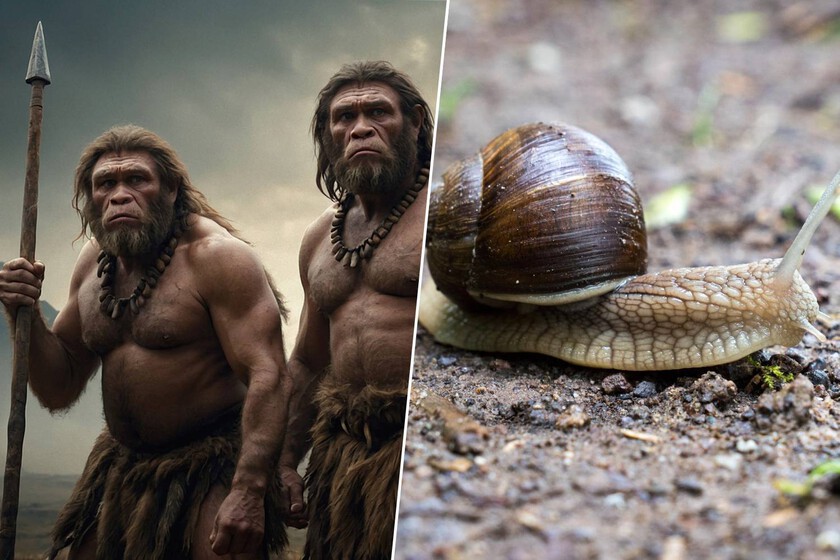
New archaeological findings from Spain are significantly recalibrating our understanding of Neanderthal intelligence and their capacity for complex planning. Research conducted on remains from the Cueva de los Aviones in Cartagena, Murcia, indicates that Neanderthals inhabiting the region 115,000 years ago – long before *Homo sapiens* arrived on the Iberian Peninsula – engaged in sophisticated, seasonally planned seafood foraging. This discovery directly challenges the long-standing narrative that cognitive advantages, particularly long-term planning and understanding annual cycles, were exclusive to *Homo sapiens*.
The study, which involved researchers from the University of Burgos and the International Institute for Prehistoric Research of Cantabria, employed advanced isotopic analysis of mollusk shells to reconstruct ancient dietary patterns. The findings suggest a level of foresight and environmental understanding previously attributed solely to modern humans, compelling a re-evaluation of evolutionary timelines and cognitive development. For developers and AI researchers observing the evolution of intelligence, this research provides a deep historical context for understanding adaptive strategies and environmental interaction.
Isotopic Analysis Reveals Prehistoric Calendar
The methodology behind this groundbreaking discovery involved a detailed analysis of oxygen isotopes within the shells of two specific mollusk species: *Phorcus turbinatus* (common periwinkle) and *Patella ferruginea* (limpet). As these mollusks grow, the carbonate in their shells incorporates oxygen isotopes. The ratio of these isotopes varies directly with the temperature of the seawater at the time the shell material was formed.
By meticulously analyzing these isotopic layers, scientists effectively created a “prehistoric thermometer.” This allowed them to pinpoint the exact time of year each mollusk was collected and consumed by Neanderthals, achieving an unprecedented temporal resolution for such ancient dietary evidence. This precision offers a tangible example of how advanced analytical techniques can unlock hidden details about past behaviors, similar to how data scientists use complex algorithms to identify patterns in vast datasets.
Seasonal Preference and Strategic Advantages
The analysis yielded striking results: approximately 78% of mollusk consumption occurred during the colder months, specifically between November and April. Conversely, consumption plummeted to a mere 5% during the summer. This pronounced seasonal preference raises a critical question: why would Neanderthals choose to venture to the coast in winter for shellfish?
The researchers propose several strategic advantages for this winter foraging. During autumn and winter, these particular mollusks are in their reproductive cycle, resulting in more meat, better texture, and superior taste. This indicates a sophisticated understanding of food quality and availability, mirroring modern culinary concepts of “seasonal eating.”
Furthermore, avoiding summer foraging offered crucial health and safety benefits. The intense heat of summer would have accelerated food decomposition, posing significant risks. More importantly, Neanderthals likely avoided the “red tides” prevalent in warmer months. Red tides are caused by toxic microalgae blooms that render shellfish poisonous, a danger that would have been well-understood through empirical observation over generations. This avoidance demonstrates not just opportunistic feeding but a deep, practically applied ecological knowledge.
Challenging the “Inferiority Complex”
The most significant implication of this study is not merely that Neanderthals ate seafood, but the irrefutable evidence of planned, seasonal harvesting. For decades, the dominant evolutionary narrative portrayed *Homo sapiens* as superior due to their perceived intellectual capacity for long-term planning and understanding annual cycles. Neanderthals were often characterized as opportunistic hunters living day-to-day, lacking such foresight.
This research fundamentally re-writes that history. It demonstrates that Neanderthals possessed cognitive abilities that enabled them to understand environmental rhythms, predict resource availability, and plan their dietary strategies accordingly. This challenges the notion of a cognitive gap between Neanderthals and *Homo sapiens*, suggesting that our ancient relatives were far more advanced and adaptable than previously assumed.
For those working with AI, particularly in areas of autonomous agents and planning algorithms, this historical perspective is compelling. It underscores that complex adaptive behaviors, including resource management and risk assessment, are not exclusive to modern human cognition but have deeper evolutionary roots. Understanding these ancestral planning strategies can inform the development of more robust and context-aware AI systems. The study offers a powerful reminder that “intelligence” manifests in diverse forms and that our understanding of cognitive evolution is continuously refined by new data and analytical methods.
Key facts:
- Location: Cueva de los Aviones, Cartagena, Murcia, Spain
- Timeframe: 115,000 years ago
- Key Finding: Neanderthals practiced planned, seasonal seafood foraging
- Analytical Method: Oxygen isotope analysis of mollusk shells
The practical impact for AI development lies in rethinking models of intelligence and adaptive behavior. If seemingly “simpler” hominids exhibited such complex planning, it suggests that foundational cognitive mechanisms for environmental understanding and resource management are deeply ingrained. This could influence research into more generalized AI, reinforcement learning agents that learn from environmental cues, and systems designed for long-term resource optimization in dynamic environments. The study encourages a broader view of intelligence beyond purely abstract reasoning, emphasizing practical, ecologically relevant problem-solving.
Source: Xataka IA – https://www.xataka.com/ecologia-y-naturaleza/hace-115-000-anos-neandertales-estaban-obsesionados-cocina-temporada-pruebas-estan-cueva-murcia
Source
Xataka IA Publicacion original: 2026-05-20T13:00:14+00:00
Related articles

Mayotte fiber dispute does not meet ReviewArticle’s AI news brief
Le Monde reports that France’s competition authority has ordered Orange to suspend part of its fiber-optic rollout in Mayotte. The dispute is…
Read article
DiffEEG Model Uses Diffusion Pre-Training to Improve Seizure Detection from Minimal Labeled Data
Researchers have introduced DiffEEG, a 9.6-million-parameter foundation model that combines denoising diffusion pre-training with reinforcement learning fine-tuning to detect seizure events from…
Read article
The Technology Trap: Why AI Cannot Escape the Unchanging Fundamentals of War
A new Foreign Affairs essay by former Pentagon official Mara Karlin warns that over-reliance on AI and advanced tech in military planning…
Read article
Supabase Releases .NET SDK for C# Developers Across ASP.NET, Unity, and Mobile
Supabase has launched a .NET SDK for C# developers, extending its backend-as-a-service platform to ASP.NET Core, console apps, desktop, Unity, and mobile…
Read articleWiki relacionada

AI Model API Pricing and Context Window Comparison: Current Rates and Limits
Compare the latest API pricing, context windows, and capabilities of leading AI model providers including OpenAI, Anthropic, Google, and Mistral. Practical guidance…
Read article
AI Agent Evaluation Frameworks: How to Benchmark Agentic Systems
A practical guide to evaluating AI agents — from task completion metrics to safety, cost, and robustness. Covers major frameworks, primary sources,…
Read article
LLM Benchmarks Decoded: What MMLU, HumanEval, and GSM8K Actually Measure for Developers
A developer-focused breakdown of the most-cited LLM benchmarks — MMLU, HumanEval, GSM8K, MATH, Chatbot Arena — including what they test, their hidden…
Read article
What Is RAG? A Practical Guide to Retrieval-Augmented Generation in 2025
Retrieval-Augmented Generation (RAG) grounds LLM outputs in external data, reducing hallucinations and enabling enterprise use cases. This guide covers how RAG works,…
Read article