
Nvidia Unleashes DLSS 4.5 with Enhanced Ray Reconstruction for Raytracing Games
Nvidia's latest DLSS 4.5 update, arriving in August, promises significant improvements to raytracing visuals through an advanced AI-powered Ray Reconstruction model, aiming to deliver clearer and more stable images in demanding titles.
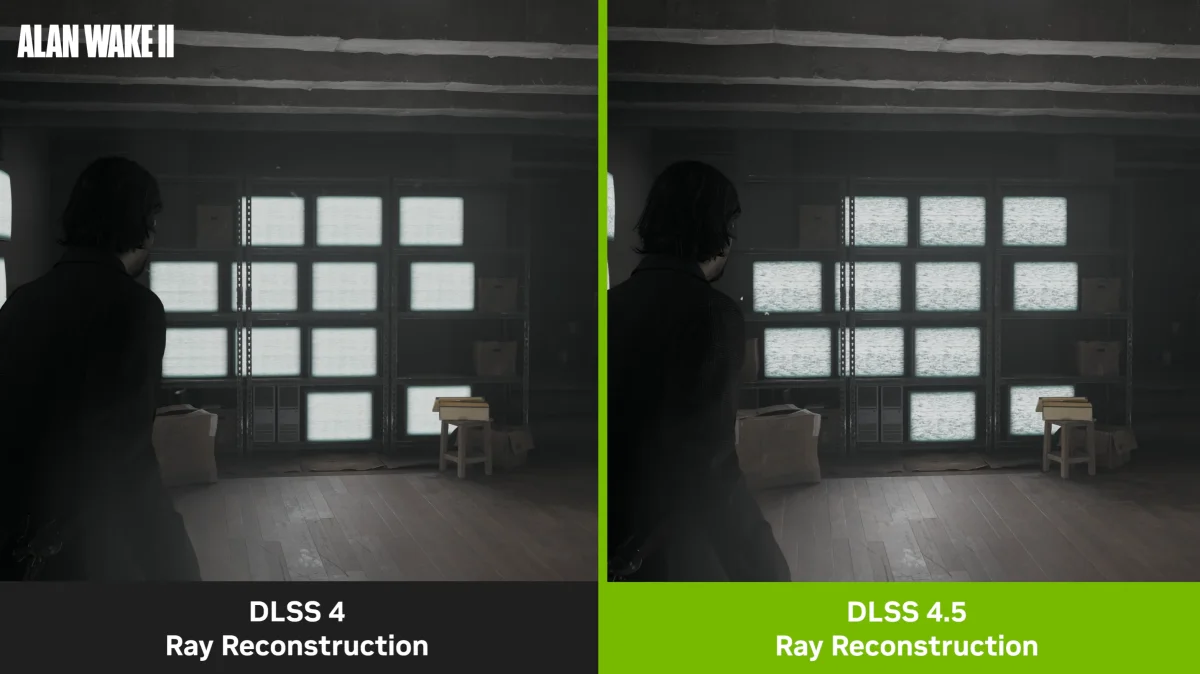
Nvidia has announced a significant upgrade to its Deep Learning Super Sampling (DLSS) technology with DLSS 4.5, set to roll out in August for all GeForce RTX graphics cards. The core of this update is an enhanced Ray Reconstruction model, an AI-powered denoiser specifically designed to improve the visual quality of games featuring intensive raytracing and path tracing. This advancement aims to address common issues like noise and artifacting that can plague these demanding graphical techniques.
The Importance of Ray Reconstruction
Raytracing and path tracing allow graphics cards to simulate the physical behavior of light, creating more realistic lighting, shadows, and reflections in video games. However, rendering these effects is computationally expensive, often requiring the graphics card to sample light paths incompletely, leading to a noisy or grainy image. Denoisers are used to smooth out this noise. Traditional denoisers, however, can sometimes soften details or introduce visual errors.
Nvidia’s Ray Reconstruction distinguishes itself by employing an AI model. This model analyzes spatial and temporal image data from the game engine to more accurately reconstruct missing pixels and denoise the image. The result, according to Nvidia, is a sharper, more stable image with more precise lighting compared to conventional methods.
DLSS 4.5: A Dual Approach
Nvidia’s earlier announcement of DLSS 4.5 introduced an improved upscaling model utilizing a new transformer approach, which enhanced overall image quality in games even without raytracing. However, this advancement initially left the Ray Reconstruction component separate. This created a situation where players engaged with raytracing-heavy games had to choose between the benefits of the new DLSS 4.5 upscaling or the existing Ray Reconstruction. Given that Ray Reconstruction is often essential for achieving acceptable visual quality in highly raytraced titles, the advantages of DLSS 4.5 were not fully realized in these technically demanding games.
The demand from players for a more integrated and improved Ray Reconstruction experience was significant, and Nvidia has responded with this new model.
Enhanced Performance and Visuals
The new Ray Reconstruction model for DLSS 4.5 is reported by Nvidia to offer approximately 35% more computational capacity while maintaining similar performance levels to the previous version. It is designed to achieve a deeper spatial awareness of game scenes and better interpret engine data related to motion and lighting.
Early demonstrations highlight specific improvements. In games like “Indiana Jones and the Great Circle,” the new model reportedly reduces artifacts like shimmering in snow and particle effects. For “Pragmata,” lighting effects, particularly from lasers, are expected to react faster and produce fewer artifacts when the laser deactivates. In “Alan Wake 2,” fine patterns, such as those seen on in-game televisions, are expected to be rendered more stably and clearly. Generally, games utilizing the new Ray Reconstruction model should exhibit less noise.
Wider Game Support
Upon its release in August, DLSS 4.5’s enhanced Ray Reconstruction will be available in 27 games. Notable titles include “Avatar: Frontiers of Pandora,” “Hogwarts Legacy,” “Half-Life 2 RTX,” and “DOOM: The Dark Ages,” alongside previously mentioned games like “Cyberpunk 2077,” “Star Wars Outlaws,” and “Alan Wake 2.”
Users will be able to manually adjust the new Ray Reconstruction settings, alongside DLSS upscaling and Frame Generation components, through the Nvidia App, starting in August. This provides players with granular control over their graphics settings to optimize visual quality and performance.
Datos clave
| Feature | Detail |
|—|—|
| Technology | Nvidia DLSS 4.5 |
| Key Component | Enhanced Ray Reconstruction |
| Release Date | August |
| Target Hardware | GeForce RTX graphics cards |
| Primary Benefit | Improved visual quality in raytracing/path tracing games |
This development is significant for ReviewArticle readers, particularly those interested in AI’s impact on gaming and graphics technology. The advancement in Nvidia’s DLSS technology directly translates to a more immersive and visually impressive experience for players utilizing RTX hardware, showcasing how AI is actively enhancing realism and detail in interactive entertainment.
Fuente: https://www.heise.de/news/DLSS-4-5-Nvidia-verbessert-Ray-Reconstruction-fuer-Raytracing-Spiele-11313102.html?wt_mc=rss.red.ho.themen.k%C3%BCnstliche+intelligenz.beitrag.beitrag
Datos clave
| Punto | Detalle |
|---|---|
| Fuente | Heise KI |
| Fecha | 2026-06-01T07:43:00+00:00 |
| Tema | DLSS 4.5: Nvidia verbessert Ray Reconstruction für Raytracing-Spiele |
Source
Heise KI Publicacion original: 2026-06-01T07:43:00+00:00
Related articles
IBM CEO Puts a Number on the Open-Weight AI Value Proposition: 90% of the Performance at 10% of the Token Cost
IBM CEO Arvind Krishna told analysts that open-weight models now deliver about 90% of frontier-model effectiveness while costing between 10% and 25%…
Read article
OCU Finds Spanish Homeowner Communities Overpaying Up to €1,500 on Electricity and €3,515 on Gas—Can AI Tools Optimize Shared Energy Bills?
A new OCU analysis of Spanish homeowner community bills reveals widespread overpayment due to non-competitive tariffs and excess contracted power. Could AI-driven…
Read article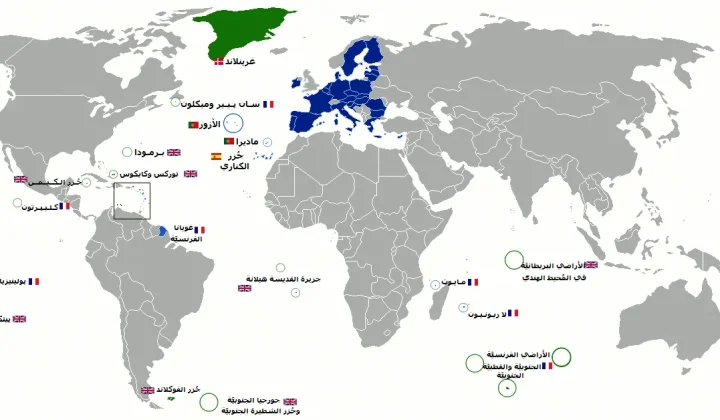
Mayotte fiber dispute does not meet ReviewArticle’s AI news brief
Le Monde reports that France’s competition authority has ordered Orange to suspend part of its fiber-optic rollout in Mayotte. The dispute is…
Read article
DiffEEG Model Uses Diffusion Pre-Training to Improve Seizure Detection from Minimal Labeled Data
Researchers have introduced DiffEEG, a 9.6-million-parameter foundation model that combines denoising diffusion pre-training with reinforcement learning fine-tuning to detect seizure events from…
Read articleWiki relacionada

AI Model API Pricing and Context Window Comparison: Current Rates and Limits
Compare the latest API pricing, context windows, and capabilities of leading AI model providers including OpenAI, Anthropic, Google, and Mistral. Practical guidance…
Read article
AI Agent Evaluation Frameworks: How to Benchmark Agentic Systems
A practical guide to evaluating AI agents — from task completion metrics to safety, cost, and robustness. Covers major frameworks, primary sources,…
Read article
LLM Benchmarks Decoded: What MMLU, HumanEval, and GSM8K Actually Measure for Developers
A developer-focused breakdown of the most-cited LLM benchmarks — MMLU, HumanEval, GSM8K, MATH, Chatbot Arena — including what they test, their hidden…
Read article
What Is RAG? A Practical Guide to Retrieval-Augmented Generation in 2025
Retrieval-Augmented Generation (RAG) grounds LLM outputs in external data, reducing hallucinations and enabling enterprise use cases. This guide covers how RAG works,…
Read article