
Pamplona Deploys AI-Powered Traffic Radars for Enhanced Infraction Detection
Pamplona is introducing four new AI-enabled traffic radars capable of detecting a wide range of driving violations, including seatbelt use, mobile phone operation, and illegal maneuvers, marking a pilot program for automated traffic enforcement in Spain.
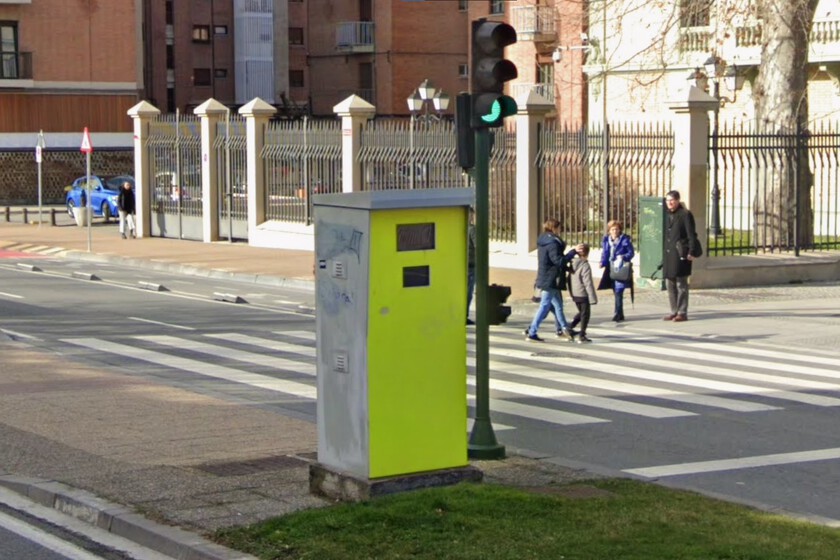
Pamplona, Spain, is set to enhance its traffic surveillance with the upcoming deployment of four artificial intelligence (AI) powered radars. These advanced systems are designed to automatically detect a comprehensive array of driving infractions, moving beyond traditional speed detection to monitor critical safety behaviors. This initiative represents a significant step towards automated traffic enforcement and could serve as a pilot for similar deployments across other Spanish cities.
The new radars, scheduled to become operational in June, will integrate color cameras and license plate recognition technology with AI algorithms. This combination allows for the identification of multiple violations that previously relied on manual observation by traffic officers. The technology aims to improve road safety by ensuring compliance with traffic regulations and reducing accidents.
Why it matters
Key infractions that the AI radars will be able to detect include:
* Use of a mobile phone while driving.
* Drivers not wearing seatbelts.
* Driving in the wrong direction and illegal turns.
* Improper lane changes.
* Running red lights.
* Failure to yield to pedestrians at crosswalks or stopping in yellow-lined zones.
In addition to these behavioral detections, the system will also incorporate speed control, with a range extending from 10 km/h to 320 km/h. The Pamplona City Council stated that the objective is to “monitor compliance with traffic regulations, regulate speed, and prevent accidents in the city.”
Context
The physical design of these new radars marks a departure from older, more conspicuous speed camera cabins. These AI units are mounted at height on poles, medians, or gantries and are designed to withstand extreme temperatures ranging from -30 to 70 degrees Celsius without requiring protective casings. A notable feature is their ability to cover multiple lanes simultaneously and operate bidirectionally, monitoring traffic approaching and receding. This also allows for the configuration of different speed limits for each lane.
The initial planned locations for these radars include Avenida del Ejército, Avenida de Gipuzkoa near the Oblatas bridge, Calle Sadar, and Paseo de Santa Lucía. To maintain an element of unpredictability and encourage compliance, the city plans to rotate these four units among eleven existing cabin locations throughout Pamplona. This rotation aims to ensure drivers cannot be certain whether a particular radar is actively monitoring at any given time.
Each radar unit represents an investment of approximately 20,000 euros (excluding VAT) for the City Council. This cost is considered justified by the devices’ capacity to detect a wide spectrum of violations, potentially leading to a swift return on investment through collected fines. The automation of enforcement for behaviors that previously required human intervention or were more easily avoided is expected to significantly increase the effectiveness of traffic control.
Before the radars can begin issuing citations, they must undergo an official homologation process by the Centro Español de Metrología (Spanish Metrology Center). The City Council anticipates this approval will be secured in time for the radars to commence operations in June.
This deployment in Pamplona is being closely watched as a potential precursor to wider adoption of AI in traffic management across Spain. If successful, the technology could be rolled out to other municipalities, fundamentally changing how traffic laws are enforced and how urban mobility is managed. The integration of AI in public safety infrastructure raises questions about data privacy, the accuracy and fairness of algorithmic enforcement, and the potential for increased surveillance. While the immediate goal is to improve road safety, the long-term implications for citizens’ privacy and the balance between security and civil liberties will be a critical area for ongoing observation.
Key facts
- Feature: Description
- Technology: AI-powered traffic radars with cameras and license plate recognition
- Detected Violations: Seatbelt use, mobile phone use, illegal turns, red light running, etc.
- Speed Range: 10 km/h to 320 km/h
- Cost per Unit: Approximately €20,000 (excluding VAT)
- Deployment Plan: Four units to be rotated among eleven locations, operational from June 2026
The introduction of AI-powered traffic enforcement systems like those in Pamplona signifies a shift towards more automated and data-driven urban management. For AI developers and product operators, this indicates a growing market for AI solutions in public infrastructure, requiring robust, reliable, and ethically considered systems. For city planners and policymakers, it presents an opportunity to enhance safety and efficiency, but also necessitates careful consideration of regulatory frameworks, data privacy, and public acceptance. The practical impact for drivers is a heightened need for vigilance and adherence to all traffic laws, as the scope of automated detection expands significantly. The next steps will involve monitoring the effectiveness of these radars, their impact on accident rates, and the public’s response to this advanced form of traffic surveillance.
Source: Pamplona va a estrenar cuatro nuevos radares con IA: detectan si llevas el cinturón, si estás con el móvil o si haces giros ilegales, Xataka, https://www.xataka.com/movilidad/pamplona-va-a-estrenar-cuatro-nuevos-radares-ia-detectan-llevas-cinturon-estas-movil-haces-giros-ilegales
Source
Xataka IA Publicacion original: 2026-05-25T15:31:33+00:00
Related articles
Mayotte fiber dispute does not meet ReviewArticle’s AI news brief
Le Monde reports that France’s competition authority has ordered Orange to suspend part of its fiber-optic rollout in Mayotte. The dispute is…
Read article
DiffEEG Model Uses Diffusion Pre-Training to Improve Seizure Detection from Minimal Labeled Data
Researchers have introduced DiffEEG, a 9.6-million-parameter foundation model that combines denoising diffusion pre-training with reinforcement learning fine-tuning to detect seizure events from…
Read article
The Technology Trap: Why AI Cannot Escape the Unchanging Fundamentals of War
A new Foreign Affairs essay by former Pentagon official Mara Karlin warns that over-reliance on AI and advanced tech in military planning…
Read article
Supabase Releases .NET SDK for C# Developers Across ASP.NET, Unity, and Mobile
Supabase has launched a .NET SDK for C# developers, extending its backend-as-a-service platform to ASP.NET Core, console apps, desktop, Unity, and mobile…
Read articleWiki relacionada

AI Model API Pricing and Context Window Comparison: Current Rates and Limits
Compare the latest API pricing, context windows, and capabilities of leading AI model providers including OpenAI, Anthropic, Google, and Mistral. Practical guidance…
Read article
AI Agent Evaluation Frameworks: How to Benchmark Agentic Systems
A practical guide to evaluating AI agents — from task completion metrics to safety, cost, and robustness. Covers major frameworks, primary sources,…
Read article
LLM Benchmarks Decoded: What MMLU, HumanEval, and GSM8K Actually Measure for Developers
A developer-focused breakdown of the most-cited LLM benchmarks — MMLU, HumanEval, GSM8K, MATH, Chatbot Arena — including what they test, their hidden…
Read article
What Is RAG? A Practical Guide to Retrieval-Augmented Generation in 2025
Retrieval-Augmented Generation (RAG) grounds LLM outputs in external data, reducing hallucinations and enabling enterprise use cases. This guide covers how RAG works,…
Read article