
SpaceX Starship V3 Launch Scrubbed Amidst Critical Countdown Issues
The highly anticipated 12th flight of SpaceX's Starship, intended to test the new V3 iteration of the spacecraft, was scrubbed due to multiple technical issues during the final countdown sequence. This marks a significant setback for SpaceX's ambitious development timeline.
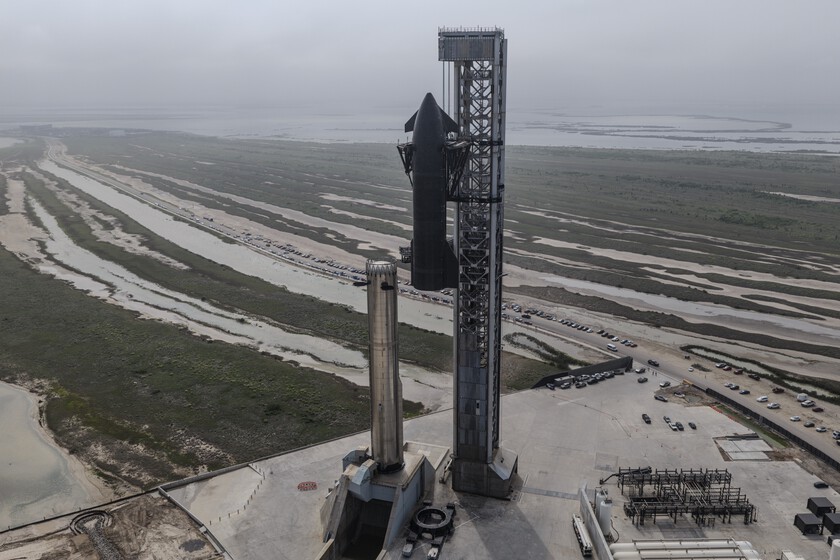
SpaceX’s highly anticipated 12th Starship flight, designed to test the upgraded V3 version of the vehicle, was aborted just moments before ignition due to a series of technical malfunctions during the final countdown. The “scrub,” which occurred before engine start, marks a significant setback for the company’s rapid development cycle and its ambitious plans for future missions, including NASA’s Artemis program.
The launch attempt, scheduled for May 22nd, 2026, saw repeated interruptions to the countdown sequence, ultimately preventing liftoff. Engineers encountered and attempted to resolve multiple issues related to the quick disconnect grids and associated hardware, as well as problems with the water deluge system.
Countdown Halts
The countdown experienced several stops, with the most critical occurring at T-40 seconds, when engineers needed to verify the quick disconnect grids for final retraction. Although this initial hurdle was seemingly cleared, the countdown halted again shortly after at T-35 seconds to address pressure management within the quick disconnect system.
The situation escalated at T-28 seconds. An initial issue detected with the water deluge system’s diverter appeared to be resolved, but the countdown immediately stopped again. Further inspection at T-28 seconds focused on sensors within the arm controlling the quick disconnect system. A final stop at T-28 seconds was triggered by a fault in the hydraulic pin responsible for retracting this arm, which failed to perform the necessary movement. The accumulation of these unresolved technical problems led to the final decision to scrub the launch.
High Stakes for SpaceX
This particular flight was deemed critical for SpaceX. The V3 iteration of Starship, along with the Super Heavy booster, incorporates substantial modifications aimed at improving flight efficiency. Success in this mission is crucial not only for advancing SpaceX’s own long-term objectives but also for maintaining its proposed timeline for supporting NASA’s Artemis missions, specifically as a human landing system. A failure in this flight would represent significant financial and reputational losses for the company. The repeated scrubs underscore the complexity of the Starship program and the rigorous engineering required to achieve reliable launches.
The source article notes that the quick disconnect grids are part of the system that releases the Starship from the launch tower. These grids must retract smoothly and quickly once ignition begins to avoid interference with the departing rocket. Issues with their retraction mechanism, as observed in this scrub, are particularly concerning as they directly impact the safe separation of the vehicle.
The water deluge system is another critical component designed to manage the immense heat and acoustic energy generated by the Super Heavy booster’s engines during liftoff. It floods the launch pad with water to absorb sound and prevent damage to the pad and the rocket itself. Malfunctions in this system can lead to catastrophic damage.
A New Attempt Expected
Despite the scrub, SpaceX indicated plans for another launch attempt on the same day. Roads around the Starbase launch site in Texas were scheduled to be closed from 10:00 AM local time (17:00 UTC) to accommodate a potential rescheduled launch. The success of this subsequent attempt hinges on engineers’ ability to fully diagnose and rectify the technical issues encountered during the V3 test flight’s countdown. The article suggests that if the problems are not adequately resolved, further delays are inevitable.
The article also references previous Starship flights, including the sixth flight where reentry and landing were successfully demonstrated. This highlights the iterative nature of SpaceX’s development process, where each flight contributes valuable data, even if it doesn’t go perfectly. The ambition for Starship extends beyond suborbital test flights, with aspirations for lunar missions as part of Artemis and eventual Mars colonization.
Key facts
- Vehicle: SpaceX Starship V3
- Flight Number: 12
- Event: Launch scrubbed due to technical issues during countdown
- Critical Systems: Quick disconnect grids, water deluge system, hydraulic pin
- Impact: Delays V3 testing, potential impact on Artemis program timeline
- Next Steps: SpaceX aimed for another launch attempt on the same day, pending issue resolution
This latest scrub serves as a stark reminder of the immense engineering challenges involved in developing a fully reusable super heavy-lift launch system. While the rapid iteration and willingness to attempt flights even with known challenges are hallmarks of SpaceX’s approach, the recurring technical glitches in critical systems like the quick disconnects and deluge systems highlight areas requiring meticulous attention to ensure the safety and success of future missions. For developers and teams building with or relying on SpaceX’s future launch capabilities, this delay underscores the importance of flexible planning and contingency measures. The successful integration of Starship into programs like Artemis is contingent on overcoming these foundational engineering hurdles.
Source: El reloj corre para SpaceX y Starship V3 no despega: nuevo scrub en el vuelo más crítico de su historia – Xataka, https://www.xataka.com/espacio/spacex-lleva-anos-preparando-vuelo-12-starship-anoche-volvio-a-quedarse-tierra
Source
Xataka IA Publicacion original: 2026-05-22T14:31:34+00:00
Related articles
Mayotte fiber dispute does not meet ReviewArticle’s AI news brief
Le Monde reports that France’s competition authority has ordered Orange to suspend part of its fiber-optic rollout in Mayotte. The dispute is…
Read article
DiffEEG Model Uses Diffusion Pre-Training to Improve Seizure Detection from Minimal Labeled Data
Researchers have introduced DiffEEG, a 9.6-million-parameter foundation model that combines denoising diffusion pre-training with reinforcement learning fine-tuning to detect seizure events from…
Read article
The Technology Trap: Why AI Cannot Escape the Unchanging Fundamentals of War
A new Foreign Affairs essay by former Pentagon official Mara Karlin warns that over-reliance on AI and advanced tech in military planning…
Read article
Supabase Releases .NET SDK for C# Developers Across ASP.NET, Unity, and Mobile
Supabase has launched a .NET SDK for C# developers, extending its backend-as-a-service platform to ASP.NET Core, console apps, desktop, Unity, and mobile…
Read articleWiki relacionada

AI Model API Pricing and Context Window Comparison: Current Rates and Limits
Compare the latest API pricing, context windows, and capabilities of leading AI model providers including OpenAI, Anthropic, Google, and Mistral. Practical guidance…
Read article
AI Agent Evaluation Frameworks: How to Benchmark Agentic Systems
A practical guide to evaluating AI agents — from task completion metrics to safety, cost, and robustness. Covers major frameworks, primary sources,…
Read article
LLM Benchmarks Decoded: What MMLU, HumanEval, and GSM8K Actually Measure for Developers
A developer-focused breakdown of the most-cited LLM benchmarks — MMLU, HumanEval, GSM8K, MATH, Chatbot Arena — including what they test, their hidden…
Read article
What Is RAG? A Practical Guide to Retrieval-Augmented Generation in 2025
Retrieval-Augmented Generation (RAG) grounds LLM outputs in external data, reducing hallucinations and enabling enterprise use cases. This guide covers how RAG works,…
Read article