
Spanish Town’s Tourism Boom Exposes Infrastructure Strain and Unsustainable Model
Alcalá de la Selva faces a critical challenge as its population swells from 380 to over 6,000 in summer, overwhelming water systems and highlighting a tourism model that benefits visitors more than permanent residents.
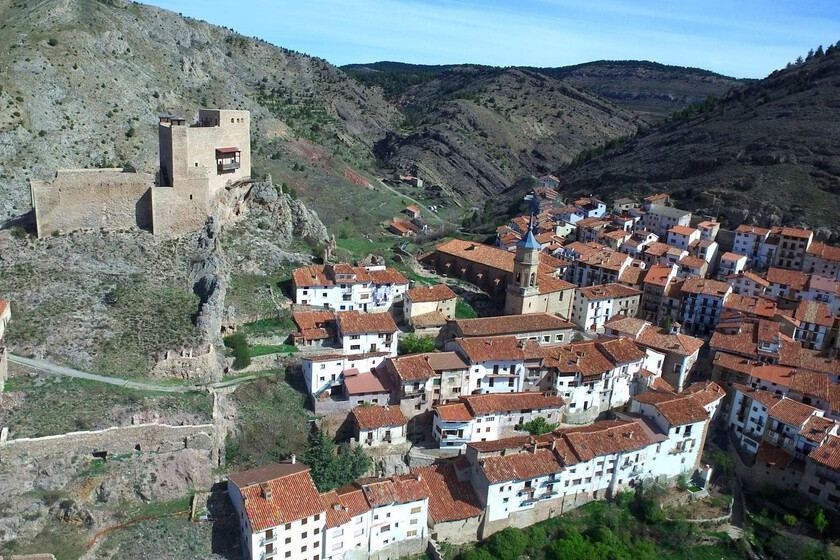
Alcalá de la Selva, a small town in Teruel, Spain, is grappling with an extreme demographic shift during the summer months, transforming from a quiet community of 380 residents to a bustling hub of over 6,000 visitors. This dramatic influx, fueled by a desire for cooler climates and recreational activities, is stretching vital infrastructure, particularly its water supply, and exposing the inherent unsustainability of its current tourism model.
The town, situated at a high altitude of 1404 meters, has become a destination for those seeking refuge from intense summer heat. However, its water network, designed for a permanent population of around 500, is struggling to cope with the demand of more than 6,000 people. This situation is exacerbated by the fact that the increased visitor numbers do not translate into official census changes, meaning the town receives no additional state or regional funding to support the surge in service consumption.
Seasonal Tourism Boom
The summer transformation of Alcalá de la Selva is driven by a combination of factors, including its appeal as a “climate refuge” and the proximity of attractions like the Valdelinares ski resort and the El Castillejo golf course. These facilities, designed for seasonal use, attract a significant number of visitors, particularly from the Valencian Community. The town’s urban planning documents have long acknowledged the seasonal nature of its population, with a 2011 Europan submission noting “hardly any need for primary housing” even when the registered population was higher than it is now.
This reliance on seasonal tourism creates a dichotomy: the town experiences peak demand for services during tourist seasons, while the permanent residents bear the cost of infrastructure maintenance and upgrades year-round. The town’s municipal planning documents, dating back to 2011, recognized the need to accommodate up to 5,000 visitors, yet the current reality far exceeds these projections, highlighting a failure to adapt infrastructure to actual usage patterns.
Economic Discrepancies
The economic model of Alcalá de la Selva reveals a significant disconnect between the generated economic activity and the financial support received. While the local council collects property taxes (IBI) and utility fees from its permanent residents, regional and national funding is calculated based solely on the registered population. This means that the substantial resources consumed by thousands of temporary visitors are not matched by proportional government contributions, placing a disproportionate financial burden on the municipality and its year-round inhabitants.
Adding to the surge, Alcalá de la Selva is also positioned as an official viewing point for the total solar eclipse on August 12, 2026. This event is expected to further inflate visitor numbers, with rural accommodations in the region already reporting over 90% occupancy for the eclipse period. Some rural houses are anticipating revenue increases of up to four times their normal August earnings, underscoring the potentially lucrative, yet transient, nature of such events.
Broader National Context
The situation in Alcalá de la Selva mirrors a larger trend across Spain, a country expecting a record 100 million tourists in 2026, with 43 million international arrivals anticipated between June and September. The rise of short-term rental platforms like Airbnb has seen a doubling of bookings since 2018, far outpacing the growth in traditional hotel stays. While new regulations require unique registration numbers for tourist accommodations, this has not curbed the overall expansion of the sector.
The Spanish national bank has previously warned that the proliferation of vacation rentals can displace the traditional rental market. Alcalá de la Selva serves as a microcosm of this national phenomenon, where infrastructure and services are developed to cater to temporary visitors, while the long-term residents are left to manage the costs and strains associated with a model built for transient use. The town’s experience highlights the challenges of balancing tourism growth with sustainable development and equitable resource distribution, particularly in the context of Spain’s “emptied Spain” regions, which often rely heavily on tourism to sustain their economies.
Key facts
| Aspect | Detail |
| :—— | :——————————————- |
| Town | Alcalá de la Selva, Teruel, Spain |
| Summer Population | From 380 to over 6,000 |
| Infrastructure Strain | Water network designed for 500 people |
| Funding Model | Based on registered population, not visitors |
| Upcoming Event | Official viewing point for August 12, 2026 solar eclipse |
This story is relevant to ReviewArticle readers as it highlights critical issues in resource management and infrastructure planning driven by fluctuating populations, a common challenge in areas embracing technology and automation for efficiency. The strain on resources in Alcalá de la Selva, exacerbated by seasonal tourism, offers a real-world case study for understanding the implications of rapid demographic shifts, which AI-driven analytics and smart city solutions aim to address. The article underscores the need for data-informed urban planning and sustainable development strategies in the face of increasing tourism and climate-related migration.
Source: De 380 habitantes a más de 6.000: Alcalá de la Selva es el vivo retrato de un modelo turístico roto, https://www.xataka.com/magnet/380-habitantes-a-6-000-alcala-selva-vivo-retrato-modelo-turistico-roto
Datos clave
| Punto | Detalle |
|---|---|
| Fuente | Xataka IA |
| Fecha | 2026-07-17T10:00:08+00:00 |
| Tema | De 380 habitantes a más de 6.000: Alcalá de la Selva es el vivo retrato de un modelo turístico roto |
Source
Xataka IA Publicacion original: 2026-07-17T10:00:08+00:00
Related articles

IBM CEO Puts a Number on the Open-Weight AI Value Proposition: 90% of the Performance at 10% of the Token Cost
IBM CEO Arvind Krishna told analysts that open-weight models now deliver about 90% of frontier-model effectiveness while costing between 10% and 25%…
Read article
OCU Finds Spanish Homeowner Communities Overpaying Up to €1,500 on Electricity and €3,515 on Gas—Can AI Tools Optimize Shared Energy Bills?
A new OCU analysis of Spanish homeowner community bills reveals widespread overpayment due to non-competitive tariffs and excess contracted power. Could AI-driven…
Read article
Mayotte fiber dispute does not meet ReviewArticle’s AI news brief
Le Monde reports that France’s competition authority has ordered Orange to suspend part of its fiber-optic rollout in Mayotte. The dispute is…
Read article
DiffEEG Model Uses Diffusion Pre-Training to Improve Seizure Detection from Minimal Labeled Data
Researchers have introduced DiffEEG, a 9.6-million-parameter foundation model that combines denoising diffusion pre-training with reinforcement learning fine-tuning to detect seizure events from…
Read articleWiki relacionada

AI Model API Pricing and Context Window Comparison: Current Rates and Limits
Compare the latest API pricing, context windows, and capabilities of leading AI model providers including OpenAI, Anthropic, Google, and Mistral. Practical guidance…
Read article
AI Agent Evaluation Frameworks: How to Benchmark Agentic Systems
A practical guide to evaluating AI agents — from task completion metrics to safety, cost, and robustness. Covers major frameworks, primary sources,…
Read article
LLM Benchmarks Decoded: What MMLU, HumanEval, and GSM8K Actually Measure for Developers
A developer-focused breakdown of the most-cited LLM benchmarks — MMLU, HumanEval, GSM8K, MATH, Chatbot Arena — including what they test, their hidden…
Read article
What Is RAG? A Practical Guide to Retrieval-Augmented Generation in 2025
Retrieval-Augmented Generation (RAG) grounds LLM outputs in external data, reducing hallucinations and enabling enterprise use cases. This guide covers how RAG works,…
Read article