
Ukrainian Drones Transporting Elderly Civilians in Unprecedented Wartime Role
Ground-based drones, initially designed for military logistics and combat, are being repurposed in Ukraine to evacuate elderly individuals from dangerous front-line areas.
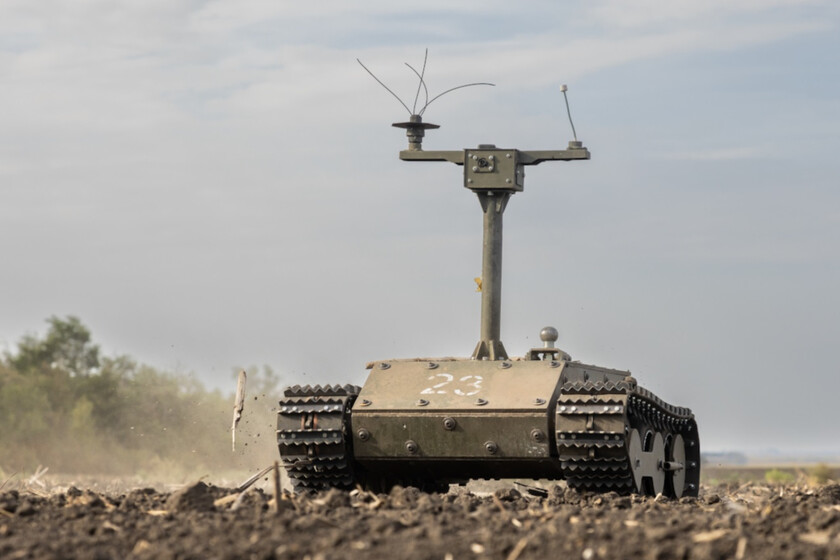
In a striking departure from their intended military functions, Ukrainian ground drones are now undertaking a novel and critical mission: the evacuation of elderly civilians from perilous front-line territories. These unmanned vehicles, often associated with transporting ammunition or engaging in combat, are proving to be vital lifelines for vulnerable individuals trapped in areas subjected to intense shelling and minefields.
Robots as Lifesavers
For years, the concept of unmanned vehicles in warfare was primarily linked to the delivery of weapons, explosives, and supplies into high-risk zones, aiming to minimize human casualties among soldiers. However, the ongoing conflict in Ukraine is rapidly expanding this definition. In some of the most dangerous sectors of the front, the same ground drones that form part of the war machine are now being utilized to extract elderly residents caught amidst the crossfire, mines, and artillery bombardments. This development transforms the perception of these machines, with one of their most unexpected payloads being elderly individuals who can no longer safely leave their homes.
Rescue Across No Man’s Land
A recent operation near Lyman in the Donetsk region highlighted this new role. During a logistical mission, a unit operating ground drones from the Kraken group was approached by a woman seeking assistance to evacuate herself and three other individuals, one of whom was injured. After days of coordination, a Zmiy Logistic vehicle, a remote-controlled four-wheeled buggy capable of carrying up to 500 kilograms, was dispatched. The drone navigated approximately 16 kilometers to a designated point, collected the four evacuees, and returned. Ukrainian soldiers then completed the rescue at a river crossing, transporting the injured to a hospital.
The Impossible Life in the Grey Zone
These rescue missions shed light on a less-visible aspect of the war. Despite years of combat, many civilians, particularly the elderly, continue to reside in the “grey zone”—a contested strip of land between opposing armies, potentially 16 to 20 kilometers wide. This area often lacks essential services like electricity, shops, schools, and hospitals, with daily life punctuated by constant shelling. Many older residents remain due to a deep attachment to their homes, the need to care for sick relatives, or a hope that the war will end before they are forced to relocate permanently.
Iron Soldiers on a New Mission
This is not an isolated incident. Reports from early April mentioned the evacuation of a 77-year-old Ukrainian woman from the same area using a ground drone operated by the 60th Mechanized Brigade. Images of the rescue, showing soldiers offering the woman a blanket with the simple message “Grandma, get on,” garnered global attention. This scene exemplifies the evolving capabilities of these systems. Originally designed for logistical support, explosive deployment, or remote weaponry, these “iron soldiers” are increasingly undertaking rescue tasks that would have previously required exposing human soldiers or volunteers to extreme danger.
Total Automation’s Unexpected Consequences
Behind these humanitarian efforts lies a significant transformation in military technology adoption. Ukraine and Russia are accelerating the deployment of unmanned ground vehicles for missions deemed too risky for personnel. These vehicles are involved in transporting ammunition, medical supplies, and armed operations. Ukraine’s ambition is substantial, with the Minister of Digital Transformation, Mykhailo Fedorov, announcing plans to acquire 25,000 ground drones in the first half of 2026, aiming for these systems to eventually handle all front-line logistics. In the first quarter of this year alone, unmanned vehicles reportedly completed over 21,500 missions. While military innovation is often associated with increasingly destructive capabilities, the Ukrainian experience reveals an unexpected outcome: the same robots developed to keep soldiers out of harm’s way are now being used to extract vulnerable civilians from some of Europe’s most dangerous locations. As armies focus on automating combat, ground drones are demonstrating a dual capacity—serving not only as instruments of war but also as crucial vehicles for escape for those caught in the midst of protracted conflict.
Datos clave
| Aspecto | Detalle |
| :————————— | :———————————————————————————————————————————- |
| Tecnología Principal | Drones terrestres (vehículos no tripulados controlados a distancia) |
| Misión Inédita | Evacuación de civiles ancianos de zonas de alto riesgo en el frente de guerra. |
| Capacidad de Carga (Ejemplo) | Zmiy Logistic: hasta 500 kg. |
| Objetivo Ucraniano | Dependencia futura de drones terrestres para toda la logística de primera línea; compra de 25,000 unidades en H1 2026. |
This development is significant for ReviewArticle’s readership as it showcases a critical and unexpected application of AI and robotics in a humanitarian context amidst modern warfare. It highlights how advanced technologies, often perceived solely through a lens of destruction or efficiency in combat, can be adapted for profound life-saving purposes, particularly for the most vulnerable populations. The practical implementation of these drones for civilian rescue underscores the evolving capabilities and ethical considerations surrounding autonomous systems.
Fuente: Ni misiles, ni fusiles, ni bombas. Los drones ucranianos están llevando un tipo de carga inédita en la guerra: ancianos – Xataka (https://www.xataka.com/magnet/misiles-fusiles-bombas-drones-ucranianos-estan-llevando-tipo-carga-inedita-guerra-ancianos)
Datos clave
| Punto | Detalle |
|---|---|
| Fuente | Xataka IA |
| Fecha | 2026-05-29T09:01:36+00:00 |
| Tema | Ni misiles, ni fusiles, ni bombas. Los drones ucranianos están llevando un tipo de carga inédita en la guerra: ancianos |
Source
Xataka IA Publicacion original: 2026-05-29T09:01:36+00:00
Related articles

OCU Finds Spanish Homeowner Communities Overpaying Up to €1,500 on Electricity and €3,515 on Gas—Can AI Tools Optimize Shared Energy Bills?
A new OCU analysis of Spanish homeowner community bills reveals widespread overpayment due to non-competitive tariffs and excess contracted power. Could AI-driven…
Read article
Mayotte fiber dispute does not meet ReviewArticle’s AI news brief
Le Monde reports that France’s competition authority has ordered Orange to suspend part of its fiber-optic rollout in Mayotte. The dispute is…
Read article
DiffEEG Model Uses Diffusion Pre-Training to Improve Seizure Detection from Minimal Labeled Data
Researchers have introduced DiffEEG, a 9.6-million-parameter foundation model that combines denoising diffusion pre-training with reinforcement learning fine-tuning to detect seizure events from…
Read article
The Technology Trap: Why AI Cannot Escape the Unchanging Fundamentals of War
A new Foreign Affairs essay by former Pentagon official Mara Karlin warns that over-reliance on AI and advanced tech in military planning…
Read articleWiki relacionada

AI Model API Pricing and Context Window Comparison: Current Rates and Limits
Compare the latest API pricing, context windows, and capabilities of leading AI model providers including OpenAI, Anthropic, Google, and Mistral. Practical guidance…
Read article
AI Agent Evaluation Frameworks: How to Benchmark Agentic Systems
A practical guide to evaluating AI agents — from task completion metrics to safety, cost, and robustness. Covers major frameworks, primary sources,…
Read article
LLM Benchmarks Decoded: What MMLU, HumanEval, and GSM8K Actually Measure for Developers
A developer-focused breakdown of the most-cited LLM benchmarks — MMLU, HumanEval, GSM8K, MATH, Chatbot Arena — including what they test, their hidden…
Read article
What Is RAG? A Practical Guide to Retrieval-Augmented Generation in 2025
Retrieval-Augmented Generation (RAG) grounds LLM outputs in external data, reducing hallucinations and enabling enterprise use cases. This guide covers how RAG works,…
Read article