
US Faces Potential $300 Billion Bill in New Iran Deal, Echoing Obama-Era Controversies
A decade after a controversial cash payment to Iran, reports suggest a new agreement could involve up to $300 billion in reconstruction and investment funds, shifting the geopolitical narrative and drawing parallels to past foreign policy debates.
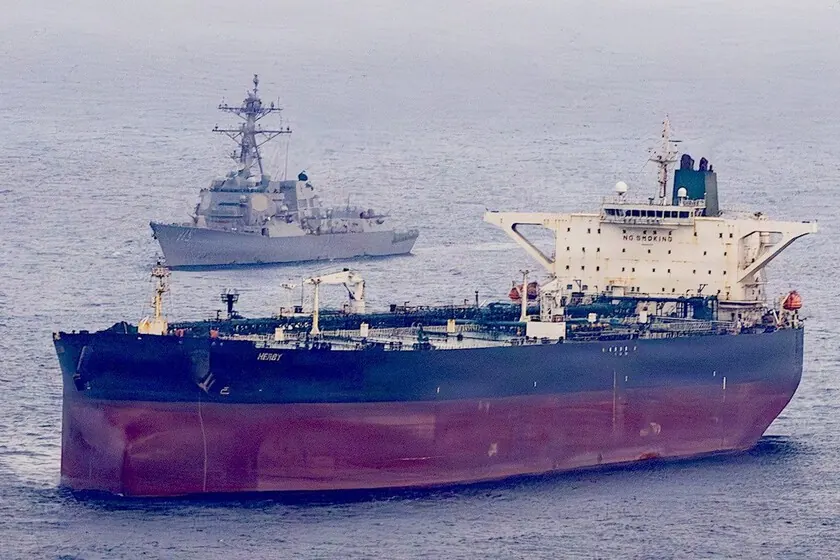
A decade after a contentious cash payment to Iran under the Obama administration, a new report suggests that a potential peace and ceasefire agreement between the United States and Iran could involve a staggering sum of up to $300 billion. This figure, earmarked for reconstruction and investment in the Iranian economy, represents a significant shift from the initial pressure campaign and raises complex geopolitical and economic questions.
The article from Xataka IA, translated and contextualized for ReviewArticle, highlights the stark contrast between the initial strategy of maximum pressure and bombing of nuclear facilities and the current scenario where Iran could emerge with substantial financial backing. This development is particularly paradoxical for former President Donald Trump, who heavily criticized Obama’s handling of Iran, including a reported $400 million cash delivery, and now faces a situation that could dwarf those concessions.
The proposed funds are not expected to come directly from the US government but rather from Western and Asian companies eager to invest in Iran should sanctions be lifted. Nevertheless, the geopolitical effect remains the same: Iran’s economic survival could become contingent on an agreement that Washington urgently seeks to finalize.
The Strait of Hormuz: The Economic Trigger
The catalyst for this potential shift in policy appears to be economic rather than purely nuclear. Iran’s prior blockade of the Strait of Hormuz, a vital artery for over a fifth of the world’s oil and gas trade, created significant global economic pressure. The market’s initial resilience eventually gave way as hundreds of ships were trapped, maritime traffic plummeted, and major shipping companies warned of prolonged disruptions.
This disruption transformed the conflict from a regional issue into a direct threat to the global economy and, crucially, to the wallets of American consumers. With elections on the horizon and oil prices as a major concern, the priority for the US administration reportedly shifted from solely crippling Iran to ensuring the swift reopening of the Strait. This pragmatic approach necessitated a more limited agreement focused on navigation, a ceasefire, and future nuclear negotiations.
Divergent Views on the Accord
The implications of this potential deal are viewed differently by key international players. While the US administration may frame it as a move towards stability and nuclear containment, strategic partners like Israel hold a contrasting perspective. Reports from The Wall Street Journal indicate that Jerusalem’s primary concerns are not only the billions Iran might receive but also the possibility that Tehran may not immediately relinquish all enriched uranium or fully abandon its nuclear program ambitions.
For many Israeli strategists, this scenario provides Iran with crucial breathing room, time, and resources to potentially rearm. They also perceive a blow to American credibility, suggesting that months of military and economic pressure have culminated in a purchased pause rather than a decisive strategic victory.
A Surprising Outcome for Iran
The agreement, as described, presents a surreal image: the United States, after a period of bombardment, pressure, and isolation, may end up facilitating the conditions for Iran’s economic reconstruction. While the Iranian regime may be battered, it appears poised to survive, retaining the Strait of Hormuz as a significant negotiating tool and potentially attracting substantial foreign investment.
The narrative pushed by the US administration might emphasize stability and nuclear control. However, from an external viewpoint, the situation suggests that the pursuit of peace has not only come at a high cost to Washington but could inadvertently finance the very actor it sought to corner and dismantle. This complex web of economic interests, geopolitical maneuvering, and internal political considerations underscores the evolving dynamics of international relations in the region.
Key facts
| Aspect | Details |
| :————————– | :———————————————————— |
| Potential Deal Value | Up to $300 billion in reconstruction and investment funds |
| Funding Source | Western and Asian companies (conditional on sanctions relief) |
| Trigger for Shift | Iran’s blockade of the Strait of Hormuz |
| Key International Concerns | Economic implications for Iran, nuclear program status, US credibility |
| Historical Precedent | Obama-era $400 million cash payment to Iran |
This development is significant for ReviewArticle readers as it touches upon the complex interplay of international policy, economic sanctions, and potential global market impacts, all driven by geopolitical negotiations that could reshape energy markets and international relations.
Source: Intuíamos que el acuerdo de paz le había salido caro a EEUU. Lo que no imaginábamos es la disparatada cifra que va a pagar a Irán – Xataka IA (https://www.xataka.com/magnet/intuiamos-que-acuerdo-paz-le-habia-salido-caro-a-eeuu-que-no-imaginabamos-disparatada-cifra-que-va-a-pagar-a-iran)
Datos clave
| Punto | Detalle |
|---|---|
| Fuente | Xataka IA |
| Fecha | 2026-06-16T11:30:17+00:00 |
| Tema | Intuíamos que el acuerdo de paz le había salido caro a EEUU. Lo que no imaginábamos es la disparatada cifra que va a pag |
Source
Xataka IA Publicacion original: 2026-06-16T11:30:17+00:00
Related articles
IBM CEO Puts a Number on the Open-Weight AI Value Proposition: 90% of the Performance at 10% of the Token Cost
IBM CEO Arvind Krishna told analysts that open-weight models now deliver about 90% of frontier-model effectiveness while costing between 10% and 25%…
Read article
OCU Finds Spanish Homeowner Communities Overpaying Up to €1,500 on Electricity and €3,515 on Gas—Can AI Tools Optimize Shared Energy Bills?
A new OCU analysis of Spanish homeowner community bills reveals widespread overpayment due to non-competitive tariffs and excess contracted power. Could AI-driven…
Read article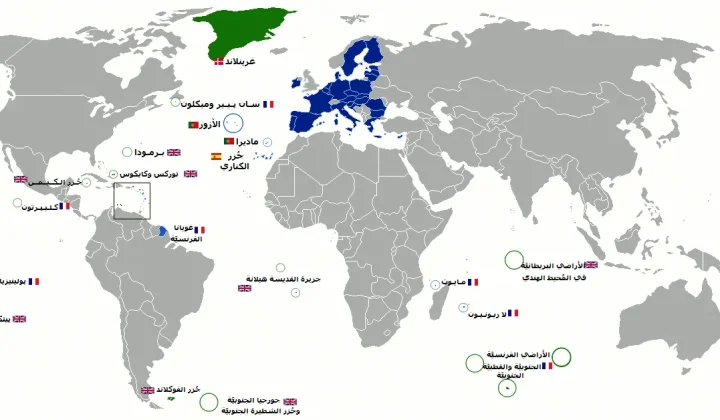
Mayotte fiber dispute does not meet ReviewArticle’s AI news brief
Le Monde reports that France’s competition authority has ordered Orange to suspend part of its fiber-optic rollout in Mayotte. The dispute is…
Read article
DiffEEG Model Uses Diffusion Pre-Training to Improve Seizure Detection from Minimal Labeled Data
Researchers have introduced DiffEEG, a 9.6-million-parameter foundation model that combines denoising diffusion pre-training with reinforcement learning fine-tuning to detect seizure events from…
Read articleWiki relacionada

AI Model API Pricing and Context Window Comparison: Current Rates and Limits
Compare the latest API pricing, context windows, and capabilities of leading AI model providers including OpenAI, Anthropic, Google, and Mistral. Practical guidance…
Read article
AI Agent Evaluation Frameworks: How to Benchmark Agentic Systems
A practical guide to evaluating AI agents — from task completion metrics to safety, cost, and robustness. Covers major frameworks, primary sources,…
Read article
LLM Benchmarks Decoded: What MMLU, HumanEval, and GSM8K Actually Measure for Developers
A developer-focused breakdown of the most-cited LLM benchmarks — MMLU, HumanEval, GSM8K, MATH, Chatbot Arena — including what they test, their hidden…
Read article
What Is RAG? A Practical Guide to Retrieval-Augmented Generation in 2025
Retrieval-Augmented Generation (RAG) grounds LLM outputs in external data, reducing hallucinations and enabling enterprise use cases. This guide covers how RAG works,…
Read article