
Ancient Yeast Found Alive in 5,300-Year-Old “Iceman” Ötzi Offers Clues to Life’s Extremes and Human Health
A recent study of Ötzi the Iceman has revealed metabolically active yeast strains that have survived for over five millennia, offering unprecedented insights into microbial resilience, potential extraterrestrial life, and the pre-antibiotic human microbiome.
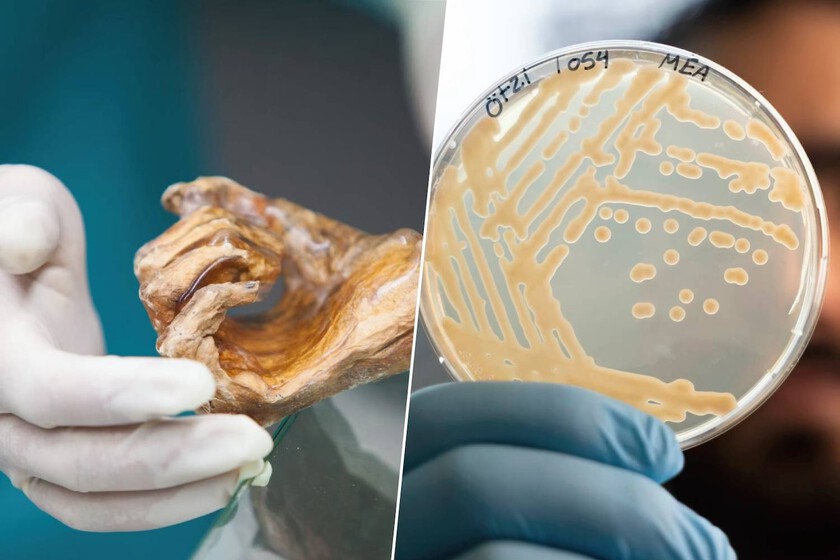
A groundbreaking study on Ötzi the Iceman, the 5,300-year-old natural mummy discovered in the Ötztal Alps, has unveiled a remarkable discovery: metabolically active yeast strains that have survived within his body for millennia. This finding not only pushes the boundaries of our understanding of microbial resilience but also carries significant implications for astrobiology and human health.
Life in the Ice
Ötzi, who died around 3255 BCE from an arrow wound to his left shoulder, has been preserved by glacial ice, making him Europe’s oldest known natural human mummy. For decades, he has served as an invaluable biological and archaeological record of the late Neolithic/Copper Age. However, a recent investigation by Eurac Research has revealed that Ötzi is more than just a historical artifact; he is a living ecosystem.
Researchers have identified several yeast strains, including Glaciozyma, Goffeauzyma, Mrakia, and Phenoliferia, that may have lain dormant for thousands of years. Crucially, some of these yeasts are metabolically active, demonstrating a remarkable adaptation to cold environments. The study also found anaerobic intestinal bacteria such as Romboutsia hominis, Clostridium moniliforme, and Ruminococcus bromii, which would have aided Ötzi in digesting his food during his lifetime.
Implications for Astrobiology and Beyond
The discovery that microorganisms can survive within a human body for over 5,000 years in icy conditions has profound implications for the search for extraterrestrial life. If microbes can endure such extreme longevity on Earth, it raises the possibility of similar survival in inhospitable environments beyond our planet, such as the polar regions of the Moon. This finding could redefine expectations for life in space and inform future astrobiological missions.
Archaeological Reconsiderations
From an archaeological perspective, the presence of viable microbial life within Ötzi necessitates a reevaluation of how ancient samples and remains are preserved, stored, and studied. The potential for contamination by modern microbes, which has historically complicated the analysis of mummies, now takes on new significance. Understanding and differentiating between ancient and modern microbial communities is crucial for extracting accurate information.
Insights into Pre-Antibiotic Health
The study also offers a unique window into the human microbiome before the advent of antibiotics, ultra-processed foods, and industrial agriculture. By comparing Ötzi’s gut bacteria with those of modern humans, scientists can gain a clearer picture of ancestral microbiota composition. This comparison is particularly relevant as research has linked the loss of microbial diversity to modern diseases like Crohn’s disease and ulcerative colitis. Ötzi’s microbiome could serve as a foundation for developing more effective probiotics and improving fecal microbiota transplantation therapies.
Methodology and Limitations
Ötzi is housed at the South Tyrol Museum of Archaeology in Bolzano, Italy, where he is kept in a refrigerated chamber at -6°C with 99% relative humidity. After decades of study, the mummy has inevitably been exposed to modern microbes. Therefore, the research team employed multiple samples and methods to distinguish between microorganisms present during Ötzi’s life and those that colonized his body later.
The researchers combined genomic sequencing with laboratory cultivation and comparisons to global databases. This approach allowed them to identify surface bacteria like Methylobacterium and Sphingomonas as modern contaminants, while Staphylococcus was identified as part of Ötzi’s original microbiome.
A key limitation of the study is the inherent risk of contamination during the handling of such an ancient specimen. Furthermore, demonstrating metabolic activity in a laboratory setting does not definitively prove continuous activity over 5,300 years; the yeasts might have reactivated under experimental conditions. Further independent studies on other glacial mummies are needed to confirm these findings and extend our understanding.
Key facts
| Aspect | Detail |
|---|---|
| Subject | Ötzi the Iceman, 5,300-year-old mummy |
| Discovery | 1991, Ötztal Alps |
| Finding | Metabolically active yeast strains (Glaciozyma, Goffeauzyma, etc.) |
| Implications | Microbial resilience, astrobiology, pre-antibiotic human health |
| Research Team | Eurac Research |
| Current Location | South Tyrol Museum of Archaeology, Bolzano, Italy |
Source: El “hombre de hielo” lleva 5.300 años congelado. En su interior todavía hay vida (Xataka IA) – https://www.xataka.com/magnet/hombre-hielo-lleva-5-300-anos-congelado-su-interior-todavia-hay-vida
Source
Xataka IA Publicacion original: 2026-06-13T11:30:16+00:00
Related articles

OCU Finds Spanish Homeowner Communities Overpaying Up to €1,500 on Electricity and €3,515 on Gas—Can AI Tools Optimize Shared Energy Bills?
A new OCU analysis of Spanish homeowner community bills reveals widespread overpayment due to non-competitive tariffs and excess contracted power. Could AI-driven…
Read article
Mayotte fiber dispute does not meet ReviewArticle’s AI news brief
Le Monde reports that France’s competition authority has ordered Orange to suspend part of its fiber-optic rollout in Mayotte. The dispute is…
Read article
DiffEEG Model Uses Diffusion Pre-Training to Improve Seizure Detection from Minimal Labeled Data
Researchers have introduced DiffEEG, a 9.6-million-parameter foundation model that combines denoising diffusion pre-training with reinforcement learning fine-tuning to detect seizure events from…
Read article
The Technology Trap: Why AI Cannot Escape the Unchanging Fundamentals of War
A new Foreign Affairs essay by former Pentagon official Mara Karlin warns that over-reliance on AI and advanced tech in military planning…
Read articleWiki relacionada

AI Model API Pricing and Context Window Comparison: Current Rates and Limits
Compare the latest API pricing, context windows, and capabilities of leading AI model providers including OpenAI, Anthropic, Google, and Mistral. Practical guidance…
Read article
AI Agent Evaluation Frameworks: How to Benchmark Agentic Systems
A practical guide to evaluating AI agents — from task completion metrics to safety, cost, and robustness. Covers major frameworks, primary sources,…
Read article
LLM Benchmarks Decoded: What MMLU, HumanEval, and GSM8K Actually Measure for Developers
A developer-focused breakdown of the most-cited LLM benchmarks — MMLU, HumanEval, GSM8K, MATH, Chatbot Arena — including what they test, their hidden…
Read article
What Is RAG? A Practical Guide to Retrieval-Augmented Generation in 2025
Retrieval-Augmented Generation (RAG) grounds LLM outputs in external data, reducing hallucinations and enabling enterprise use cases. This guide covers how RAG works,…
Read article