
Argentina’s AI Surveillance Expansion and OpenAI Copyright Lawsuit Highlight Growing AI Regulation Push
Argentina’s Milei government expands AI surveillance; Carlsen Verlag sues OpenAI over copyright infringement on children’s books.
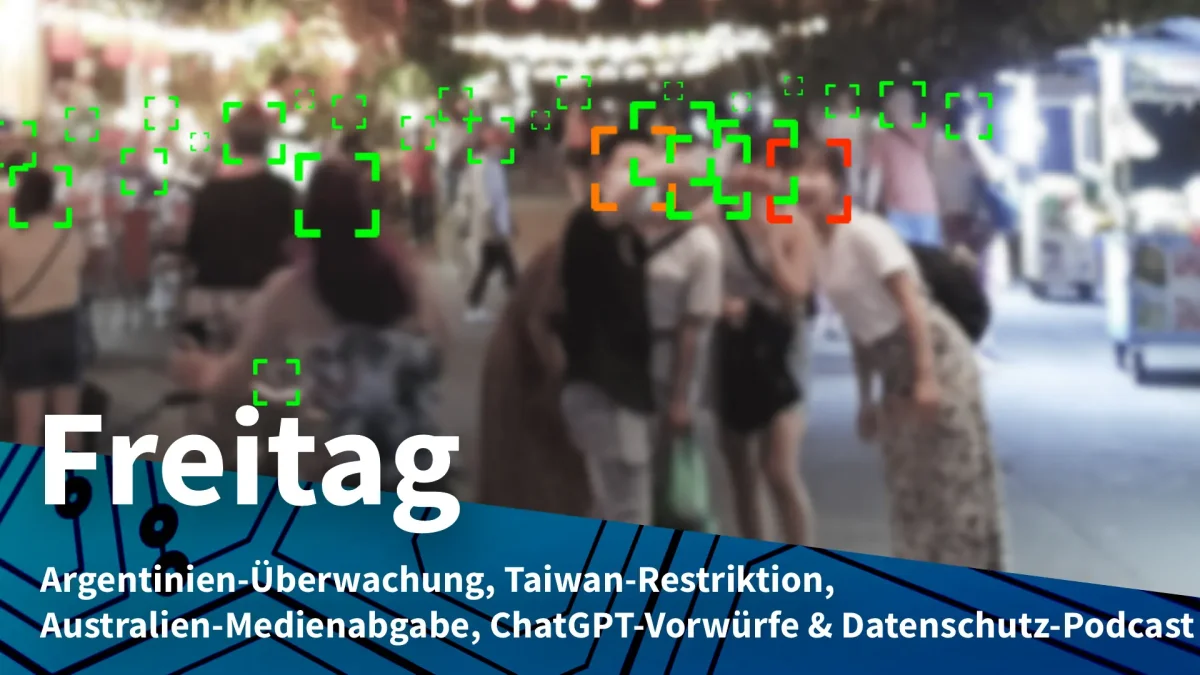
Argentina’s AI Surveillance Expansion
The Argentine government under President Javier Milei has significantly expanded the use of AI‑powered surveillance technologies over the past two years. A report published by Amnesty International details institutional reforms that have broadened the state’s intelligence capabilities. Between 2024 and 2025, the government acquired tools worth at least $1.2 million, including software for social‑media monitoring, facial‑recognition systems, and aerial‑surveillance drones.
Journalists and activists in Argentina say they feel targeted by the new surveillance apparatus. Amnesty International has called for regulation, arguing that the measures threaten the right to privacy as well as freedoms of expression, assembly, and association. The report also criticises the lack of transparency in procurement and oversight.
Legal Challenge Against OpenAI
In a separate development, the Hamburg‑based publisher Carlsen Verlag has filed a lawsuit against OpenAI in Munich. The publisher alleges that ChatGPT has been used to generate texts and illustrations that closely imitate the copyrighted children’s book series “NEINhorn” by author Marc‑Uwe Kling and illustrator Astrid Henn. According to the filing, ChatGPT was trained on the books and now produces content that is “indistinguishable” from the original works, even suggesting additional infringing characters and settings. Kling and Henn have called the practice “theft.”
The case is scheduled to be heard in Munich. It raises questions about the extent to which AI models are trained on copyrighted material without permission and whether generated outputs that reproduce protected elements constitute infringement. The outcome could set a precedent for similar lawsuits against generative‑AI providers, particularly in Europe where copyright laws are strict.
Concerns Over AI Copyright and Training Data
The Carlsen lawsuit is one of several recent actions that test the boundaries of fair use and copyright in the age of large language models. OpenAI has previously argued that training on publicly available text is transformative and falls under fair use, but European courts have not yet settled this question for commercially deployed AI services.
For developers and publishers, the uncertainty creates risk. If the court finds against OpenAI, it could compel the company to alter its training datasets, pay licensing fees, or remove certain capabilities from models available in the EU. The case also highlights the need for clearer guidelines on what constitutes acceptable use of copyrighted works in AI training.
Regulatory Responses and Industry Impact
Both stories illustrate a broader push toward tighter regulation of AI systems. In Argentina, Amnesty International is calling for a legal framework that curbs mass surveillance and subjects AI procurement to judicial oversight. In the EU, the upcoming AI Act is expected to impose transparency and risk‑management obligations on high‑risk AI systems – a category that would likely include the facial‑recognition tools used by the Argentine government.
The OpenAI case could accelerate demands for copyright safe‑harbours or mandatory disclosure of training data, which many AI developers currently resist. For the AI industry, the combination of surveillance‑related human‑rights concerns and copyright litigation creates a dual pressure to adopt more responsible practices or face legal and reputational consequences.
What Remains Unclear
Several details are still emerging. The exact timeline of the Argentine government’s AI purchases and the specific oversight mechanisms in place are not fully documented. In the OpenAI case, the full scope of alleged infringement – how many “NEINhorn”‑like outputs were generated and whether they were shared publicly – has not been disclosed. The court has not yet set a date for a final ruling.
Key Facts at a Glance
| Story | Key Entity | Issue | Impact |
|---|---|---|---|
| Argentina AI surveillance | Argentine government (Milei) | Expanded use of facial recognition, social media monitoring, drones | Privacy rights threatened; activists report feeling tracked |
| OpenAI copyright lawsuit | Carlsen Verlag vs OpenAI | ChatGPT generates texts and illustrations imitating “NEINhorn” series | Potential precedent for AI training on copyrighted works; publisher seeks damages |
| Regulatory push | Amnesty International, EU lawmakers | Calls for regulation of AI surveillance and copyright | Could reshape AI deployment and data handling rules |
Practical Checks for Readers
- For developers: Review your own training‑data sourcing policies and consider the risk of copyright claims when fine‑tuning models on published works.
- For businesses using AI surveillance: Monitor regional legal developments, especially in Latin America and the EU, that may affect compliance requirements.
- For content creators: Document your works and their timestamps; if you suspect infringement, consult legal counsel on how to submit takedown notices or file complaints under local copyright law.
Source: Original report from Heise KI (Aug 21, 2026) – https://www.heise.de/news/Freitag-KI-Ueberwachung-in-Argentinien-Chinas-wachsender-Druck-auf-Taiwan-11421302.html?wt_mc=rss.red.ho.themen.k%C3%BCnstliche+intelligenz.beitrag.beitrag. Amnesty International report details via Heise coverage. Lawsuit information provided by Carlsen Verlag and reported by Heise. No additional independent sources were available at the time of writing.
Source
Heise KI Publicacion original: 2026-08-21T04:15:00+00:00
Related articles
OCU Finds Spanish Homeowner Communities Overpaying Up to €1,500 on Electricity and €3,515 on Gas—Can AI Tools Optimize Shared Energy Bills?
A new OCU analysis of Spanish homeowner community bills reveals widespread overpayment due to non-competitive tariffs and excess contracted power. Could AI-driven…
Read article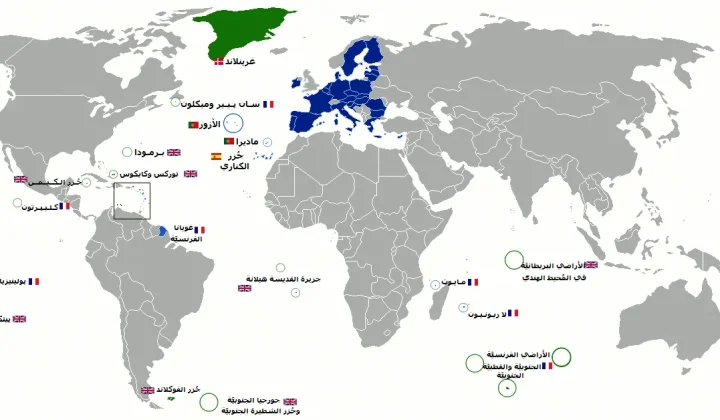
Mayotte fiber dispute does not meet ReviewArticle’s AI news brief
Le Monde reports that France’s competition authority has ordered Orange to suspend part of its fiber-optic rollout in Mayotte. The dispute is…
Read article
DiffEEG Model Uses Diffusion Pre-Training to Improve Seizure Detection from Minimal Labeled Data
Researchers have introduced DiffEEG, a 9.6-million-parameter foundation model that combines denoising diffusion pre-training with reinforcement learning fine-tuning to detect seizure events from…
Read article
The Technology Trap: Why AI Cannot Escape the Unchanging Fundamentals of War
A new Foreign Affairs essay by former Pentagon official Mara Karlin warns that over-reliance on AI and advanced tech in military planning…
Read articleWiki relacionada

AI Model API Pricing and Context Window Comparison: Current Rates and Limits
Compare the latest API pricing, context windows, and capabilities of leading AI model providers including OpenAI, Anthropic, Google, and Mistral. Practical guidance…
Read article
AI Agent Evaluation Frameworks: How to Benchmark Agentic Systems
A practical guide to evaluating AI agents — from task completion metrics to safety, cost, and robustness. Covers major frameworks, primary sources,…
Read article
LLM Benchmarks Decoded: What MMLU, HumanEval, and GSM8K Actually Measure for Developers
A developer-focused breakdown of the most-cited LLM benchmarks — MMLU, HumanEval, GSM8K, MATH, Chatbot Arena — including what they test, their hidden…
Read article
What Is RAG? A Practical Guide to Retrieval-Augmented Generation in 2025
Retrieval-Augmented Generation (RAG) grounds LLM outputs in external data, reducing hallucinations and enabling enterprise use cases. This guide covers how RAG works,…
Read article