
Yale Researchers Develop Non-Invasive Brain-Computer Interface for Faster Learning
A new study from Yale University details a non-invasive brain-computer interface that leverages natural brain activity patterns, potentially accelerating learning for controlling external devices and paving the way for mental health treatments.
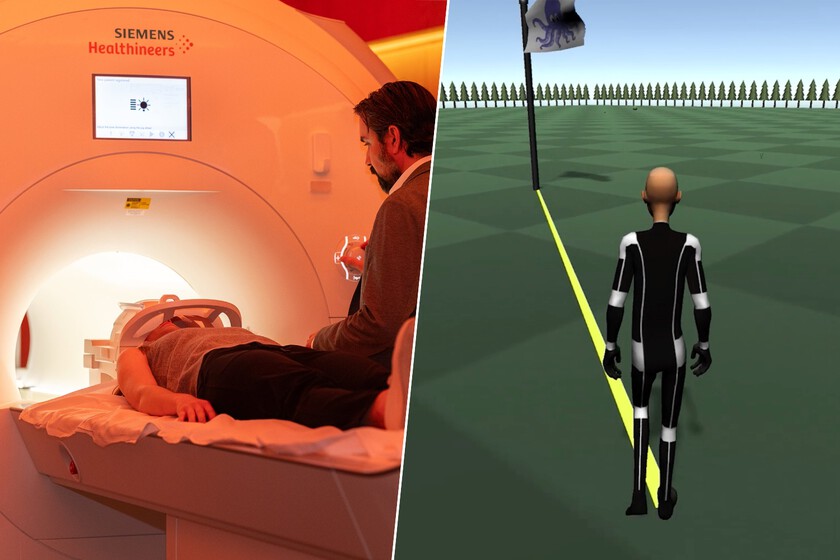
Researchers at Yale University have developed a novel non-invasive brain-computer interface (BCI) that significantly reduces the learning time required for users to control external devices with their minds. The breakthrough, detailed in a study published in Nature Neuroscience, focuses on working with the brain’s natural activity patterns rather than against them, a departure from traditional BCI approaches.
This development moves beyond the highly invasive nature of brain implants, such as those being developed by Neuralink, and addresses the efficiency issues of existing non-invasive methods like fMRI-based BCIs. These earlier systems often required extensive training sessions with modest results, and a notable percentage of participants were unable to master the controls.
Working with the Brain’s Natural Geometry
The core innovation lies in aligning the BCI with the individual’s unique “natural routes” of brain activity. Instead of forcing the brain to create entirely new pathways, the Yale team’s system leverages existing neural geometry. This approach aims to reduce friction and accelerate the learning process, making it more effective and faster.
The technology involves users undergoing real-time functional magnetic resonance imaging (fMRI). This is not for diagnostic scanning but to capture brain activity that is then interpreted by proprietary algorithms. These algorithms map the individual’s specific brain activity patterns, creating a personalized “map.” This map is then used to translate brain data into movements within a software environment, demonstrated in this study with controlling an avatar in a video game.
The system reads the user’s brain scans every two seconds and translates the data into in-game actions. Researchers tested three configurations: one aligning with the brain’s most natural routes, another with less dominant natural routes, and a third with pathways the brain doesn’t naturally produce but can construct.
Significant Learning Acceleration
The results were highly positive. Participants using the BCI aligned with their brain’s natural geometry learned to control the avatar using only their thoughts in under an hour, and in some cases, even faster. When the system deviated from this natural geometry, control was still possible, but the learning time increased considerably.
The study observed that this alignment led to a physical reorganization of the brain as it adapted to the interface’s demands. This adaptation even extended to brain regions not directly involved in the task, suggesting a domino effect in neural adaptation.
Limitations and Future Implications
Despite the promising results, a significant hurdle remains: the equipment required. The current setup necessitates users being inside a large, expensive MRI machine, making it impractical for widespread, everyday use compared to the ultimate goal of brain implants.
However, the implications extend far beyond gaming. The researchers suggest this technology could be crucial for developing treatments for mental health conditions like depression and anxiety, as well as addressing motor and communication disorders and cognitive enhancement. While not a consumer-ready “off-the-shelf” technology yet, the discovery is considered highly valuable for research.
Erica Busch, the study’s lead author, noted that understanding the brain’s structure more effectively can lead to more efficient methods for self-improvement through education, practice, or therapy. While the immediate application is clinical and research-oriented, Busch also acknowledged the potential for future advancements in next-generation video games controlled directly by the mind.
Key facts
| Aspect | Detail |
| :————————– | :————————————————————————- |
| Research Institution | Yale University |
| Technology | Non-invasive Brain-Computer Interface (BCI) using fMRI |
| Key Innovation | Aligning BCI with natural brain activity geometry for faster learning |
| Potential Applications | Mental health treatments, motor/communication disorder therapy, research tool |
| Current Limitation | Requires large and expensive fMRI equipment |
This development is significant for the AI and technology field as it demonstrates a more efficient pathway for human-computer interaction via brain signals. By reducing the learning curve and working with biological predispositions, it opens up possibilities for more accessible and effective brain-computer interfaces, not just for control but potentially for therapeutic interventions in mental health and neurological conditions.
Source: Controlling a video game with your mind seems like an empty advance. It’s the door to treatments for depression or anxiety – Xataka – https://www.xataka.com/medicina-y-salud/controlar-videojuego-mente-parece-avance-vacio-puerta-a-tratamientos-para-depresion-ansiedad
Datos clave
| Punto | Detalle |
|---|---|
| Fuente | Xataka IA |
| Fecha | 2026-06-14T10:00:17+00:00 |
| Tema | Controlar un videojuego con la mente parece un avance vacío. Es la puerta a tratamientos para la depresión o la ansiedad |
Source
Xataka IA Publicacion original: 2026-06-14T10:00:17+00:00
Related articles

OCU Finds Spanish Homeowner Communities Overpaying Up to €1,500 on Electricity and €3,515 on Gas—Can AI Tools Optimize Shared Energy Bills?
A new OCU analysis of Spanish homeowner community bills reveals widespread overpayment due to non-competitive tariffs and excess contracted power. Could AI-driven…
Read article
Mayotte fiber dispute does not meet ReviewArticle’s AI news brief
Le Monde reports that France’s competition authority has ordered Orange to suspend part of its fiber-optic rollout in Mayotte. The dispute is…
Read article
DiffEEG Model Uses Diffusion Pre-Training to Improve Seizure Detection from Minimal Labeled Data
Researchers have introduced DiffEEG, a 9.6-million-parameter foundation model that combines denoising diffusion pre-training with reinforcement learning fine-tuning to detect seizure events from…
Read article
The Technology Trap: Why AI Cannot Escape the Unchanging Fundamentals of War
A new Foreign Affairs essay by former Pentagon official Mara Karlin warns that over-reliance on AI and advanced tech in military planning…
Read articleWiki relacionada

AI Model API Pricing and Context Window Comparison: Current Rates and Limits
Compare the latest API pricing, context windows, and capabilities of leading AI model providers including OpenAI, Anthropic, Google, and Mistral. Practical guidance…
Read article
AI Agent Evaluation Frameworks: How to Benchmark Agentic Systems
A practical guide to evaluating AI agents — from task completion metrics to safety, cost, and robustness. Covers major frameworks, primary sources,…
Read article
LLM Benchmarks Decoded: What MMLU, HumanEval, and GSM8K Actually Measure for Developers
A developer-focused breakdown of the most-cited LLM benchmarks — MMLU, HumanEval, GSM8K, MATH, Chatbot Arena — including what they test, their hidden…
Read article
What Is RAG? A Practical Guide to Retrieval-Augmented Generation in 2025
Retrieval-Augmented Generation (RAG) grounds LLM outputs in external data, reducing hallucinations and enabling enterprise use cases. This guide covers how RAG works,…
Read article