
Expert Warns of Potential Atlantic Current Weakening, Citing New Oceanographic Findings
New analysis by a leading expert suggests a persistent cooling anomaly in the North Atlantic is linked to a weakening of the Atlantic Meridional Overturning Circulation (AMOC), with potential implications for global climate.
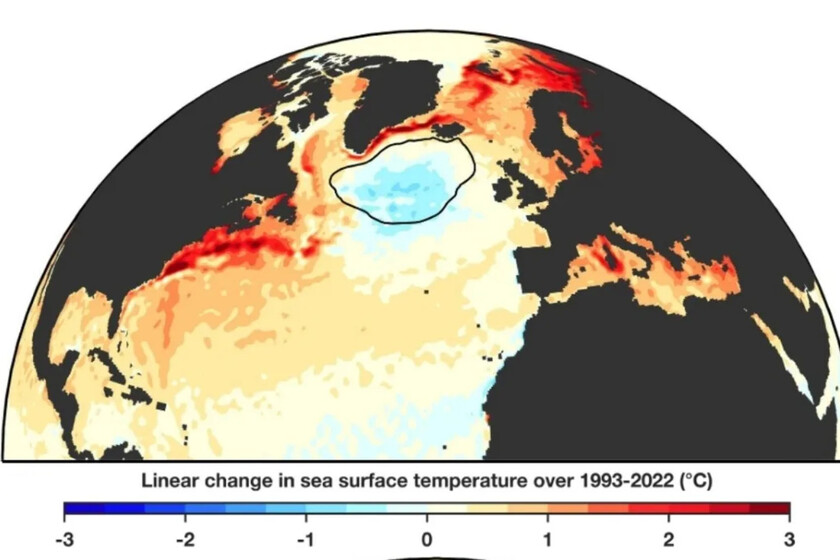
A persistent cooling anomaly in the North Atlantic, south of Greenland, is likely caused by a weakening of the Atlantic Meridional Overturning Circulation (AMOC), according to new analysis by Stefan Rahmstorf, a prominent expert on the Gulf Stream’s collapse. This finding offers a potential explanation for a decades-long oceanic mystery and carries significant implications for global climate patterns.
The “cold blob” in the North Atlantic, a region that has defied the global warming trend by experiencing persistent cooling, has perplexed scientists for years. While the phenomenon has been known since the mid-1990s, a definitive explanation has remained elusive until now. Rahmstorf’s team has conducted an analysis of heat balance in the affected region, suggesting that the cooling is not primarily driven by surface heat flows.
Instead, the research indicates that the heat loss across the entire water column is linked to a reduction in oceanic heat transport into the region. This points towards a weakening of the AMOC, a crucial component of the global thermohaline circulation.
The AMOC is responsible for transporting warm surface waters northward and cold deep waters southward, playing a vital role in regulating climate, particularly in Europe and North America. Its weakening could lead to significant, adverse climate effects in these regions.
Controversy and Scientific Debate
The findings, while offering a plausible explanation, are not without controversy. Rahmstorf and his team are specialists in the very phenomenon they are investigating, leading some climatologists to express caution. Critics suggest a potential bias, akin to the saying “to a hammer, everything looks like a nail,” given Rahmstorf’s established research focus on AMOC collapse.
However, proponents argue that despite the potential for debate and reanalysis, this is currently one of the most robust explanations available for the observed oceanic anomaly. The study aims to provide a more complete picture by linking multidecadal oceanic evolution with the current.
Uncertainty Over AMOC’s Future
The question of whether the AMOC will collapse remains a subject of ongoing scientific debate. While some studies, including a 2023 paper by Ditlevsen, have suggested a probable collapse and even proposed a timeline, the Intergovernmental Panel on Climate Change (IPCC) in 2021 deemed a collapse “unlikely.” More recent research in early 2025 by Terhaar, Vogt, and Foukal indicated no significant weakening since 1063.
Scientists generally agree that climate drift suggests a future collapse is possible, as it has occurred in Earth’s past. However, pinpointing the exact timing, mechanism, and cause remains challenging. The potential consequences of an AMOC collapse are significant, with predictions of substantial cooling in Western Europe and Eastern North America, alongside a cascade of other adverse climate effects.
Key Facts
| Aspect | Details |
|---|---|
| Phenomenon | Persistent cooling anomaly in the North Atlantic (“cold blob”). |
| Proposed Cause | Weakening of the Atlantic Meridional Overturning Circulation (AMOC). |
| Lead Researcher | Stefan Rahmstorf, expert on Gulf Stream collapse. |
| Potential Impact | Significant climate changes in Europe and North America if AMOC collapses. |
| Scientific Consensus | Ongoing debate regarding the probability and timeline of AMOC collapse. |
The implications of this research extend beyond academic interest. Understanding the dynamics of the AMOC is critical for predicting future climate scenarios and informing climate policy. For readers interested in AI and its application in scientific research, this study highlights how advanced analysis and modeling are crucial for unraveling complex environmental challenges. The development underscores the need for continued monitoring and research into oceanographic processes and their relationship with global climate systems.
Source: “Lo está causando el propio océano”: El mayor experto mundial en la Corriente del GOlfo tiene una mala noticia sobre el corazón del Atlántico – Xataka (https://www.xataka.com/ecologia-y-naturaleza/esta-causando-propio-oceano-mayor-experto-mundial-corriente-golfo-tiene-mala-noticia-corazon-atlantico)
Source
Xataka IA Publicacion original: 2026-06-15T09:30:17+00:00
Related articles
OCU Finds Spanish Homeowner Communities Overpaying Up to €1,500 on Electricity and €3,515 on Gas—Can AI Tools Optimize Shared Energy Bills?
A new OCU analysis of Spanish homeowner community bills reveals widespread overpayment due to non-competitive tariffs and excess contracted power. Could AI-driven…
Read article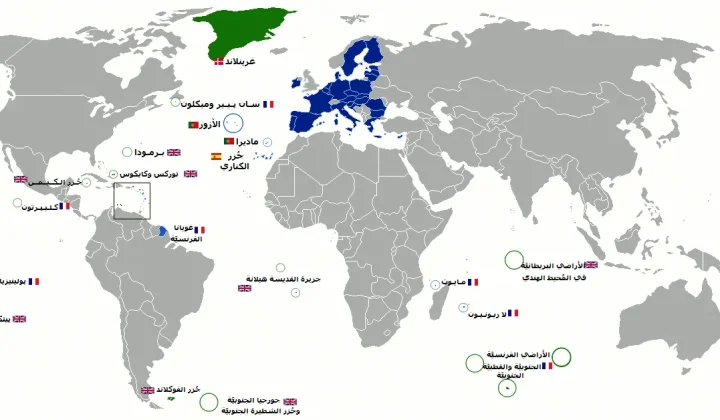
Mayotte fiber dispute does not meet ReviewArticle’s AI news brief
Le Monde reports that France’s competition authority has ordered Orange to suspend part of its fiber-optic rollout in Mayotte. The dispute is…
Read article
DiffEEG Model Uses Diffusion Pre-Training to Improve Seizure Detection from Minimal Labeled Data
Researchers have introduced DiffEEG, a 9.6-million-parameter foundation model that combines denoising diffusion pre-training with reinforcement learning fine-tuning to detect seizure events from…
Read article
The Technology Trap: Why AI Cannot Escape the Unchanging Fundamentals of War
A new Foreign Affairs essay by former Pentagon official Mara Karlin warns that over-reliance on AI and advanced tech in military planning…
Read articleWiki relacionada

AI Model API Pricing and Context Window Comparison: Current Rates and Limits
Compare the latest API pricing, context windows, and capabilities of leading AI model providers including OpenAI, Anthropic, Google, and Mistral. Practical guidance…
Read article
AI Agent Evaluation Frameworks: How to Benchmark Agentic Systems
A practical guide to evaluating AI agents — from task completion metrics to safety, cost, and robustness. Covers major frameworks, primary sources,…
Read article
LLM Benchmarks Decoded: What MMLU, HumanEval, and GSM8K Actually Measure for Developers
A developer-focused breakdown of the most-cited LLM benchmarks — MMLU, HumanEval, GSM8K, MATH, Chatbot Arena — including what they test, their hidden…
Read article
What Is RAG? A Practical Guide to Retrieval-Augmented Generation in 2025
Retrieval-Augmented Generation (RAG) grounds LLM outputs in external data, reducing hallucinations and enabling enterprise use cases. This guide covers how RAG works,…
Read article