
ESA Explores Adapting Ariane 6 Rocket for Manned Spaceflight
The European Space Agency is seriously considering modifying its Ariane 6 rocket to carry astronauts, a move driven by shifting international partnerships and a desire for greater European autonomy in space exploration.
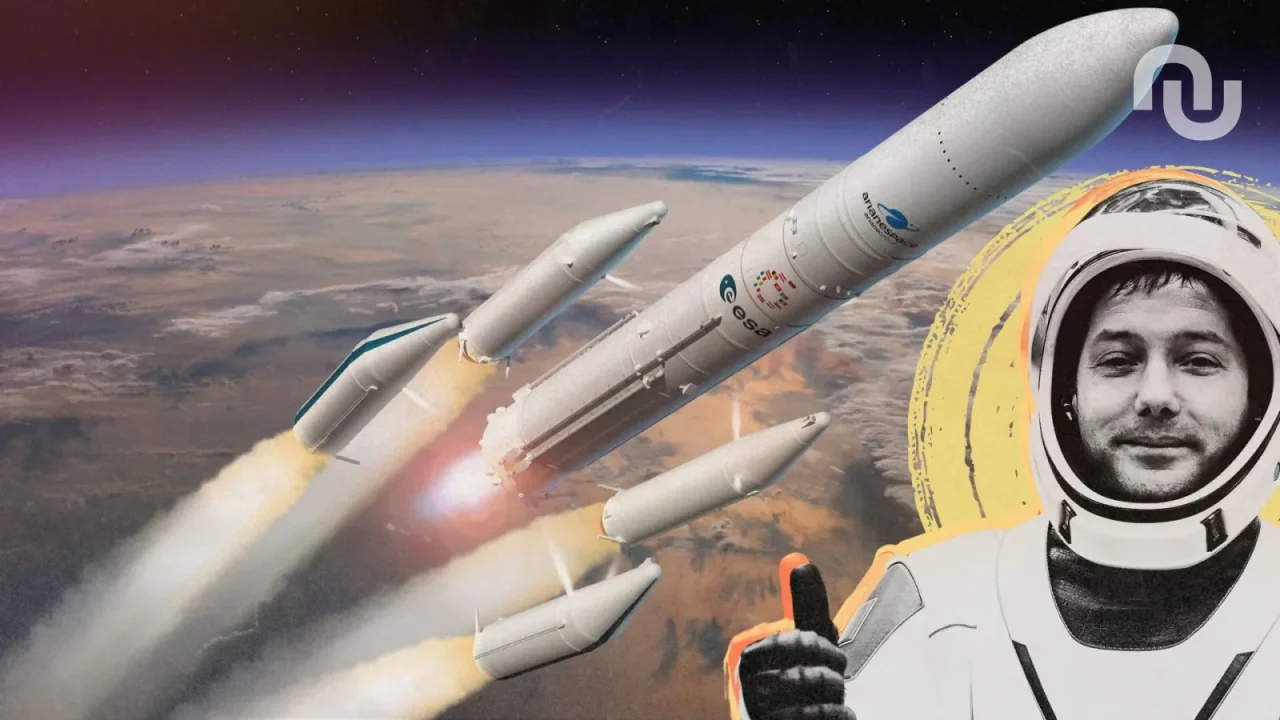
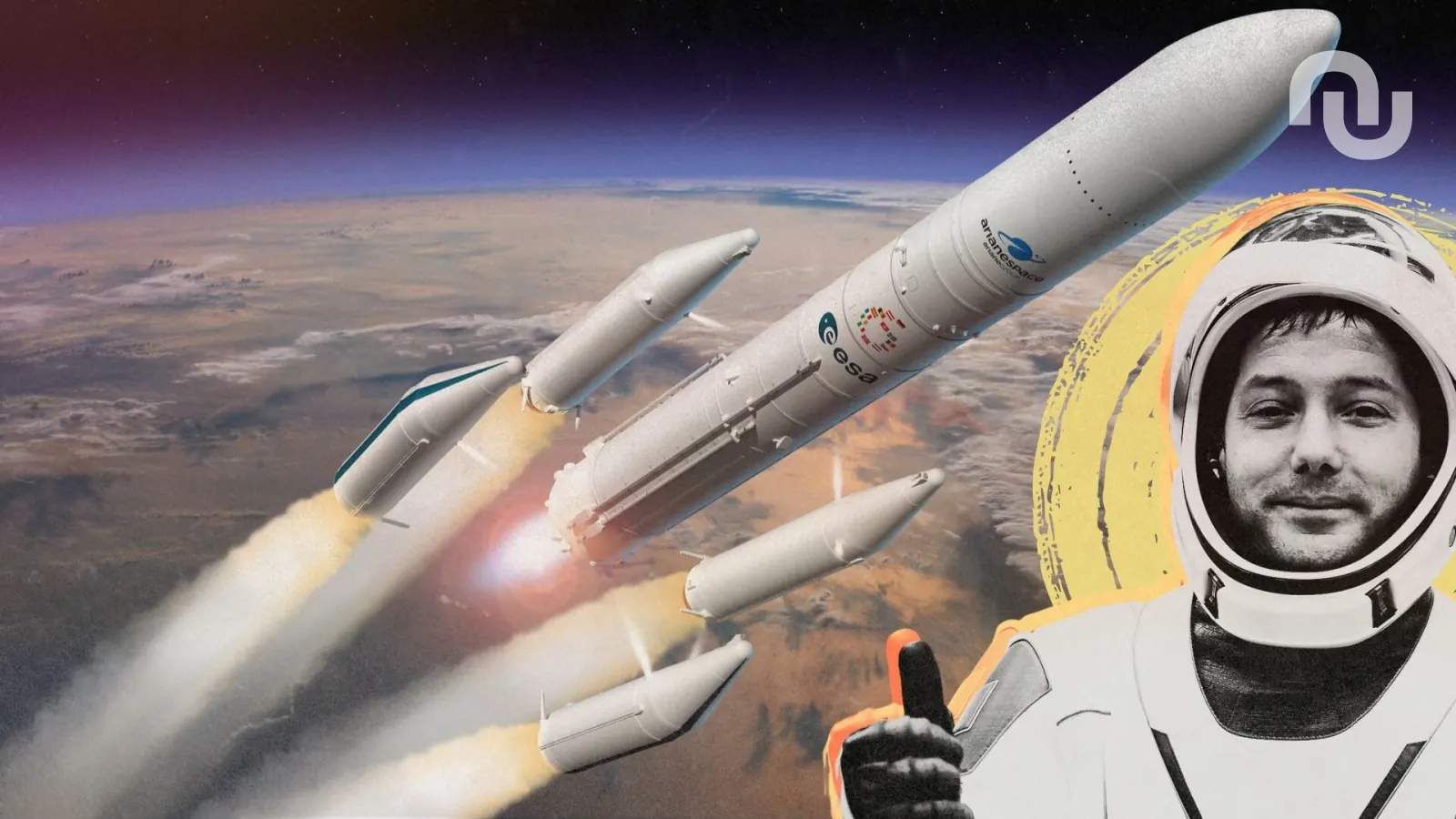
The European Space Agency (ESA) is actively investigating the feasibility of adapting its Ariane 6 rocket to carry astronauts, signaling a significant potential shift in Europe’s human spaceflight capabilities. Josef Aschbacher, the Director General of ESA, indicated that there are “good chances” this adaptation could materialize, according to reports from Aviation Week. This exploration is driven by a changing global landscape in space exploration and a push for greater European autonomy.
A Strategic Pivot
This potential development represents a strategic pivot for Europe, moving beyond its historical role as a participant in international manned missions to potentially becoming a provider of independent human spaceflight. The discussions are happening at a critical juncture, with decisions on the political and budgetary front expected by the end of 2026.
The European Space Agency is seriously considering adapting its Ariane 6 rocket to carry astronauts, a move driven by shifting international partnerships and a desire for greater European autonomy in space exploration.
Key facts
| Detail | Information |
|—|—|
| Rocket | Ariane 6 |
| Agency | European Space Agency (ESA) |
| Status | Under serious study for manned adaptation |
| Key Figure | Josef Aschbacher, ESA Director General |
| Potential Timeline | Decisions expected by end of 2026 |
Leveraging Existing Infrastructure
Rather than starting from scratch, ESA aims to leverage its existing assets. The Ariane 6 rocket, which has been successfully deploying satellites since its inaugural flight on July 9, 2024, represents a modern and established launch platform. Furthermore, Europe possesses its own sovereign launch site in Kourou, French Guiana, a location deemed excellent for space operations.
However, significant technical adaptations would be required. Qualifying Ariane 6 for human spaceflight necessitates substantial modifications to the launchpad facilities to accommodate crewed missions. Crucially, a launch escape system for Ariane 6 would need to be developed, along with a habitable capsule.
European industry players like Thales Alenia Space and The Exploration Company are already involved with ESA in developing automatic cargo return vehicles for low Earth orbit. These vehicles could potentially be adapted in the future to carry astronauts. This approach mirrors the strategy employed by companies like SpaceX in the United States, which began with cargo transport before progressing to human spaceflight after extensive certification processes.
Geopolitical Drivers
The impetus for this accelerated exploration of manned Ariane 6 capabilities stems from recent shifts in international cooperation. Aschbacher has publicly expressed concerns about Europe’s passive role in space exploration, highlighting recent unilateral decisions by NASA regarding the Lunar Gateway and significant budget cuts to the Mars Sample Return mission. These programs were areas where Europe had substantial involvement.
Compounded by the disruption of cooperation with Russia, which impacted missions like ExoMars, Europe has found itself on the sidelines of key international space endeavors. Meanwhile, China continues its rapid advancements, and India is poised to join the ranks of nations with independent human spaceflight capabilities through its Gaganyaan program.
The realization is dawning within Europe that while having world-class engineers is essential, it is not sufficient. Europe needs to have direct control over its spacefaring destiny.
Looking Ahead
The coming months will be crucial in determining the future of this initiative. A major space summit hosted by France in September, followed by an ESA interministerial meeting in December, will likely address the budget allocation for human exploration. The technical challenges are significant, but the political will and financial commitment from ESA’s 23 member states will be paramount. For Europe to compete with the substantial budgets of the United States and China, a unified and collaborative approach will be necessary, resisting nationalistic tendencies that could dilute collective capabilities.
The practical impact for the AI and developer community is the potential for a new European-centric platform for space-related AI development, automation, and tooling. As Europe seeks greater autonomy in space, new opportunities for research, development, and deployment of AI technologies in areas like mission control, data analysis, and autonomous systems may emerge. This could foster innovation in areas such as AI-powered mission planning, real-time trajectory analysis, and autonomous spacecraft operations, providing new avenues for developers and researchers.
Source: Numerama IA – La fusée Ariane 6 pour transporter des astronautes ? « Il y a de bonnes chances que cela puisse se concrétiser » (https://www.numerama.com/sciences/2275885-la-fusee-ariane-6-pour-transporter-des-astronautes-il-y-a-de-bonnes-chances-que-cela-puisse-se-concretiser.html)
Datos clave
| Punto | Detalle |
|---|---|
| Fuente | Numerama IA |
| Fecha | 2026-06-15T08:55:54+00:00 |
| Tema | La fusée Ariane 6 pour transporter des astronautes ? « Il y a de bonnes chances que cela puisse se concrétiser » |
Source
Numerama IA Publicacion original: 2026-06-15T08:55:54+00:00
Related articles
IBM CEO Puts a Number on the Open-Weight AI Value Proposition: 90% of the Performance at 10% of the Token Cost
IBM CEO Arvind Krishna told analysts that open-weight models now deliver about 90% of frontier-model effectiveness while costing between 10% and 25%…
Read article
OCU Finds Spanish Homeowner Communities Overpaying Up to €1,500 on Electricity and €3,515 on Gas—Can AI Tools Optimize Shared Energy Bills?
A new OCU analysis of Spanish homeowner community bills reveals widespread overpayment due to non-competitive tariffs and excess contracted power. Could AI-driven…
Read article
Mayotte fiber dispute does not meet ReviewArticle’s AI news brief
Le Monde reports that France’s competition authority has ordered Orange to suspend part of its fiber-optic rollout in Mayotte. The dispute is…
Read article
DiffEEG Model Uses Diffusion Pre-Training to Improve Seizure Detection from Minimal Labeled Data
Researchers have introduced DiffEEG, a 9.6-million-parameter foundation model that combines denoising diffusion pre-training with reinforcement learning fine-tuning to detect seizure events from…
Read articleWiki relacionada

AI Model API Pricing and Context Window Comparison: Current Rates and Limits
Compare the latest API pricing, context windows, and capabilities of leading AI model providers including OpenAI, Anthropic, Google, and Mistral. Practical guidance…
Read article
AI Agent Evaluation Frameworks: How to Benchmark Agentic Systems
A practical guide to evaluating AI agents — from task completion metrics to safety, cost, and robustness. Covers major frameworks, primary sources,…
Read article
LLM Benchmarks Decoded: What MMLU, HumanEval, and GSM8K Actually Measure for Developers
A developer-focused breakdown of the most-cited LLM benchmarks — MMLU, HumanEval, GSM8K, MATH, Chatbot Arena — including what they test, their hidden…
Read article
What Is RAG? A Practical Guide to Retrieval-Augmented Generation in 2025
Retrieval-Augmented Generation (RAG) grounds LLM outputs in external data, reducing hallucinations and enabling enterprise use cases. This guide covers how RAG works,…
Read article