
The useful way to judge a new AI feature
A practical column framework for deciding whether an AI release deserves a workflow change, a pilot or a polite shrug.

The release note is not the outcome
Most AI features arrive with the same promise: less friction, more speed and a cleaner path from idea to finished work. That promise is useful, but it is not enough for a working team. A serious evaluation starts with the task the feature changes, the cost of adopting it and the risk of trusting it too quickly.
ReviewArticle will treat new AI features as workflow events, not as hype cycles. The question is not only whether a model, assistant or agent can perform an impressive demo. The question is whether it can improve a real process when deadlines, handoffs, permissions, edge cases and review standards are involved.
Three tests before adoption
The first test is repetition. If a feature only helps once, it may be a novelty. If it saves time across a repeated workflow, it can become infrastructure. The second test is reviewability. Teams need to see what the AI changed, why it changed it and where a human must approve the result. The third test is reversibility. A good AI workflow should make it easy to undo, compare or rerun the result.
| Question | Why it matters |
|---|---|
| What task changes? | Prevents vague productivity claims. |
| Who reviews the output? | Keeps accountability visible. |
| What can fail? | Separates useful automation from risky shortcuts. |
What to watch next
The best AI features will not be the loudest. They will be the ones that fit into version control, documents, support queues, analytics dashboards, design tools and deployment workflows without hiding the chain of responsibility. That is the standard this site will use in columns and reviews.
Related articles

Gen Z’s Shifting Relationship with Alcohol: Social Pressure Persists Despite Reduced Consumption
New studies reveal that while Generation Z is drinking less alcohol, social pressure to consume remains a significant factor in their decisions,…
Read article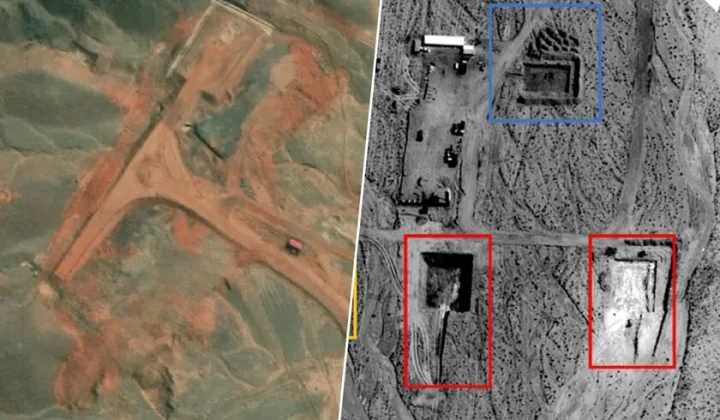
Satellite Images Reveal Mysterious Chinese Desert Structures Aimed at Taiwan
New satellite imagery from China's Jilantai base shows two unidentified rectangular structures with retractable roofs, sparking speculation about their purpose and potential…
Read article
Claude 3.5 Sonnet: A Leap in AI Model Performance and Accessibility
Anthropic's latest AI model, Claude 3.5 Sonnet, promises significant improvements in speed, cost-effectiveness, and capability, marking a new milestone in accessible AI.
Read article
Cold Water Digestion Myth Debunked by Experts: It Slows, Not Stops
While drinking ice-cold water doesn't block digestion, experts explain it can lead to slower, less comfortable digestive processes.
Read articleWiki relacionada
Understanding Large Language Models (LLMs)
An introduction to Large Language Models (LLMs), their architecture, capabilities, limitations, and real-world applications in AI.
Read article
Understanding LLM Context Windows
An in-depth look at Large Language Model context windows, their importance, limitations, and how they impact AI applications.
Read article
Comprendiendo los Modelos Llama 3: Una Visión Integral
Explore la familia de modelos Llama 3, detallando su arquitectura, capacidades, limitaciones y aplicaciones prácticas en el desarrollo de IA.
Read article
Comprensión de los Modelos de Lenguaje Grandes (LLM)
Una mirada en profundidad a los Modelos de Lenguaje Grandes (LLM), su arquitectura, capacidades, limitaciones e impacto en el desarrollo de la…
Read article