
Anthropic to Pay SpaceX $15 Billion Annually for Cloud AI Infrastructure Access
A recent SpaceX IPO filing reveals Anthropic's agreement to pay $1.25 billion monthly for access to SpaceX's cloud computing infrastructure, highlighting the escalating costs and bottlenecks in AI development.
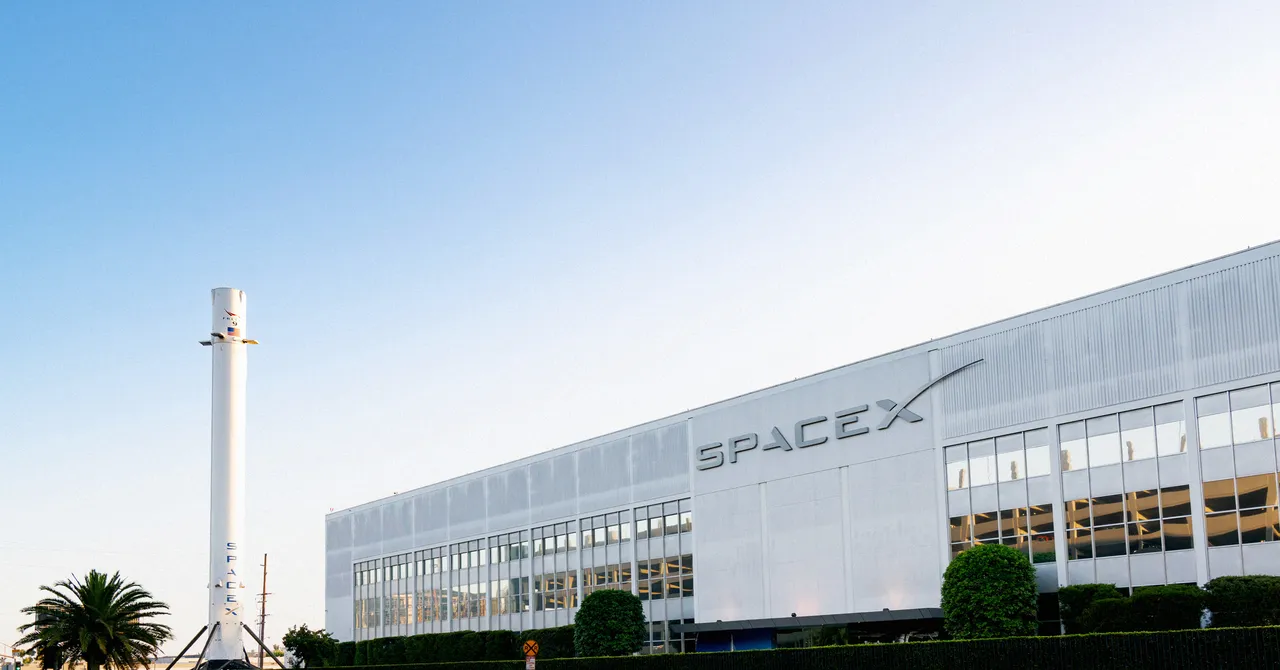
Anthropic has made a significant financial commitment to secure access to SpaceX’s vast cloud computing resources. This arrangement, detailed in SpaceX’s S-1 regulatory filing, reveals Anthropic will pay $1.25 billion per month—totaling $15 billion annually—through May 2029 for GPU access at the Colossus and Colossus II data centers. This substantial investment highlights the critical and escalating demand for computational power in the competitive landscape of advanced AI development.
The data centers, located across Tennessee and Mississippi, collectively offer over one gigawatt of computing power. SpaceX initially constructed these facilities to support its own xAI unit, responsible for the Grok AI chatbot. However, Elon Musk indicated that xAI did not require the full capacity, leading to this lucrative third-party agreement. While an initial partnership was announced earlier, the specific financial terms were not publicly disclosed until the recent IPO filing. Anthropic will begin with a reduced fee for May and June before the full monthly rate takes effect, according to the filing.
Impact on AI Development Workflows
For AI developers, product operators, and teams, this deal underscores a fundamental shift in the economics and logistics of building and deploying advanced AI models. Access to dedicated, high-capacity compute infrastructure is no longer just a scalable option but a strategic necessity. The $15 billion annual spend by Anthropic reflects the staggering costs associated with training and running large language models (LLMs) and other sophisticated AI systems. For those evaluating AI tools or considering in-house model development, this signals that:
- Compute Costs are Paramount: The cost of compute is becoming a dominant factor in AI development budgets, potentially overshadowing other expenses like talent acquisition or data curation.
- Infrastructure as a Bottleneck: Even well-funded AI labs face compute bottlenecks. Securing dedicated resources, even from a competitor’s affiliate, becomes a strategic move to ensure continuous innovation and avoid reliance on shared cloud resources.
- Strategic Partnerships for Scale: Companies like Anthropic are willing to enter into massive long-term contracts to guarantee access to the raw processing power needed for their ambitious roadmaps. This influences how teams might consider their own cloud strategies, weighing the flexibility of public clouds against the guaranteed capacity of dedicated arrangements.
- Competitive Advantage: The ability to access and utilize such vast compute resources can provide a significant competitive edge in model performance, speed of iteration, and the ability to handle increasingly complex tasks such as AI coding tools.
This substantial investment from Anthropic suggests aggressive plans for further model development and scaling of its AI products. The company’s revenue projections, exceeding $10 billion for Q2 2026, as reported by The Wall Street Journal and confirmed by an Anthropic spokesperson to WIRED, indicate a significant portion of its earnings is being reinvested into core infrastructure.
SpaceX’s Strategic Diversification
The agreement also reveals SpaceX’s strategic move to monetize its extensive infrastructure. By building Colossus and Colossus II, SpaceX not only supported its internal xAI projects but also positioned itself as a major provider of AI compute services. This “dual monetization strategy,” as described in the S-1 filing, aims to generate substantial returns on invested capital. SpaceX anticipates “additional similar services contracts,” indicating a broader ambition to become a key player in the AI infrastructure market.
This diversification aligns with SpaceX’s broader financial context ahead of its anticipated initial public offering (IPO). SpaceX is targeting the largest IPO in history, aiming to raise approximately $75 billion at a $1.75 trillion valuation, according to the filing. The confidential filing with the US Securities and Exchange Commission occurred on April 1, with the cleaned-up version released on Wednesday. The company may debut on Nasdaq under the ticker SPCX as early as June 12, as reported.
The filing also offered a glimpse into SpaceX’s financial performance, revealing nearly $4.7 billion in revenue and a loss of almost $4.3 billion in the first quarter of this year. In the previous year, SpaceX generated $18.7 billion in revenue but incurred a $4.9 billion loss due to heavy spending on AI technologies and the development of its Starship rocket, according to the S-1 document. These figures underscore the capital-intensive nature of both space exploration and cutting-edge AI development. The S-1 document aims to provide potential investors with a comprehensive understanding of the company’s financial health and strategic direction.
Corporate Governance and Investor Scrutiny
The S-1 filing has also brought to light significant concerns regarding SpaceX’s corporate governance structure. Activist groups, including a prominent US teachers’ union, AI safety researchers, and environmental organizations, have urged investors to exercise caution. Concerns center on the significant power held by Elon Musk within SpaceX, with excerpts from the filing reportedly indicating that Musk is the sole individual capable of removing himself, and that he will maintain control over the company’s board. This, coupled with his and his allies’ outsized voting power, raises questions about accountability and shareholder influence, as reported by Reuters.
Public employee retirement funds from California, New York, and New York City have collectively labeled SpaceX’s proposed governance as “novel and extreme,” citing it as “the most management-favorable governance structure ever brought to the U.S. public markets at this scale,” according to their joint letter. While acknowledging SpaceX’s technological achievements and national security contributions, these institutional investors advocate for adherence to baseline protections for long-term institutional capital. Concerns also extend to SpaceX’s reported intention to allow individual investors to buy a sizable 30% of initially offered shares, which some fear could lead to market volatility akin to a “meme stock.”
Key Details from SpaceX S-1 Filing
- Anthropic Compute Deal: $1.25 billion/month ($15 billion annually) through May 2029 for GPU access.
- Data Centers: Colossus and Colossus II (Tennessee & Mississippi), >1 gigawatt computing power.
- IPO Valuation Target: $1.75 trillion valuation, aiming to raise $75 billion.
- Q1 2026 Financials: $4.7 billion revenue, $4.3 billion loss.
- 2025 Financials: $18.7 billion revenue, $4.9 billion loss (due to AI/Starship spending).
- Governance Concerns: Elon Musk’s extensive control, “management-favorable structure.”
What remains unclear
While the S-1 filing provides substantial financial details, the full scope of how this partnership will impact the broader AI cloud computing market is yet to be seen. The specific technologies and GPU models Anthropic gains access to through Colossus and Colossus II are not explicitly detailed, nor is the precise breakdown of how Anthropic plans to utilize this immense computational power for specific projects beyond its general AI coding tools. Further, the extent to which SpaceX’s “additional similar services contracts” will materialize and with which partners remains an open question, and how these future deals might affect resource availability or pricing.
Source: Wired AI: “SpaceX IPO Filing Reveals Anthropic Is Paying $15 Billion a Year to Access Its Data Centers” (https://www.wired.com/story/spacex-ipo-anthropic-compute-finances-risks/)
Source
Wired AI Publicacion original: 2026-05-20T21:43:40+00:00
Related articles
Nvidia’s $250 Billion Credit Wrapper Could Give OpenAI Its Own Data Center in Ohio
Nvidia is negotiating a $250 billion guarantee to help OpenAI lease a 10 GW data center campus in Ohio, according to the…
Read article
Starlink’s Emergency Satellite SMS in Spain Wildfires Shows the Pre-Condition for AI-Driven Disaster Response
Wildfires in central Spain destroyed cell towers, leaving 100,000 people without phone service. Starlink activated free SMS via satellite-to-phone LTE, a technology…
Read article
Source Off-Topic: No AI Angle in Spanish Wildfire Leave Story
The submitted Xataka article covers paid leave for wildfire-affected workers in Spain. It contains no AI, tool, or developer content. ReviewArticle cannot…
Read article
Chinese DRAM Makers Raise Prices and Prioritize AI Server Deals, Reshaping Global Supply
Chinese DRAM manufacturers CXMT and YMTC, once seen as relief for the global RAM shortage, are now raising prices and signing multi-billion-dollar…
Read articleWiki relacionada

Mistral AI Models and API: A Developer Overview
Mistral AI offers a family of open-weight and proprietary models for developers, from Mistral 7B to Mistral Large. This guide covers model…
Read article
What Is Retrieval-Augmented Generation (RAG)? A Developer’s Guide
Retrieval-augmented generation (RAG) combines LLMs with external knowledge retrieval to reduce hallucinations, keep facts current, and enable enterprise-grade AI workflows. This guide…
Read article
What Is a Context Window in AI Models? A Practical Guide
Understand how context windows define the memory and reasoning scope of large language models, with real limits, comparisons, and practical implications for…
Read article
AI Model Evaluation Benchmarks: A Practical Guide for Developers
Compare AI models with confidence. This guide explains the most common benchmarks—MMLU, HumanEval, GPQA, and others—what they measure, their limits, and how…
Read article