
Perplexity Sonar Models Explained
An overview of Perplexity AI's Sonar models, their capabilities for search-grounded answer generation, and how they are used in real-world applications.

Last checked: 2026-05-21
What it is
Perplexity Sonar models are a family of large language models (LLMs) developed by Perplexity AI, specifically designed for search-grounded answer generation. Unlike traditional LLMs that rely solely on their pre-trained knowledge, Sonar models integrate real-time web search capabilities to provide accurate, up-to-date, and cited responses. This architecture positions them as advanced tools for applications requiring current information and factual accuracy, minimizing hallucinations by grounding responses in verified sources.
Why it matters
The ability of Perplexity Sonar models to perform real-time information retrieval and synthesize answers from current web data addresses a critical limitation of many LLMs: their knowledge cutoff. For users and developers who need factual consistency, verifiable answers, and access to the latest information, Sonar models offer a significant advantage. This makes them particularly valuable for news summarization, research assistance, content creation, and data analysis where timeliness is paramount. They represent a step towards more reliable and transparent AI systems by providing direct citations for generated content.
Who it is for
Perplexity Sonar models are primarily for developers, researchers, content creators, and businesses that require AI systems capable of:
* Generating answers based on recent information.
* Providing verifiable citations for AI-generated content.
* Integrating real-time web search into their applications.
* Reducing instances of hallucination in LLM outputs.
* Building AI assistants, chatbots, or knowledge bases that need to stay current.
How it is used in real workflows
In practical workflows, Perplexity Sonar models are typically accessed via an API, allowing integration into various applications. Common use cases include:
* Search and Summarization: Powering AI-driven search engines or tools that summarize complex topics with cited sources.
* Customer Support: Enhancing chatbots with the ability to answer user queries using the most current product information or news.
* Content Generation: Assisting writers and journalists in generating fact-checked articles, reports, or blog posts.
* Research Assistants: Providing researchers with quick, source-backed answers to queries across diverse fields.
* Data Analysis: Grounding insights from data with external, real-time context from the web.
Capabilities and limits
Perplexity Sonar models offer distinct capabilities:
* Real-time Information Access: Integrates web search to provide answers based on current information.
* Cited Responses: Generates responses with links to the original sources, enhancing verifiability.
* Reduced Hallucinations: Grounding in real-time search results helps mitigate the generation of factually incorrect information.
* Multilingual Support: Capable of processing and generating content in multiple languages, depending on the specific model variant.
However, limitations exist:
* Latency: The integration of real-time search can introduce slight latency compared to models that only rely on internal knowledge.
* Search Scope: Effectiveness is dependent on the quality and availability of information on the public web.
* Cost: API usage is typically billed based on tokens, and the search component may add to the operational cost compared to purely generative models.
Access, pricing or availability caveats
Perplexity Sonar models are primarily accessible through the Perplexity API. Access usually involves signing up for an API key. Pricing is typically usage-based, calculated on input and output tokens. Specific pricing tiers and availability may vary and are detailed on the official Perplexity AI website. Some models might be available in different sizes (e.g., “Online” for real-time search, “Large” for broader capabilities).
Privacy, data, copyright, security or enterprise caveats
When using Perplexity Sonar models, developers and enterprises should consider the following:
* Data Handling: Understand Perplexity’s data retention and usage policies for API calls. Input data sent to the API may be used for model improvement unless specific opt-out agreements are in place.
* Copyright: While Sonar models cite sources, users are responsible for ensuring their use of generated content complies with copyright laws, especially when integrating into commercial products.
* Security: API keys and sensitive information should be managed securely to prevent unauthorized access.
* Enterprise Features: For enterprise-grade applications, specific service level agreements (SLAs), enhanced data privacy, and dedicated support may be available through direct engagement with Perplexity AI.
Alternatives or close comparisons
Several other platforms and models offer capabilities for search-augmented generation or real-time information access:
- Primary Access: API | End-user search interface | API, Chatbot UI | Self-hosted, API (via partners)
- Real-time Search: Yes, integrated | Yes, core feature | Yes, via browsing tool | Requires external RAG setup
- Citations: Yes, explicit links | Yes, explicit links | Sometimes, depending on browsing tool implementation | Depends on RAG implementation
- Customization: Via API parameters | Limited, end-user focus | Via API parameters, fine-tuning | High, full control over RAG and model
- Target User: Developers, businesses | General users | Developers, general users | Developers, researchers
Practical checklist
When considering Perplexity Sonar models for your project, use this checklist:
1. Define Information Needs: Do you require real-time, cited information?
2. Evaluate Latency Tolerance: Can your application accommodate potential slight search-related delays?
3. Review Pricing Structure: Understand the token-based pricing and potential costs for search integration.
4. Assess Data Privacy Requirements: Are Perplexity’s data handling policies compatible with your project’s privacy needs?
5. Test API Integration: Experiment with the API to understand functionality and output quality for your specific use cases.
6. Plan for Citation Display: How will you present the provided citations to your end-users?
7. Consider Alternatives: Compare against other search-grounded or RAG-enabled models based on your specific criteria.
Related ReviewArticle pages or internal link suggestions
- Guide to Retrieval Augmented Generation (RAG)
- Understanding Large Language Model Hallucinations
- API Best Practices for AI Models
- Review of OpenAI GPT Models
- Cloud AI Services Comparison
Sources and caveats
The information regarding Perplexity Sonar models is based on official Perplexity AI documentation, blog posts, and API references. Pricing and specific model capabilities are subject to change as Perplexity AI continues to develop and update its offerings. Users should always refer to the most current official documentation for the latest details.
Update log
- 2026-05-21: Initial page creation based on Perplexity AI’s public API documentation and blog announcements regarding Sonar models.
Sources
Historial de cambios
Ultima revision y actualizacion: 10 June 2026.
Latest related articles
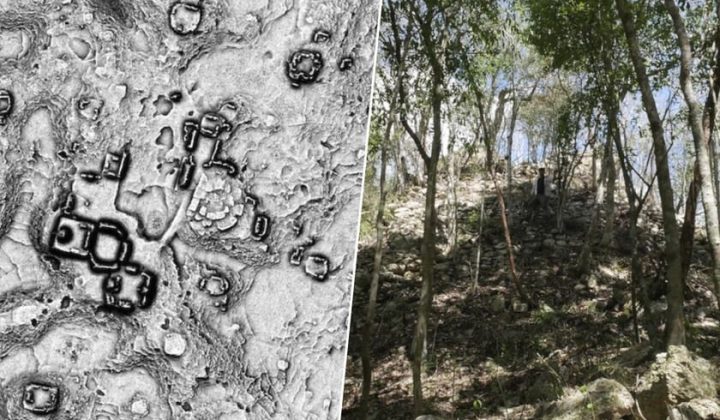
Archaeologists Uncover Hidden Maya City ‘Minanbé’ Using LiDAR Technology
A team of archaeologists has discovered a previously unknown Maya city, named Minanbé, deep within Mexico's Calakmul Biosphere Reserve, utilizing advanced LiDAR…
Read article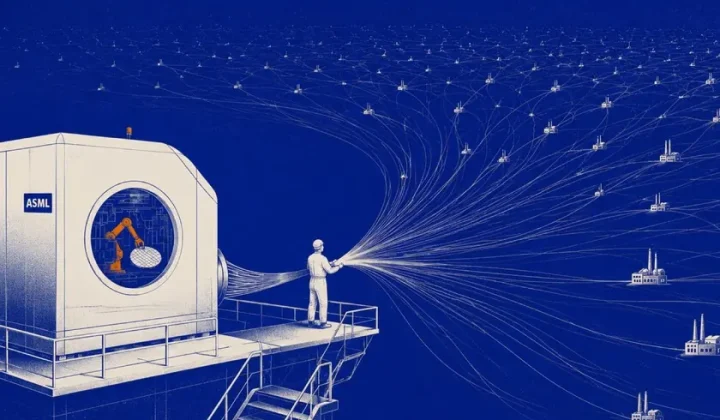
ASML’s Near-Death Journey to Global Semiconductor Monopoly
The story of ASML's rise from a struggling joint venture to the indispensable linchpin of global advanced chip manufacturing, detailing its strategic…
Read article
AI Tools Help Preserve Produce: New Methods for Extending Vegetable Shelf Life
While not directly AI-driven, advanced preservation techniques for vegetables like zucchini highlight the intersection of technology and food science, offering insights into…
Read article
Deteriorating Radioactive Barrels in Atlantic Pose Dilemma for Researchers
Decades-old radioactive waste buried deep in the Atlantic is showing critical signs of decay, raising concerns about potential environmental impacts and the…
Read article