
US Navy Reorients Research Strategy, Prioritizing Unique Capabilities Over Duplication
The U.S. Navy's top research official, Rachel Riley, is directing the service to cease replicating private sector innovations and instead focus on developing unique military capabilities that have no commercial market.
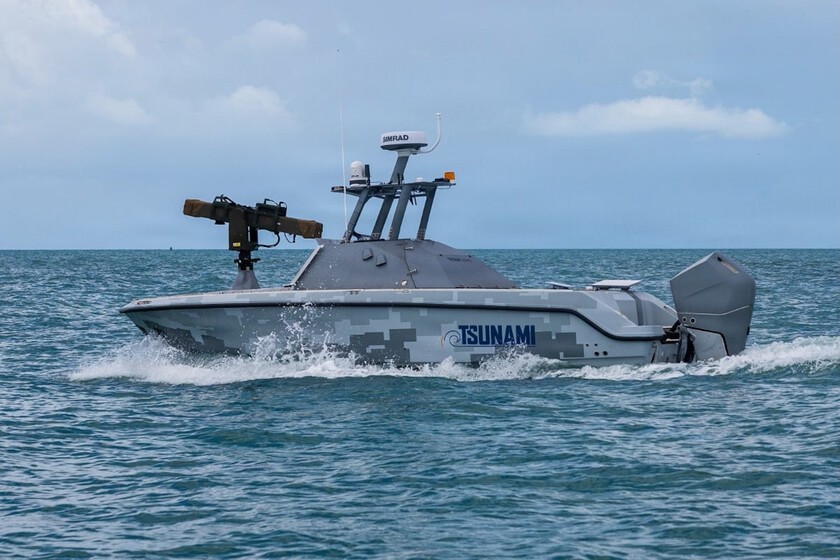
The U.S. Navy is undertaking a significant strategic pivot, aiming to redirect its research and development efforts away from duplicating technologies already being developed by the private sector. Rachel Riley, the chief of naval research, has articulated a new doctrine that emphasizes the Navy concentrating its public resources on creating capabilities that lack a commercial market. This strategic adjustment intends to curb redundant spending and accelerate the adoption of truly disruptive technologies essential for national defense.
A Shift in Doctrinal Approach
For decades, the Office of Naval Research (ONR) has operated as a substantial research laboratory, frequently exploring avenues parallel to those of private industry. Riley’s recent directives signal a departure from this model, with the core of the new doctrine being a clear instruction to “stop copying what the industry builds.” This reflects an understanding that private capital naturally gravitizes towards avenues with profit potential. Consequently, the Navy’s mission should now be to focus on areas that the private sector cannot or will not fund.
Riley highlighted the critical importance of speed in contemporary technological warfare, stating, “speed is the word of the year in our business.” This statement suggests a strategic acknowledgment that in a competitive technological landscape, the pace of development and deployment can be as vital as the technology itself.
Focusing on the Uniquely Military
The new frontier for Navy investment, according to Riley, lies in capabilities that do not have a civilian counterpart. She offered a concise example: “there is no commercial need for very quiet tubes that move underwater for a long time,” a clear reference to submarines. This illustrates the emerging investment criterion: if the market will never develop a particular technology, the Pentagon should. This focus gains particular relevance in 2026, with the AUKUS agreement in place and underwater warfare reasserting its centrality in the Indo-Pacific region amidst ongoing geopolitical tensions.
From Experimentation to Operational Reality
The development of the Sea Hunter, an autonomous naval vessel initially conceived as an experiment in 2017 for submarine hunting and mine clearance, serves as a prime example of this transition. After nearly a decade, it is now becoming an operational asset. The Navy’s objective is to drastically reduce such timelines, prioritizing the rapid integration of functional prototypes over prolonged development cycles. The logic is straightforward: less time spent in perpetual labs, and more functional systems reaching the fleet quickly.
Recent operations have begun to demonstrate the efficacy of this revised model. An autonomous naval drone, the Saronic Corsair, successfully rescued two downed pilots from a Boeing AH-64 Apache helicopter off the coast of Oman. A particularly revealing aspect of this mission was the timeframe: just four months elapsed from initial testing to a successful real-world deployment. This rapid iteration and immediate practical utility align with the objectives of the Defense Innovation Unit (DIU).
The Challenge of Autonomous Swarms
Beyond individual autonomous systems, a significant bottleneck remains in scaling capabilities to operate effectively in large numbers. Both Riley and Jarred Conley have emphasized a shared objective: transitioning from human control of single drones to human oversight of entire swarms. Riley reportedly critiqued current approaches as uncoordinated, likening them to disorganized team sports. Consequently, the Navy is studying biological systems, such as the formations of insects and birds, to translate this organized, collective logic into military doctrine for future autonomous operations. The anticipated revolution is not expected to be in the individual drone, but in the concept of the intelligent mass.
Addressing Bureaucracy as an Internal Obstacle
The U.S. Navy appears to have internalized a critical lesson from recent conflicts: rapid innovation is paramount, often more so than slow, methodical perfection. Historically, the Pentagon maintained tight control over every phase of development. Now, there is a growing acceptance that the role of the military should shift towards identifying critical gaps, funding their development, and allowing industry to execute the solutions. The overarching message is that future military superiority may be won not by inventing everything from scratch, but by discerning precisely which innovations are most critical to pursue.
Key Developments in Navy Innovation
| Aspect | Detail |
|---|---|
| Key Figure | Rachel Riley, Chief of Naval Research, U.S. Navy |
| New Doctrine | Cease copying industry developments; focus on unique military capabilities. |
| Rationale | Avoid redundant spending, accelerate adoption of disruptive tech. |
| Focus Areas | Capabilities with no commercial market, autonomous systems, swarm ops. |
| Speed Emphasis | Highlighted as a critical factor in technological warfare. |
| Example | Sea Hunter vessel; Saronic Corsair drone rescue (4 months from test). |
This strategic pivot by U.S. Navy Research underscores a significant trend in defense technology development. As AI and autonomous systems become increasingly central to military strategy, the ability to innovate rapidly and focus on unique, defensible capabilities will be crucial.
Source: La jefa de investigación de la Armada de EEUU advierte: “dejen de copiar lo que desarrolla la industria” – Xataka (https://www.xataka.com/magnet/jefa-investigacion-armada-eeuu-advierte-dejen-copiar-que-desarrolla-industria)
Source
Xataka IA Publicacion original: 2026-06-23T09:01:01+00:00
Related articles

IBM CEO Puts a Number on the Open-Weight AI Value Proposition: 90% of the Performance at 10% of the Token Cost
IBM CEO Arvind Krishna told analysts that open-weight models now deliver about 90% of frontier-model effectiveness while costing between 10% and 25%…
Read article
OCU Finds Spanish Homeowner Communities Overpaying Up to €1,500 on Electricity and €3,515 on Gas—Can AI Tools Optimize Shared Energy Bills?
A new OCU analysis of Spanish homeowner community bills reveals widespread overpayment due to non-competitive tariffs and excess contracted power. Could AI-driven…
Read article
Mayotte fiber dispute does not meet ReviewArticle’s AI news brief
Le Monde reports that France’s competition authority has ordered Orange to suspend part of its fiber-optic rollout in Mayotte. The dispute is…
Read article
DiffEEG Model Uses Diffusion Pre-Training to Improve Seizure Detection from Minimal Labeled Data
Researchers have introduced DiffEEG, a 9.6-million-parameter foundation model that combines denoising diffusion pre-training with reinforcement learning fine-tuning to detect seizure events from…
Read articleWiki relacionada

AI Model API Pricing and Context Window Comparison: Current Rates and Limits
Compare the latest API pricing, context windows, and capabilities of leading AI model providers including OpenAI, Anthropic, Google, and Mistral. Practical guidance…
Read article
AI Agent Evaluation Frameworks: How to Benchmark Agentic Systems
A practical guide to evaluating AI agents — from task completion metrics to safety, cost, and robustness. Covers major frameworks, primary sources,…
Read article
LLM Benchmarks Decoded: What MMLU, HumanEval, and GSM8K Actually Measure for Developers
A developer-focused breakdown of the most-cited LLM benchmarks — MMLU, HumanEval, GSM8K, MATH, Chatbot Arena — including what they test, their hidden…
Read article
What Is RAG? A Practical Guide to Retrieval-Augmented Generation in 2025
Retrieval-Augmented Generation (RAG) grounds LLM outputs in external data, reducing hallucinations and enabling enterprise use cases. This guide covers how RAG works,…
Read article