
US Government Requests OpenAI Restrict GPT 5.6 Rollout Amid Security Concerns
The US administration has asked OpenAI to limit the distribution of its upcoming GPT 5.6 model to a select group of approved partners, citing the AI's advanced capabilities and potential cybersecurity risks, following a similar move against Anthropic.

The United States government has reportedly requested that OpenAI limit the distribution of its forthcoming AI model, GPT 5.6, to a select number of partners approved by the administration. This directive, as reported by CNN, stems from the model’s advanced capabilities, which have raised concerns regarding potential misuse.
This development follows closely on the heels of similar actions taken by the Trump administration, which imposed export controls on Anthropic. This led the AI company to withdraw its most advanced models, Mythos and Fable, from the market. The critical capabilities of these models, particularly in cybersecurity, reportedly alerted Washington and Wall Street to what some experts deem an unprecedented risk vector.
Por que importa
According to sources cited in the report, both the administration and OpenAI acknowledge that GPT 5.6 possesses capabilities comparable to Anthropic’s Mythos model. This positions GPT 5.6 as the second cutting-edge AI model to undergo direct governmental scrutiny within weeks.
OpenAI has reportedly agreed to these restrictions as a provisional measure to facilitate the model’s eventual public release. Sam Altman, CEO of OpenAI, is quoted in an internal report describing the situation as a “strange moment” due to the absence of a clear regulatory framework for AI models. He further explained that the government is approving access on a “client-by-client” basis, a method that OpenAI tolerates but does not endorse as a long-term solution.
Altman has conveyed OpenAI’s official stance, stating, “We have made it clear to the US Government that this is not our preferred long-term model, and we will work with them and other industry players to achieve a more sustainable approach in future releases.” The White House has issued a brief statement to CNN, indicating that they “continue to collaborate with frontier AI labs to develop shared approaches.” OpenAI has not provided further comment at this time.
Regulatory Confusion Amidst Shifting Policies
The broader regulatory landscape for advanced AI remains complex and somewhat uncoordinated. Earlier this month, former President Donald Trump signed an executive order requiring companies with advanced AI models to undergo voluntary governmental review 30 days prior to each launch. However, the framework for implementing this order is still under development.
The handling of OpenAI’s situation highlights this confusion. The request to restrict GPT 5.6 originated from the White House, while the export ban on Anthropic’s models was issued by the Department of Commerce. These are distinct governmental bodies operating with apparently uncoordinated instruments.
Critics point to the ad hoc nature of these regulatory interventions. Brad Carson, director of Public First, a bipartisan super PAC advocating for AI safety, stated, “Right now, we have an ad hoc, personalized, opaque approach, possibly outside the law.” Carson acknowledges the government’s authority to remove dangerous products, including AI models, but emphasizes the need for transparency and fairness in the process. The exact public release date for GPT 5.6 remains unconfirmed.
Key facts
| Aspect | Detail |
| :—————— | :———————————————————————– |
| Model | GPT 5.6 |
| Requesting Body | US Government (White House) |
| Action | Limit distribution to approved partners |
| Reason | Advanced capabilities, potential cybersecurity risks |
| Precedent | Similar US action against Anthropic’s Mythos and Fable models |
| OpenAI’s response | Accepted as provisional; seeks sustainable long-term approach |
| Regulatory Context | Evolving, with recent executive order on pre-launch reviews |
This development is significant for ReviewArticle readers as it illustrates the increasing governmental oversight and regulatory pressure on leading AI developers. The restrictions placed on OpenAI’s GPT 5.6, following similar actions against Anthropic, signal a growing trend towards government intervention in the release and deployment of advanced AI models. This could impact the pace of AI innovation, the accessibility of new tools, and the development of industry-wide safety standards. For developers and users of AI tools, understanding these regulatory shifts is crucial for navigating the evolving landscape of AI development and deployment.
Source: EEUU aprieta las tuercas a OpenAI: debe restringir el lanzamiento de GPT 5.6 sí o sí – Xataka, https://www.xataka.com/robotica-e-ia/eeuu-aprieta-tuercas-a-openai-debe-restringir-lanzamiento-gpt-5-6
Datos clave
| Punto | Detalle |
|---|---|
| Fuente | Xataka IA |
| Fecha | 2026-06-26T11:55:00+00:00 |
| Tema | EEUU aprieta las tuercas a OpenAI: debe restringir el lanzamiento de GPT 5.6 sí o sí |
Source
Xataka IA Publicacion original: 2026-06-26T11:55:00+00:00
Related articles
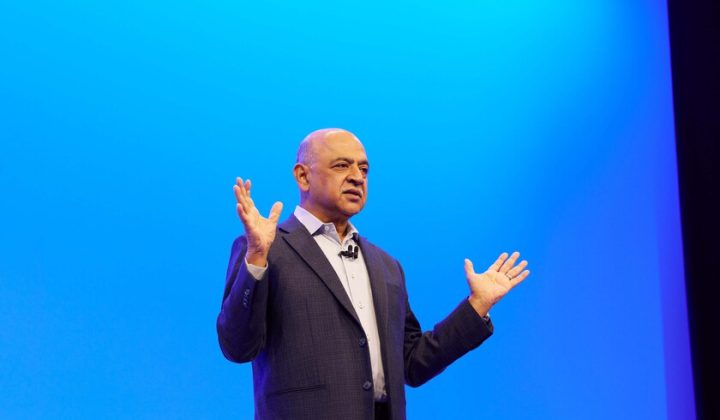
IBM CEO Puts a Number on the Open-Weight AI Value Proposition: 90% of the Performance at 10% of the Token Cost
IBM CEO Arvind Krishna told analysts that open-weight models now deliver about 90% of frontier-model effectiveness while costing between 10% and 25%…
Read article
OCU Finds Spanish Homeowner Communities Overpaying Up to €1,500 on Electricity and €3,515 on Gas—Can AI Tools Optimize Shared Energy Bills?
A new OCU analysis of Spanish homeowner community bills reveals widespread overpayment due to non-competitive tariffs and excess contracted power. Could AI-driven…
Read article
Mayotte fiber dispute does not meet ReviewArticle’s AI news brief
Le Monde reports that France’s competition authority has ordered Orange to suspend part of its fiber-optic rollout in Mayotte. The dispute is…
Read article
DiffEEG Model Uses Diffusion Pre-Training to Improve Seizure Detection from Minimal Labeled Data
Researchers have introduced DiffEEG, a 9.6-million-parameter foundation model that combines denoising diffusion pre-training with reinforcement learning fine-tuning to detect seizure events from…
Read articleWiki relacionada

AI Model API Pricing and Context Window Comparison: Current Rates and Limits
Compare the latest API pricing, context windows, and capabilities of leading AI model providers including OpenAI, Anthropic, Google, and Mistral. Practical guidance…
Read article
AI Agent Evaluation Frameworks: How to Benchmark Agentic Systems
A practical guide to evaluating AI agents — from task completion metrics to safety, cost, and robustness. Covers major frameworks, primary sources,…
Read article
LLM Benchmarks Decoded: What MMLU, HumanEval, and GSM8K Actually Measure for Developers
A developer-focused breakdown of the most-cited LLM benchmarks — MMLU, HumanEval, GSM8K, MATH, Chatbot Arena — including what they test, their hidden…
Read article
What Is RAG? A Practical Guide to Retrieval-Augmented Generation in 2025
Retrieval-Augmented Generation (RAG) grounds LLM outputs in external data, reducing hallucinations and enabling enterprise use cases. This guide covers how RAG works,…
Read article