
How AI Tool Launches Change Procurement Decisions This Quarter
AI launch cycles can distort software buying if teams react to announcements before checking what is actually documented, available, and relevant to their workflows. This guide reframes launch season around practical procurement decisions: renew, pilot, expand, or wait.
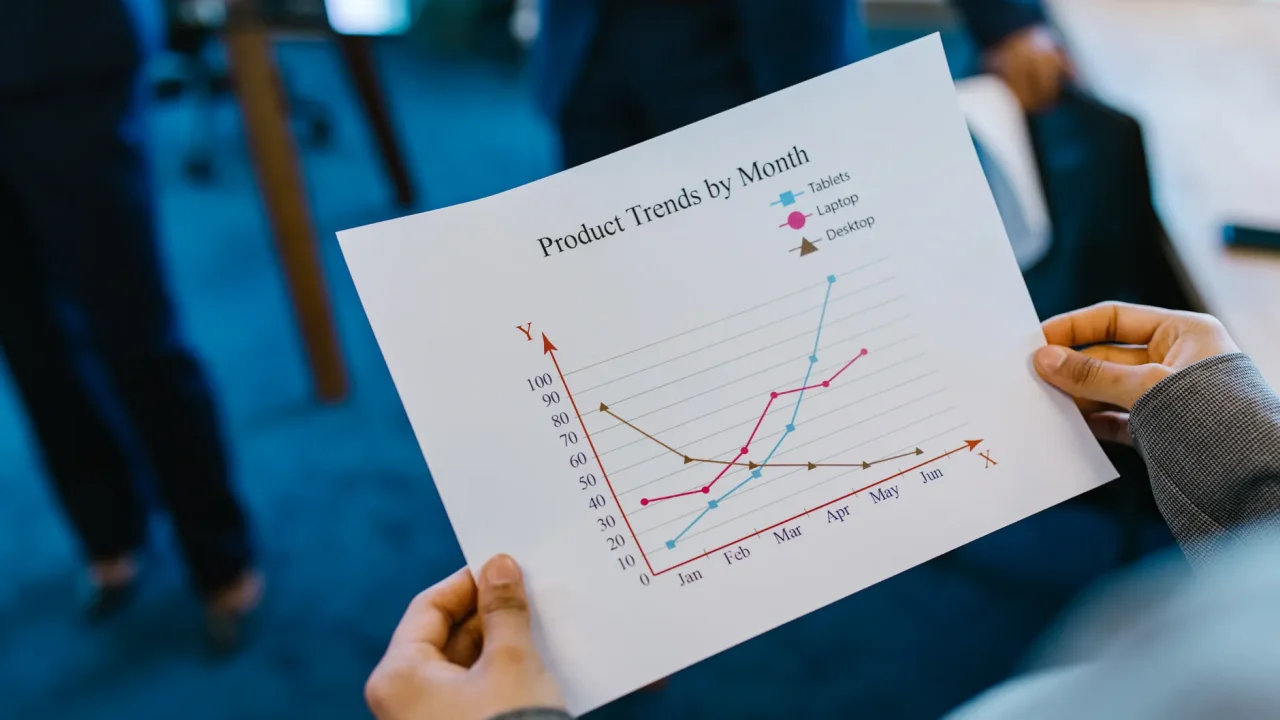
How AI Tool Launches Change Procurement Decisions This Quarter
Summary box: The procurement takeaway
Most AI launches should trigger a review, not an automatic buying decision. For procurement teams, the useful question is whether a launch changes a live decision already in scope: renew, pilot, expand, or wait. With the current source set, the safest evidence-led approach is to judge claims by documented usefulness and clarity rather than by novelty or broad AI branding. <!– sources: 1,2 –>
Date-checked note: This article was refreshed against the currently available source set for this assignment. Those sources support an evergreen procurement framework, not vendor-specific or quarter-specific launch claims. If you need current-quarter buying guidance tied to named tools, check official release notes, admin documentation, and pricing pages before acting. <!– sources: 1,2 –>
Why launches matter to procurement
Launch announcements can change how teams think about renewals, pilots, and vendor comparisons. But an announcement alone does not prove that a capability is mature, broadly available, or materially useful in an existing workflow. A safer procurement posture is to treat launches as prompts to re-check assumptions rather than as proof that a vendor now deserves broader deployment. <!– sources: 1,3 –>
Start with the decision, not the announcement
A practical way to reduce launch-season noise is to sort each announcement into one of four decision paths:
- Renew if the launch appears to close a known gap in an existing contract.
- Pilot if the capability looks relevant but fit is still uncertain.
- Expand if the launch may reduce overlap or improve standardization.
- Wait if scope, documentation, controls, or practical impact remain unclear. <!– sources: 1,2 –>
This keeps teams focused on what the business needs to decide, instead of treating every announcement as a reason to restart vendor evaluation from scratch. <!– sources: 1,2 –>
Decision table: what to verify before acting
| Decision type | Typical trigger | What to verify first | Sensible next step |
|---|---|---|---|
| Renew | Vendor says a previous gap is now addressed | Whether the change is concrete and relevant to current users | Renew only if the value case improves materially |
| Pilot | New capability looks promising but unproven | One workflow to test and a clear review point | Run a time-boxed pilot |
| Expand | Launch appears to reduce tool overlap | Whether it serves more of the real workflow | Expand selectively |
| Wait | Announcement language is broad or unclear | What has actually changed in practice | Delay commitment until the case is clearer |
What procurement teams should verify
1. What is actually being claimed?
Broad terms such as “AI-powered,” “transformative,” or similar marketing language are not procurement evidence on their own. The first step is to identify the concrete capability being described and the user problem it is meant to address. <!– sources: 1,3 –>
2. Does the launch change a real workflow?
A launch matters most when it changes the work users can actually complete, not just the language on a product page. If the practical benefit is still vague, the announcement may not yet justify a change in spend or vendor ranking. <!– sources: 1,2 –>
3. Is this a comparison update or a buying trigger?
In many cases, a launch should update your comparison criteria before it changes your shortlist. That means reviewing whether the new capability alters usefulness, workflow fit, or overlap with tools you already pay for. <!– sources: 1,2 –>
Procurement checklist
Use this checklist before changing course because of a recent launch:
- Identify the exact buying decision affected: renewal, pilot, expansion, or wait.
- Write down the specific workflow the launch is supposed to improve.
- Separate documented facts from assumptions made by the team.
- Check whether the announcement changes existing tool overlap or standardization plans.
- Confirm what still appears unclear from public documentation.
- Avoid treating category-level AI language as proof of enterprise readiness. <!– sources: 1,2,3 –>
Renewal review questions
When should a launch affect a renewal?
A renewal deserves closer review when a vendor claims to have fixed a weakness that previously limited adoption or value. That should trigger verification, not automatic approval. The question is whether the documented change is substantial enough to alter the current business case. <!– sources: 1,2 –>
Ask:
- Does the launch clearly improve a workflow that matters to current users?
- Is the team reacting to documented capability or broad positioning language?
- Does the change reduce overlap elsewhere in the stack?
- Would preserving flexibility be wiser if the practical case is still unclear?
- Has the team written down what changed in the value case? <!– sources: 1,2,3 –>
Pilot criteria
What should be piloted?
Pilot when a new capability looks relevant but the team still lacks evidence on fit, adoption, or usefulness in practice. This is the middle path between overcommitting and dismissing a potentially useful change too early. <!– sources: 1,2 –>
A launch-driven pilot should be:
- Tied to one defined workflow.
- Limited to a clear user group.
- Time-boxed with a review date.
- Evaluated against evidence for usefulness in practice.
- Documented with open questions, not just positive impressions. <!– sources: 1,2 –>
What should usually be skipped for now?
If a launch does not yet make clear what changed, who benefits, or how it improves work, the safer move is usually to wait rather than to start a broad pilot. In procurement terms, “skip” often means “do not expand evaluation until documentation and practical relevance are clearer.” <!– sources: 1,2,3 –>
How launches should change vendor comparisons
A launch should usually change your evaluation criteria before it changes your ranking. Compare the announcement against your own documented needs rather than against category excitement. For readers building a wider buying process, see [How to evaluate new AI tools for teams without buying hype](/how-to-evaluate-new-ai-tools-for-teams-without-buying-hype) and the related [AI tool evaluation checklist](/ai-tool-evaluation-checklist). For broader launch context, see [What the latest AI tool launches mean for teams right now](/what-the-latest-ai-tool-launches-mean-for-teams-right-now). <!– sources: 1,2 –>
Practical risks during launch-heavy periods
The practical risk is not that every launch is unhelpful. It is that announcement momentum can outrun verification. Teams can reduce that risk by returning to a simple test: is the claim clearly described, tied to a user need, and more helpful in practice than the status quo? <!– sources: 1,2 –>
Next actions for this quarter
- Review active renewals that could be influenced by recent launch claims.
- Narrow any launch-driven pilot to one workflow and one review date.
- Update vendor comparison criteria before changing rankings or spend.
- Pause where public documentation still leaves major questions unanswered.
- Keep a short decision memo separating verified facts from internal interpretation. <!– sources: 1,2,3 –>
Sources
- Google Search Central: helpful content – Google Search Central.
- Google Search Central: AI-generated content – Google Search Central.
- Artificial intelligence overview – Wikipedia.
Related articles

Archaeologists Uncover Hidden Maya City ‘Minanbé’ Using LiDAR Technology
A team of archaeologists has discovered a previously unknown Maya city, named Minanbé, deep within Mexico's Calakmul Biosphere Reserve, utilizing advanced LiDAR…
Read article
ASML’s Near-Death Journey to Global Semiconductor Monopoly
The story of ASML's rise from a struggling joint venture to the indispensable linchpin of global advanced chip manufacturing, detailing its strategic…
Read article
AI Tools Help Preserve Produce: New Methods for Extending Vegetable Shelf Life
While not directly AI-driven, advanced preservation techniques for vegetables like zucchini highlight the intersection of technology and food science, offering insights into…
Read article
Deteriorating Radioactive Barrels in Atlantic Pose Dilemma for Researchers
Decades-old radioactive waste buried deep in the Atlantic is showing critical signs of decay, raising concerns about potential environmental impacts and the…
Read articleWiki relacionada
Understanding Large Language Models (LLMs)
An introduction to Large Language Models (LLMs), their architecture, capabilities, limitations, and real-world applications in AI.
Read article
Understanding LLM Context Windows
An in-depth look at Large Language Model context windows, their importance, limitations, and how they impact AI applications.
Read article
Comprendiendo los Modelos Llama 3: Una Visión Integral
Explore la familia de modelos Llama 3, detallando su arquitectura, capacidades, limitaciones y aplicaciones prácticas en el desarrollo de IA.
Read article
Comprensión de los Modelos de Lenguaje Grandes (LLM)
Una mirada en profundidad a los Modelos de Lenguaje Grandes (LLM), su arquitectura, capacidades, limitaciones e impacto en el desarrollo de la…
Read article