
Satya Nadella Critiques AI Centralization, Advocates for Broader Access
Microsoft CEO Satya Nadella expresses concerns over the concentration of AI development power in a few companies, urging for a more distributed model and broader societal benefit from AI advancements.
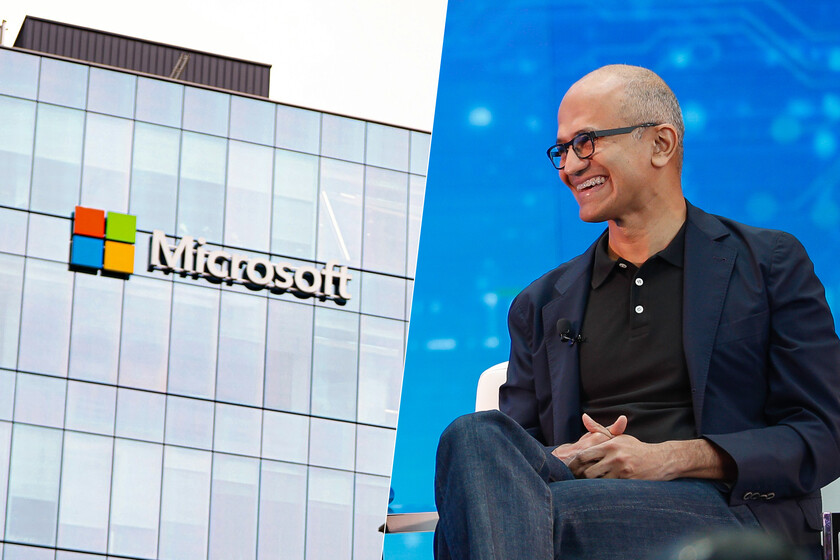
Microsoft CEO Satya Nadella has voiced significant concerns about the current trajectory of artificial intelligence development, arguing that the societal acceptance of AI hinges on broader access and a move away from the concentration of power within a few leading companies. In a recent interview with The Wall Street Journal, Nadella stated that the prevailing model of AI development is neither sustainable nor legitimate in the eyes of the public.
Nadella’s remarks echo prior warnings he has issued, notably at the World Economic Forum in Davos earlier this year. At that event, he cautioned that if AI’s advancements do not translate into tangible improvements in areas like health, education, and productivity, the “social license” to continue investing vast resources into its development could be jeopardized. He emphasized that demonstration of real-world impact, rather than mere narrative, is now crucial.
Concentration of Power
The Microsoft chief pointed to a small group of companies – those developing the most advanced AI models such as OpenAI, Anthropic, and Google – as accumulating significant value from AI. Simultaneously, he noted, these entities often contribute to public apprehension regarding AI’s potential downsides, including widespread job displacement and existential risks.
“You can’t say all white-collar jobs are going to disappear, that this could be a weapon, and at the same time use all the available power to build data centers,” Nadella told the WSJ. He asserted that society will ultimately reject a scenario where only a select few models and companies drive all global AI learning. “The narrative is not enough because now we have to demonstrate with facts,” he insisted.
While Nadella did not name specific companies, the context of his comments clearly points to major AI players. CEOs of companies like Anthropic and OpenAI, both significant partners of Microsoft, have previously made stark predictions about AI’s impact on employment. Dario Amodei of Anthropic, for instance, foresees AI potentially eliminating half of entry-level jobs by 2029. Sam Altman of OpenAI, while also issuing similar warnings, has recently acknowledged missteps in his earlier predictions. Both Anthropic and OpenAI have also faced scrutiny from the U.S. government regarding the safety and security of their models.
Microsoft’s Strategic Approach
In contrast to the perceived concentration, Nadella highlighted Microsoft’s initiatives to democratize AI access. The company has introduced a range of lower-cost AI models designed to make AI more affordable for its enterprise clients. Furthermore, Microsoft launched Copilot Cowork, an autonomous AI agent that allows users to select from various models, including more economical options, based on the specific task at hand.
The WSJ article also noted that Microsoft is reportedly considering hosting a version of DeepSeek’s models on its platform. DeepSeek recently made waves in the tech industry with its R1 model and has faced accusations of model copying from competitors like OpenAI and Anthropic.
A More Distributed Future
Nadella envisions a future where AI development is more distributed. This model would empower companies to leverage their own data and access a diverse array of models at different price points, reducing reliance on a limited number of providers. He described future companies as “continuous learning systems” that seamlessly integrate human knowledge with AI capabilities.
In this distributed paradigm, a company’s capital would extend beyond traditional assets to include its capacity for processing and learning, a concept Nadella termed “token capital.” He stressed the importance of protecting intellectual property to prevent businesses from becoming mere executors of directives from dominant AI models.
Strategic Implications
Nadella’s stance also carries strategic weight for Microsoft. The company has not yet developed its own flagship AI model capable of directly competing with the most advanced offerings from OpenAI, Anthropic, or Google. Data from analytics firm Recon Analytics, as cited by the WSJ, suggests that some Copilot users are beginning to explore alternative AI solutions. By advocating for market diversity and price competition, Microsoft benefits from a landscape less dominated by its key AI partners’ cutting-edge, and potentially more expensive, models. This approach positions Microsoft to capitalize on a broader range of AI solutions rather than being tied to a single, dominant provider.
Key Facts
| Aspect | Detail |
|---|---|
| Speaker | Satya Nadella, CEO of Microsoft |
| Core Concern | Concentration of AI development power in a few companies. |
| Proposed Solution | More distributed AI model, broader access, focus on tangible impact. |
| Microsoft’s Action | Offering lower-cost models, Copilot Cowork agent, exploring DeepSeek. |
| Nadella’s Vision | “Continuous learning systems,” “token capital,” protecting IP. |
Source: Satya Nadella, CEO de Microsoft: “La sociedad no va a tolerar que solo unas pocas empresas hagan todo el aprendizaje” – Xataka, https://www.xataka.com/empresas-y-economia/satya-nadella-ceo-microsoft-sociedad-no-va-a-tolerar-que-solo-unas-pocas-empresas-hagan-todo-aprendizaje
Source
Xataka IA Publicacion original: 2026-06-28T11:30:13+00:00
Related articles

OCU Finds Spanish Homeowner Communities Overpaying Up to €1,500 on Electricity and €3,515 on Gas—Can AI Tools Optimize Shared Energy Bills?
A new OCU analysis of Spanish homeowner community bills reveals widespread overpayment due to non-competitive tariffs and excess contracted power. Could AI-driven…
Read article
Mayotte fiber dispute does not meet ReviewArticle’s AI news brief
Le Monde reports that France’s competition authority has ordered Orange to suspend part of its fiber-optic rollout in Mayotte. The dispute is…
Read article
DiffEEG Model Uses Diffusion Pre-Training to Improve Seizure Detection from Minimal Labeled Data
Researchers have introduced DiffEEG, a 9.6-million-parameter foundation model that combines denoising diffusion pre-training with reinforcement learning fine-tuning to detect seizure events from…
Read article
The Technology Trap: Why AI Cannot Escape the Unchanging Fundamentals of War
A new Foreign Affairs essay by former Pentagon official Mara Karlin warns that over-reliance on AI and advanced tech in military planning…
Read articleWiki relacionada

AI Model API Pricing and Context Window Comparison: Current Rates and Limits
Compare the latest API pricing, context windows, and capabilities of leading AI model providers including OpenAI, Anthropic, Google, and Mistral. Practical guidance…
Read article
AI Agent Evaluation Frameworks: How to Benchmark Agentic Systems
A practical guide to evaluating AI agents — from task completion metrics to safety, cost, and robustness. Covers major frameworks, primary sources,…
Read article
LLM Benchmarks Decoded: What MMLU, HumanEval, and GSM8K Actually Measure for Developers
A developer-focused breakdown of the most-cited LLM benchmarks — MMLU, HumanEval, GSM8K, MATH, Chatbot Arena — including what they test, their hidden…
Read article
What Is RAG? A Practical Guide to Retrieval-Augmented Generation in 2025
Retrieval-Augmented Generation (RAG) grounds LLM outputs in external data, reducing hallucinations and enabling enterprise use cases. This guide covers how RAG works,…
Read article