
Cities’ Nighttime Glow Transforms from Amber to White as LED Lighting Dominates
Astronauts observe a dramatic shift in Earth's urban landscapes from space, as the widespread adoption of LED technology replaces the traditional yellow sodium streetlights.
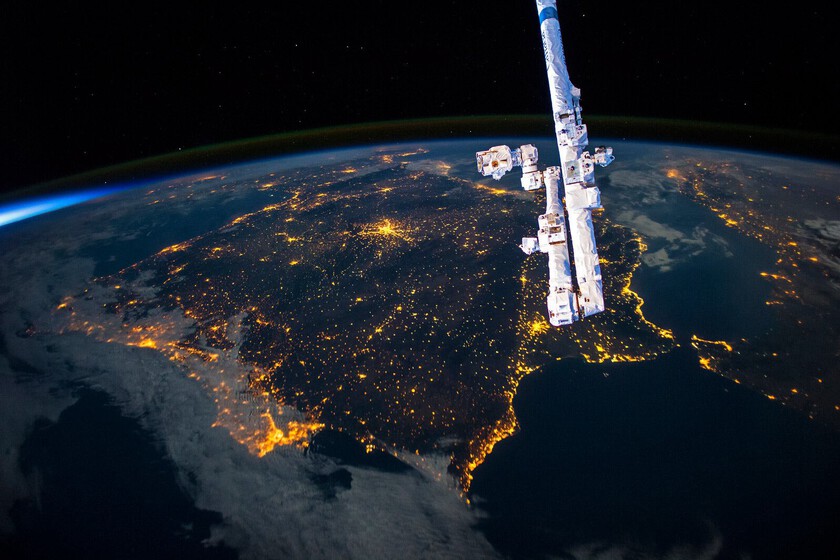
Astronauts orbiting Earth have become unwitting witnesses to one of the most rapid and widespread infrastructure transformations in recent history: the global replacement of public lighting. Over the past decade, the familiar amber glow emanating from cities at night has systematically given way to a more intense, white light, a change directly attributable to the mass adoption of Light Emitting Diode (LED) technology.
This shift, driven largely by energy efficiency regulations, has significantly altered the visual appearance of urban areas from the vantage point of space, approximately 400 kilometers above the planet’s surface. What were once diffuse patches of amber are now brilliant white beacons, a testament to the retirement of old sodium vapor lamps in favor of new, more efficient LED systems.
The Science Behind the White Light
The fundamental difference in lighting technology lies in the light spectrum emitted. Older low-pressure sodium vapor lamps were inherently monochromatic, producing light within a very narrow band of the electromagnetic spectrum, resulting in their characteristic yellow-orange hue. This distinctive color became synonymous with urban nightscapes worldwide.
The advent of the high-efficiency blue LED, a breakthrough recognized with the 2014 Nobel Prize in Physics awarded to Isamu Akasaki, Hiroshi Amano, and Shuji Nakamura, revolutionized lighting. By combining these blue LEDs with a phosphor coating, manufacturers could generate bright, affordable white light. This technology offers not only superior energy efficiency, with some LEDs exceeding 300 lumens per watt compared to the 16 lumens per watt of incandescent bulbs, but also a much broader light spectrum.
Global Cities Embrace LEDs
The visual evidence of this transformation is stark. Milan, for instance, completed its city-wide LED transition by 2015, and comparative images from the European Space Agency (ESA) taken by astronauts André Kuipers and Samantha Cristoforetti clearly illustrate the before-and-after effect. However, Milan is far from alone in this modernization effort.
Los Angeles was an early adopter, initiating the replacement of 140,000 streetlights in 2009. Buenos Aires upgraded its public lighting with smart LED fixtures between 2013 and 2016. New York City concluded its extensive project to replace 500,000 bulbs in 2023, while Barcelona is targeting full public lighting remote management by 2028. On a massive scale, India is leading the world in LED installations, with over 13 million streetlights already converted.
The Downside of Brighter Cities
Despite the clear benefits of energy efficiency, this lighting revolution carries a significant environmental consequence: light pollution. As cities adopt more efficient LED lighting, there is a tendency to increase the number of light points or their intensity, leading to a brighter planet overall. This makes escaping light pollution increasingly difficult.
Official measurements of light pollution, often conducted by satellites, may not fully capture the extent of the problem. Satellites are less sensitive to blue light, meaning the actual increase in light pollution, particularly as perceived by humans, could be substantially higher than reported figures suggest. Furthermore, the blue-rich light emitted by many LEDs can disrupt human circadian rhythms, impacting sleep quality. It also poses a threat to nocturnal wildlife, such as migratory birds and moths, disorienting them.
The Future is Regulated and Intelligent
Experts emphasize that the solution is not to revert to older, less efficient lighting technologies. Instead, the focus is shifting towards smarter application of LED technology. The next phase of this transition involves the installation of intelligent streetlights, which are expected to comprise nearly a quarter of all streetlights by 2030.
These connected lights can dynamically adjust their intensity based on time of day or traffic flow, detect faults in real-time, and collect environmental data. This intelligent management allows for the application of a new principle: using light only when, where, and as much as needed. Concurrently, innovative solutions are emerging to mitigate environmental impact, such as the red-light streetlights being tested in Nordic cities to minimize disturbance to bat populations, and ongoing research into bioluminescence as a sustainable, zero-electricity lighting alternative.
Key facts
| Aspect | Detail |
|—|—|
| Primary Change | Replacement of traditional yellow sodium vapor streetlights with white LED lighting. |
| Driver | Energy efficiency regulations and technological advancements. |
| Impact | Reduced energy consumption, altered urban nightscapes visible from space, increased light pollution, potential disruption to biological rhythms. |
| Future Trends | Smart, dimmable streetlights, specialized lighting for wildlife, and exploration of bioluminescence. |
This development is relevant to ReviewArticle readers as it highlights a significant technological shift impacting urban infrastructure and the environment. The widespread adoption of LED technology, driven by efficiency and innovation, showcases how advancements in lighting, enabled by breakthroughs like the blue LED (Nobel Prize-winning technology), are reshaping our world. The article also touches upon the unintended consequences of technological progress, such as increased light pollution, and points towards future, more sustainable solutions, aligning with the site’s focus on AI, technology, and their broader societal impacts.
Source: Poco a poco, los astronautas han sido testigos de una transformación radical: las ciudades han dejado de ser amarillas – Xataka (https://www.xataka.com/espacio/poco-a-poco-astronautas-han-sido-testigos-transformacion-radical-ciudades-han-dejado-ser-amarillas)
Datos clave
| Punto | Detalle |
|---|---|
| Fuente | Xataka IA |
| Fecha | 2026-06-30T07:32:56+00:00 |
| Tema | Poco a poco, los astronautas han sido testigos de una transformación radical: las ciudades han dejado de ser amarillas |
Source
Xataka IA Publicacion original: 2026-06-30T07:32:56+00:00
Related articles
OCU Finds Spanish Homeowner Communities Overpaying Up to €1,500 on Electricity and €3,515 on Gas—Can AI Tools Optimize Shared Energy Bills?
A new OCU analysis of Spanish homeowner community bills reveals widespread overpayment due to non-competitive tariffs and excess contracted power. Could AI-driven…
Read article
Mayotte fiber dispute does not meet ReviewArticle’s AI news brief
Le Monde reports that France’s competition authority has ordered Orange to suspend part of its fiber-optic rollout in Mayotte. The dispute is…
Read article
DiffEEG Model Uses Diffusion Pre-Training to Improve Seizure Detection from Minimal Labeled Data
Researchers have introduced DiffEEG, a 9.6-million-parameter foundation model that combines denoising diffusion pre-training with reinforcement learning fine-tuning to detect seizure events from…
Read article
The Technology Trap: Why AI Cannot Escape the Unchanging Fundamentals of War
A new Foreign Affairs essay by former Pentagon official Mara Karlin warns that over-reliance on AI and advanced tech in military planning…
Read articleWiki relacionada

AI Model API Pricing and Context Window Comparison: Current Rates and Limits
Compare the latest API pricing, context windows, and capabilities of leading AI model providers including OpenAI, Anthropic, Google, and Mistral. Practical guidance…
Read article
AI Agent Evaluation Frameworks: How to Benchmark Agentic Systems
A practical guide to evaluating AI agents — from task completion metrics to safety, cost, and robustness. Covers major frameworks, primary sources,…
Read article
LLM Benchmarks Decoded: What MMLU, HumanEval, and GSM8K Actually Measure for Developers
A developer-focused breakdown of the most-cited LLM benchmarks — MMLU, HumanEval, GSM8K, MATH, Chatbot Arena — including what they test, their hidden…
Read article
What Is RAG? A Practical Guide to Retrieval-Augmented Generation in 2025
Retrieval-Augmented Generation (RAG) grounds LLM outputs in external data, reducing hallucinations and enabling enterprise use cases. This guide covers how RAG works,…
Read article