
Venice’s Flood Barrier Offers a Cautionary Tale for Spain’s Cadiz Bay
Venice's ambitious MOSE project, designed to protect the city from rising sea levels, is facing challenges with frequent deployments and potential ecological impacts, prompting comparisons and calls for proactive solutions in Spain's Cadiz Bay.
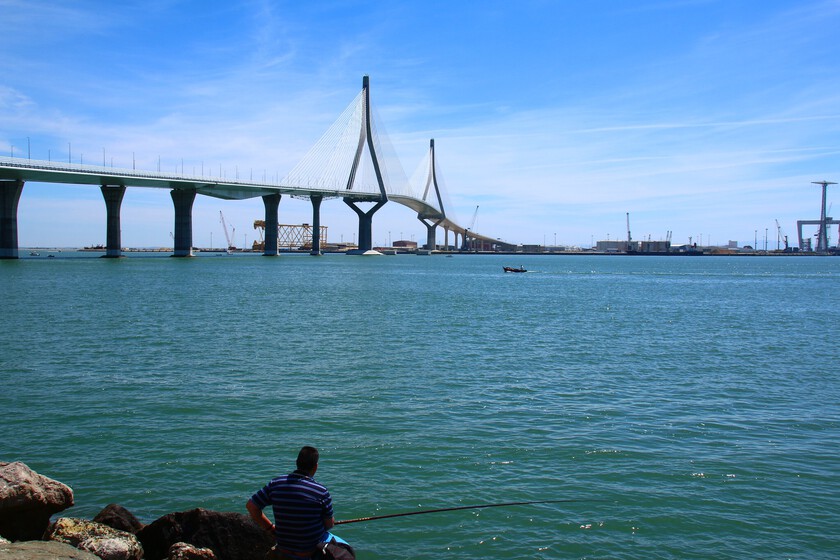
Venice’s costly MOSE flood barrier system, designed to combat rising sea levels and protect the historic city, is being deployed with increasing frequency, raising concerns about its long-term effectiveness and ecological impact. This situation is drawing parallels with the escalating environmental challenges faced by Spain’s Cadiz Bay, where coastal erosion threatens vital natural habitats.
The MOSE project, representing a significant investment of €6 billion, has been activated 30 times in the first two months of 2026 alone, and 108 times over the past five years. While the necessity of the barrier is undeniable, its constant deployment is beginning to pose a risk to the very lagoon it aims to protect, potentially suffocating the delicate ecosystem.
This scenario is prompting discussions about potential futures for coastal areas facing similar threats. Approximately 2,000 kilometers away, Cadiz Bay is experiencing substantial sea-level rise, with the sea encroaching on one of Spain’s largest tidal saline wetlands. The shadow of large-scale engineering solutions like Venice’s MOSE is now looming over the region.
A Shared Challenge
For decades, the sea has been advancing on Cadiz Bay. However, recent years have seen increased collaboration among salt producers, aquaculturists, scientists, and environmentalists, leading to a shared diagnosis of the problem. Their ambition is significantly more modest than that of Venice’s project, reflecting a different scale of challenge.
The core request from stakeholders in Cadiz Bay is for better coordination among relevant administrative bodies. This coordination is crucial to prevent the degradation of the saline wetland, which is sustained by traditional, “soft” dikes known as “vueltas de afuera.” These structures, a product of centuries of human intervention, help regulate tidal flows and mitigate the impact of storms.
The Problem of Abandonment
A critical issue contributing to the vulnerability of Cadiz Bay is the decline in the maintenance of these traditional dikes. Approximately 80% of the salt pans are now abandoned, with only four remaining artisanal salt pans out of the 160 that existed in the 1970s. This socio-economic shift is leading to what is often labeled as a “natural” disaster but is, in reality, rooted in human activity and neglect.
The consequences are stark. In areas like the south of Puerto Real, the sea is advancing at an estimated rate of 3 meters per year, according to the University of Cadiz. This encroaches upon the first houses, situated just over 200 meters from the current shoreline.
For the 94,000 inhabitants of San Fernando, who live below sea level, the protected natural park surrounding the bay serves as their primary defense. Projections from the Alianza Bahía Azul suggest that a sea-level rise of 55 to 70 centimeters could have severe repercussions for these communities, leading to widespread consequences and urgent calls for action. It is precisely at such critical junctures that large-scale engineering solutions like MOSE might be seriously considered.
A Different Approach for Cadiz Bay
However, advocates in Cadiz Bay emphasize that a direct replication of the Venetian MOSE system would be a mistake. There have been no calls for a “Venetian MOSE” in Cadiz. Instead, the proposed “concrete” solutions are described as more precise and targeted.
The fundamental proposal is to revert to tide-permeable walls, leveraging modern technology to restore traditional engineering practices. The aim is to maintain a complex and vital ecosystem rather than simply building a barrier. The Venetian wall, while potentially protecting new developments in San Fernando, would not sustain the ecological health of the bay itself.
The decision facing Cadiz Bay is whether to invest now, when costs are lower and risks are less immediate, or to wait until the threat is undeniable and the expense significantly higher.
Key facts
| Aspect | Venice (MOSE) | Cadiz Bay (Proposed) |
|---|---|---|
| Investment | €6 billion | Coordinated administrative action, modern technology applied to traditional engineering |
| Deployment Frequency | High (30 times in first 2 months of 2026) | Focus on sustainable maintenance and ecosystem preservation |
| Ecosystem Impact | Potential suffocation of lagoon | Aim to maintain and restore ecological balance |
| Approach | Large-scale mobile barrier | Tide-permeable walls, traditional engineering revival |
The development of solutions for coastal areas like Cadiz Bay is increasingly informed by the outcomes and challenges faced by other major projects, such as Venice’s MOSE. The economic and ecological trade-offs inherent in large-scale engineering versus adaptive, ecosystem-focused strategies are critical considerations for communities worldwide grappling with the impacts of climate change and rising sea levels.
Source: Venice’s Flood Barrier Offers a Cautionary Tale for Spain’s Cadiz Bay – Xataka IA (https://www.xataka.com/ecologia-y-naturaleza/venecia-se-gasto-6-000-millones-dique-para-frenar-mar-hay-quien-ve-como-unico-futuro-que-le-queda-a-bahia-cadiz)
Source
Xataka IA Publicacion original: 2026-07-01T08:32:00+00:00
Related articles

OCU Finds Spanish Homeowner Communities Overpaying Up to €1,500 on Electricity and €3,515 on Gas—Can AI Tools Optimize Shared Energy Bills?
A new OCU analysis of Spanish homeowner community bills reveals widespread overpayment due to non-competitive tariffs and excess contracted power. Could AI-driven…
Read article
Mayotte fiber dispute does not meet ReviewArticle’s AI news brief
Le Monde reports that France’s competition authority has ordered Orange to suspend part of its fiber-optic rollout in Mayotte. The dispute is…
Read article
DiffEEG Model Uses Diffusion Pre-Training to Improve Seizure Detection from Minimal Labeled Data
Researchers have introduced DiffEEG, a 9.6-million-parameter foundation model that combines denoising diffusion pre-training with reinforcement learning fine-tuning to detect seizure events from…
Read article
The Technology Trap: Why AI Cannot Escape the Unchanging Fundamentals of War
A new Foreign Affairs essay by former Pentagon official Mara Karlin warns that over-reliance on AI and advanced tech in military planning…
Read articleWiki relacionada

AI Model API Pricing and Context Window Comparison: Current Rates and Limits
Compare the latest API pricing, context windows, and capabilities of leading AI model providers including OpenAI, Anthropic, Google, and Mistral. Practical guidance…
Read article
AI Agent Evaluation Frameworks: How to Benchmark Agentic Systems
A practical guide to evaluating AI agents — from task completion metrics to safety, cost, and robustness. Covers major frameworks, primary sources,…
Read article
LLM Benchmarks Decoded: What MMLU, HumanEval, and GSM8K Actually Measure for Developers
A developer-focused breakdown of the most-cited LLM benchmarks — MMLU, HumanEval, GSM8K, MATH, Chatbot Arena — including what they test, their hidden…
Read article
What Is RAG? A Practical Guide to Retrieval-Augmented Generation in 2025
Retrieval-Augmented Generation (RAG) grounds LLM outputs in external data, reducing hallucinations and enabling enterprise use cases. This guide covers how RAG works,…
Read article