
Anthropic CEO Echoes 25-Year-Old Microsoft Warning on Open-Source AI
Dario Amodei's concerns about open-source AI echo Steve Ballmer's past fears about Linux, drawing parallels between the historical impact of open-source software and the current AI landscape.

Dario Amodei, CEO of Anthropic, has recently reiterated concerns about the potential dangers posed by open-source artificial intelligence. These statements draw a striking parallel to a sentiment expressed by Steve Ballmer, then CEO of Microsoft, 25 years ago regarding Linux, the open-source operating system. The historical context suggests that such warnings, while highlighting perceived threats, may inadvertently bolster the very technologies they aim to caution against.
Amodei’s remarks, made in a July 2023 appearance before the U.S. Senate Judiciary Committee, initially gained less attention. At the time, leading AI models were still relatively limited, and open-source alternatives like Meta’s Llama 3 were even less advanced. However, the rapid progress in open-source AI development over the past three years has made Amodei’s prediction significantly more relevant.
The Rise of Open-Source AI
The landscape has dramatically shifted, with several startups and technology firms in China developing open-source models that are now approaching the capabilities of frontier models from giants like Anthropic, OpenAI, and Google. This progress is underscored by the capabilities of models like Zhipu.ai’s GLM-5.2, which independent cybersecurity analyses suggest is as potent in cybersecurity applications as Anthropic’s Claude Opus 4.8.
This development raises concerns for the U.S., as Chinese companies are poised to release open-source models with power comparable to Anthropic’s Mythos. Jie Tang, CEO of Z.ai, echoed this sentiment, suggesting that such advancements will arrive sooner than anticipated, potentially within the next year, aligning with Elon Musk’s earlier predictions.
Anthropic’s Own Challenges
Ironically, Anthropic’s own models have faced scrutiny for their potential risks. Mythos Preview and its successor, Mythos 5, are reportedly restricted to a select group of entities due to their capacity to uncover cybersecurity vulnerabilities. Fable 5, a more constrained version of Mythos, was briefly embargoed by the U.S. government before its deployment was reinstated with stricter usage protocols. Any detected malicious intent now triggers a switch to Opus 4.8.
Historical Echoes of Open Source
The current situation evokes the early 2000s when Steve Ballmer famously described Linux as a “cancer” threatening Microsoft’s dominance. His fear was that the open-source philosophy would undermine proprietary software. However, history shows that Ballmer’s stance did not weaken Linux; instead, it contributed to its widespread adoption. Microsoft itself eventually integrated Linux and open-source solutions into its Azure cloud infrastructure.
Today, Linux virtual machines constitute a significant portion of Azure’s offerings, highlighting the dominance of open-source platforms in the server market. Microsoft’s acquisition of GitHub in 2018 further solidified its commitment to open-source development, with features like the Windows Subsystem for Linux (WSL) becoming crucial for developers.
The Parallel for AI
The parallel between Linux’s historical trajectory and the current open-source AI movement is significant. Just as Linux challenged Microsoft’s established position, open-source AI models are now posing a similar challenge to dominant players like Anthropic and OpenAI. The question is not whether these models can be dangerous—as demonstrated by Mythos and others—but rather for whom the danger exists: the global community or the companies aiming for market monopolies.
The historical precedent with Linux suggests that open-source solutions, rather than being an existential threat, can become integrated and even essential components of major technological ecosystems. It remains to be seen if this pattern will repeat in the AI domain, potentially reshaping the competitive landscape and challenging the dominance of proprietary AI models.
Key Facts
| Aspect | Details |
|---|---|
| Historical Parallel | Steve Ballmer’s 1999 “Linux is a cancer” statement |
| Current Concern | Anthropic CEO Dario Amodei’s warnings about open-source AI dangers |
| Advancing Open Source | Chinese firms like Zhipu.ai releasing powerful open-source models |
| Industry Implication | Potential challenge to proprietary AI model dominance |
The implications for ReviewArticle readers, who are interested in AI tools, models, and the business of AI, are substantial. The dynamic between open-source and proprietary AI development directly impacts the future of AI accessibility, innovation, and market structure. Understanding these parallels offers insight into potential future industry shifts and the ongoing debate surrounding AI safety and control.
Source: “La IA Open Source es peligrosa”: el CEO de Anthropic repite lo que Ballmer dijo hace 25 años al calificar a Linux de ser “un cáncer” – Xataka, https://www.xataka.com/robotica-e-ia/ia-open-source-peligrosa-ceo-anthropic-repite-que-ballmer-dijo-hace-25-anos-al-calificar-a-linux-ser-cancer
Source
Xataka IA Publicacion original: 2026-07-02T12:01:54+00:00
Related articles
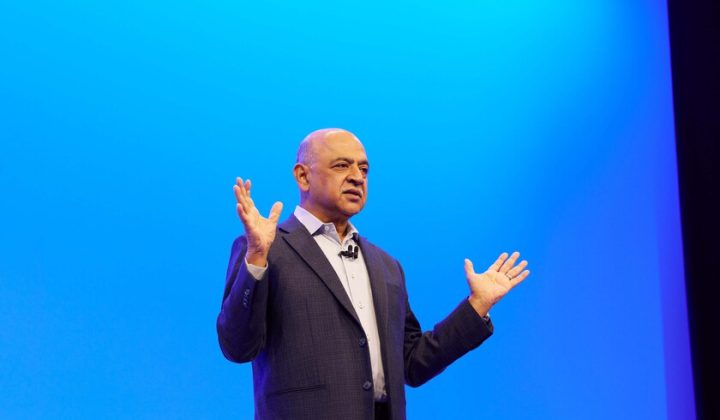
IBM CEO Puts a Number on the Open-Weight AI Value Proposition: 90% of the Performance at 10% of the Token Cost
IBM CEO Arvind Krishna told analysts that open-weight models now deliver about 90% of frontier-model effectiveness while costing between 10% and 25%…
Read article
OCU Finds Spanish Homeowner Communities Overpaying Up to €1,500 on Electricity and €3,515 on Gas—Can AI Tools Optimize Shared Energy Bills?
A new OCU analysis of Spanish homeowner community bills reveals widespread overpayment due to non-competitive tariffs and excess contracted power. Could AI-driven…
Read article
Mayotte fiber dispute does not meet ReviewArticle’s AI news brief
Le Monde reports that France’s competition authority has ordered Orange to suspend part of its fiber-optic rollout in Mayotte. The dispute is…
Read article
DiffEEG Model Uses Diffusion Pre-Training to Improve Seizure Detection from Minimal Labeled Data
Researchers have introduced DiffEEG, a 9.6-million-parameter foundation model that combines denoising diffusion pre-training with reinforcement learning fine-tuning to detect seizure events from…
Read articleWiki relacionada

AI Model API Pricing and Context Window Comparison: Current Rates and Limits
Compare the latest API pricing, context windows, and capabilities of leading AI model providers including OpenAI, Anthropic, Google, and Mistral. Practical guidance…
Read article
AI Agent Evaluation Frameworks: How to Benchmark Agentic Systems
A practical guide to evaluating AI agents — from task completion metrics to safety, cost, and robustness. Covers major frameworks, primary sources,…
Read article
LLM Benchmarks Decoded: What MMLU, HumanEval, and GSM8K Actually Measure for Developers
A developer-focused breakdown of the most-cited LLM benchmarks — MMLU, HumanEval, GSM8K, MATH, Chatbot Arena — including what they test, their hidden…
Read article
What Is RAG? A Practical Guide to Retrieval-Augmented Generation in 2025
Retrieval-Augmented Generation (RAG) grounds LLM outputs in external data, reducing hallucinations and enabling enterprise use cases. This guide covers how RAG works,…
Read article