
EU AI Act after August 2026: what changed and what remains unclear
After the August 2026 milestone, older EU AI Act explainers need a basic update: stop treating the date as upcoming, separate confirmed facts from interpretation, and flag where stronger official sourcing is still needed.
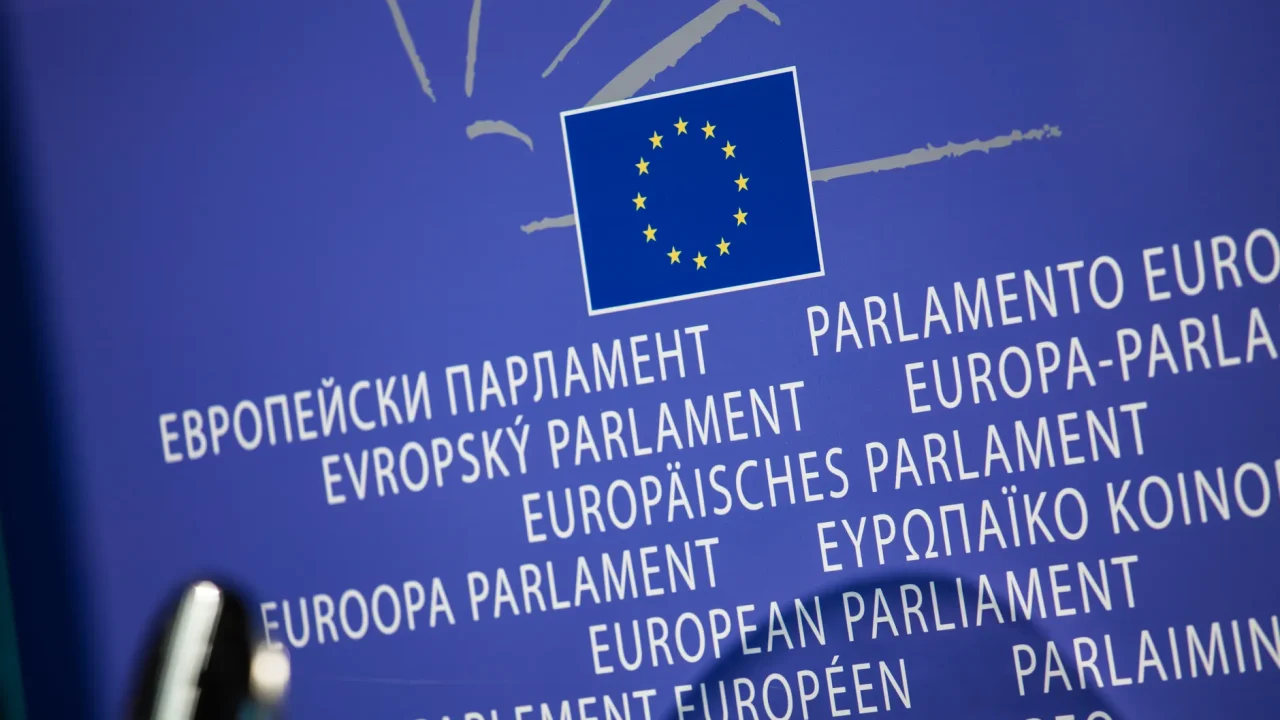
EU AI Act after August 2026: what changed and what remains unclear
Summary
The most defensible post-milestone update is narrow: August 2026 should no longer be described as an upcoming date, and any article framed as a countdown is now outdated. Beyond that, this source set does not support a reliable legal explainer on the exact effect of the milestone, which provisions applied at that point, or how enforcement and implementation were clarified afterward.
Date-checked note: This article is intentionally limited to what can be supported by the currently available sources used for this draft. It should not be treated as legal advice or a definitive statement of EU AI Act applicability.
What changed after the milestone
The clearest change is editorial. If an older explainer said the August 2026 milestone would happen, that wording is now out of date. Post-milestone coverage should use present or past tense and clearly distinguish verified facts from interpretation.
A second change is reader need. Before a deadline passes, a timeline can be enough. After it passes, readers are more likely to need a status update: what is confirmed, what still needs official verification, and which older summaries may now be misleading.
Quick update table
| Area | Safe update now | What still needs stronger verification |
|---|---|---|
| August 2026 milestone | It has passed, so future-tense countdown wording should be removed | The exact legal effect of that milestone |
| Article framing | Shift from pre-deadline explainer to current-status update | Which provisions were applicable at that stage |
| Compliance discussion | Keep claims narrow and source-led | Role-specific duties, enforcement setup, and official guidance |
| Reader advice | Tell readers to trace claims to primary materials | Which operational requirements are settled versus debated |
What remains unclear
The current source set does not include the core EU primary materials needed to explain the milestone's legal effect with confidence. That means this article cannot safely state exactly what changed in law, which obligations applied from that date, or how authorities were expected to enforce them.
That uncertainty is not trivial. Scholarly discussion of transparency and explainability under the EU AI Act supports a cautious reading: even where legal text exists, practical meaning and implementation can still be contested. For readers, that means commentary and operational advice should not be presented as if they were settled black-letter law.
Old article audit
Rewrite future-tense language
Any sentence that still treats August 2026 as upcoming should be revised first. That is the simplest fix and the least controversial one.
Remove overconfident legal summaries
A single date can be easy to headline, but phased regulation is rarely that simple. Older explainers should avoid implying that one milestone resolved every question about scope, obligations, or enforcement.
Add a verification section
A stronger update should tell readers how to check claims before acting on them, especially if the article discusses procurement, internal governance, deployment, or compliance planning.
Practical checklist for readers
- Check the tense first. If a piece still says August 2026 is ahead, it is already stale.
- Trace legal claims to primary materials. Be careful with claims about duties, applicability, penalties, or enforcement if they are not tied to official sources.
- Separate law from interpretation. Academic analysis and commentary can be useful, but they are not substitutes for legal text or regulator guidance.
- Be cautious with absolute wording. Phrases like "fully in force" or "all companies must" need direct official support.
- Look for a date stamp. Time-sensitive policy coverage should make clear when it was checked.
Sections a fuller rewrite still needs
What changed
A future version should identify the August 2026 milestone precisely and explain it using official EU materials. That work is still missing from the source base used here.
What did not change
A useful explainer should also say which questions remained open after the milestone rather than treating the date as a complete policy endpoint.
What readers should watch next
Readers should look for official legal text, implementation pages, regulator notices, and clearly sourced reporting that distinguishes confirmed status from interpretation.
Sources to verify before a fuller update
- EUR-Lex text of the EU AI Act
- European Commission implementation and timeline material
- European AI Office guidance or notices
- Relevant member-state authority updates
- Current reputable reporting that cites primary materials directly
Sources
- Google Search Central: helpful content – Google Search Central.
- Google Search Central: AI-generated content – Google Search Central.
- Artificial intelligence overview – Wikipedia.
- What the Boston School Bus Schedule Can Teach Us About AI – MIT Press.
- Habemus a Right to an Explanation: so What? – A Framework on Transparency-Explainability Functionality and Tensions in the EU AI Act – Association for the Advancement of Artificial Intelligence (AAAI).
Related articles

IBM CEO Puts a Number on the Open-Weight AI Value Proposition: 90% of the Performance at 10% of the Token Cost
IBM CEO Arvind Krishna told analysts that open-weight models now deliver about 90% of frontier-model effectiveness while costing between 10% and 25%…
Read article
OCU Finds Spanish Homeowner Communities Overpaying Up to €1,500 on Electricity and €3,515 on Gas—Can AI Tools Optimize Shared Energy Bills?
A new OCU analysis of Spanish homeowner community bills reveals widespread overpayment due to non-competitive tariffs and excess contracted power. Could AI-driven…
Read article
Mayotte fiber dispute does not meet ReviewArticle’s AI news brief
Le Monde reports that France’s competition authority has ordered Orange to suspend part of its fiber-optic rollout in Mayotte. The dispute is…
Read article
DiffEEG Model Uses Diffusion Pre-Training to Improve Seizure Detection from Minimal Labeled Data
Researchers have introduced DiffEEG, a 9.6-million-parameter foundation model that combines denoising diffusion pre-training with reinforcement learning fine-tuning to detect seizure events from…
Read articleWiki relacionada

AI Model API Pricing and Context Window Comparison: Current Rates and Limits
Compare the latest API pricing, context windows, and capabilities of leading AI model providers including OpenAI, Anthropic, Google, and Mistral. Practical guidance…
Read article
AI Agent Evaluation Frameworks: How to Benchmark Agentic Systems
A practical guide to evaluating AI agents — from task completion metrics to safety, cost, and robustness. Covers major frameworks, primary sources,…
Read article
LLM Benchmarks Decoded: What MMLU, HumanEval, and GSM8K Actually Measure for Developers
A developer-focused breakdown of the most-cited LLM benchmarks — MMLU, HumanEval, GSM8K, MATH, Chatbot Arena — including what they test, their hidden…
Read article
What Is RAG? A Practical Guide to Retrieval-Augmented Generation in 2025
Retrieval-Augmented Generation (RAG) grounds LLM outputs in external data, reducing hallucinations and enabling enterprise use cases. This guide covers how RAG works,…
Read article