
Archaeologists Unearth Roman Coin Hoard of 40,000 Coins in France
A remarkable discovery in Senon, France, has revealed three amphorae containing an estimated 40,000 Roman coins, dating back to the late 3rd and early 4th centuries AD. The find offers a unique glimpse into Roman monetary management.
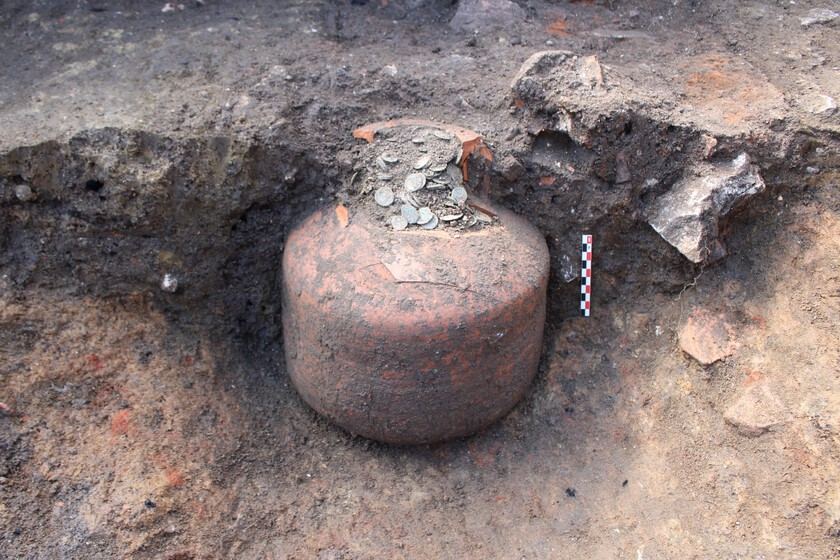
Archaeologists in Senon, northeastern France, have made an extraordinary discovery: three amphorae brimming with an estimated 40,000 Roman coins, dating from the late 3rd and early 4th centuries AD. The find, unearthed during an excavation project prompted by residential development, offers a rare window into the financial practices and daily lives of Roman inhabitants in the region.
The excavation, conducted by the National Institute for Preventive Archaeological Research (INRAP), uncovered vestiges of an area with layers spanning from the Gallic period to the mid-4th century AD. Among the findings were ancient limestone quarries, constructions, remnants of dwellings, roads, walls, ovens, and courtyards. The INRAP noted that the architectural features and material culture suggested a relatively well-off population, potentially composed of artisans or merchants.
A Significant Hoard
The most striking discovery came during the examination of late antiquity residential areas, where three large ceramic vessels were found containing thousands of coins. Two of the amphorae were located by INRAP, while the third was found by the Regional Archaeology Service. Initial estimates from Live Science indicated over 40,000 coins in total.
One amphora contained approximately 38 kilograms of metal, translating to an estimated 23,000-24,000 coins, according to numismatist Vicent Geneviève of INRAP. A second, damaged amphora, weighing around 50 kilograms, is believed to hold between 18,000 and 19,000 coins. The third vessel contained only three coins.
Dating and Context
Analysis of the coins suggests the amphorae were buried between 280 and 310 AD. Some coins bear the likenesses of emperors Victorinus, Tetricus I, and his son Tetricus II, who ruled the short-lived Gallic Empire between 260 and 274 AD, separate from central Roman authority.
While coin hoards are not entirely uncommon in the Mosa region, with around thirty such deposits previously found, the significance of this particular discovery lies in its context. Archaeologists propose that these were not hidden for safekeeping during times of crisis but rather functioned as a form of “home bank.” The amphorae were reportedly not buried with coins already inside but were placed in an accessible location and gradually filled over time.
Insights into Monetary Management
Experts from INRAP explain that these deposits offer a snapshot of complex, medium- to long-term monetary management within a household or administration, capable of regular deposits and withdrawals. The researchers observed no signs of hasty concealment, noting that the vessels were “carefully placed in well-prepared pits, vertical thanks to leveling stones.” Their placement in seemingly common rooms, close to ground level, indicates they remained easily accessible to their owner.
The Enduring Mystery
The primary enigma surrounding the hoard is not why the coins were stored, but why they were ultimately left behind, seemingly forgotten for centuries. INRAP experts suggest several possibilities, including the presence of a military fortification near the excavation site, approximately 150 meters away. This raises questions about a potential link between the coin deposits and the military base, perhaps intended for payments.
Records indicate a fire in the area in the early 4th century, which may have impacted the coin deposits. While dwellings were later rebuilt on the existing foundations, this second occupation lasted only about 50 years. The site appears to have been definitively abandoned by the mid-4th century, following another fire.
Key facts
| Detail | Information |
|---|---|
| Location | Senon, northeastern France |
| Contents | Approximately 40,000 Roman coins |
| Date of Burial | Between 280 and 310 AD |
| Excavating Body | INRAP (National Institute for Preventive Archaeological Research) |
| Significance | Provides insight into Roman monetary management and daily life |
This discovery is of particular interest to the ReviewArticle audience as it highlights the tangible remnants of historical financial systems, offering a connection to how wealth was managed and stored in the past. While not directly related to AI or technology, it underscores the human element behind systems of value and exchange, a foundational concept that underpins modern economic and technological advancements. The meticulous work of archaeologists and numismatists in deciphering such finds also echoes the data analysis and pattern recognition inherent in AI research.
Source: Unos arqueólogos han desenterrado en Francia una vasija llena con decenas de miles de monedas romanas de hace 1.800 años – Xataka
Source
Xataka IA Publicacion original: 2026-07-02T09:15:54+00:00
Related articles
OCU Finds Spanish Homeowner Communities Overpaying Up to €1,500 on Electricity and €3,515 on Gas—Can AI Tools Optimize Shared Energy Bills?
A new OCU analysis of Spanish homeowner community bills reveals widespread overpayment due to non-competitive tariffs and excess contracted power. Could AI-driven…
Read article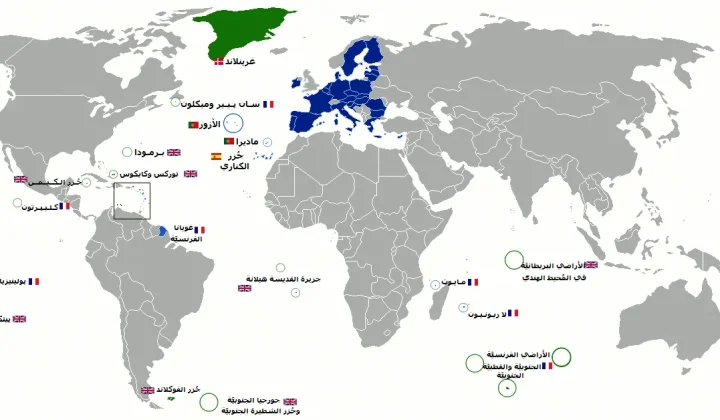
Mayotte fiber dispute does not meet ReviewArticle’s AI news brief
Le Monde reports that France’s competition authority has ordered Orange to suspend part of its fiber-optic rollout in Mayotte. The dispute is…
Read article
DiffEEG Model Uses Diffusion Pre-Training to Improve Seizure Detection from Minimal Labeled Data
Researchers have introduced DiffEEG, a 9.6-million-parameter foundation model that combines denoising diffusion pre-training with reinforcement learning fine-tuning to detect seizure events from…
Read article
The Technology Trap: Why AI Cannot Escape the Unchanging Fundamentals of War
A new Foreign Affairs essay by former Pentagon official Mara Karlin warns that over-reliance on AI and advanced tech in military planning…
Read articleWiki relacionada

AI Model API Pricing and Context Window Comparison: Current Rates and Limits
Compare the latest API pricing, context windows, and capabilities of leading AI model providers including OpenAI, Anthropic, Google, and Mistral. Practical guidance…
Read article
AI Agent Evaluation Frameworks: How to Benchmark Agentic Systems
A practical guide to evaluating AI agents — from task completion metrics to safety, cost, and robustness. Covers major frameworks, primary sources,…
Read article
LLM Benchmarks Decoded: What MMLU, HumanEval, and GSM8K Actually Measure for Developers
A developer-focused breakdown of the most-cited LLM benchmarks — MMLU, HumanEval, GSM8K, MATH, Chatbot Arena — including what they test, their hidden…
Read article
What Is RAG? A Practical Guide to Retrieval-Augmented Generation in 2025
Retrieval-Augmented Generation (RAG) grounds LLM outputs in external data, reducing hallucinations and enabling enterprise use cases. This guide covers how RAG works,…
Read article