
DIY Pinhole Camera Offers Safe Solar Eclipse Viewing Alternative
With an upcoming solar eclipse, experts recommend certified glasses for safe viewing. However, a simple homemade pinhole camera provides an indirect and engaging method for observing the event, especially for families.
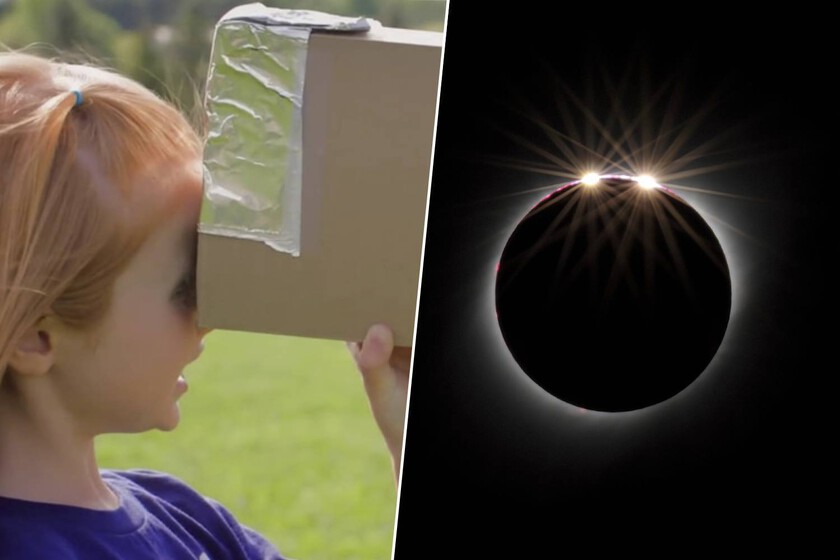
As the next solar eclipse approaches, the need for safe viewing methods becomes paramount. While certified eclipse glasses are the primary recommendation for direct observation, a readily accessible and educational alternative exists: the homemade pinhole camera. This simple device allows individuals, particularly families with children, to witness the celestial event indirectly and safely.
Building a Pinhole Camera
The construction of a pinhole camera is straightforward, requiring common household materials. The essential components include a cardboard box (such as a cereal box or shoebox), a sheet of white paper, aluminum foil, adhesive tape, a pencil, scissors, and a thumbtack.
The process begins by tracing one of the shorter sides of the cardboard box onto the white paper and cutting out this shape. This paper cutout is then affixed to the inside of the box, serving as the screen onto which the solar image will be projected.
On the opposite end of the box, two square openings need to be created. If using a cereal box with an open side, an additional piece of cardboard can be taped to create these two square apertures. The article references a NASA publication that provides visual guidance on the desired configuration of these openings.
One of these openings is then covered with aluminum foil, secured with tape. A small, precise hole is made in the center of the aluminum foil using a thumbtack. This tiny aperture acts as the pinhole, allowing sunlight to enter the camera.
How to Use the Pinhole Camera
To use the pinhole camera, the observer should stand with their back to the sun. Light from the sun passes through the small hole in the aluminum foil, which functions like a lens. This light then travels inside the box and projects an inverted image of the sun onto the white paper screen at the back of the box.
This projection method is effective during the partial phases of a solar eclipse. When the eclipse reaches totality, and the sun is completely obscured by the moon, the intensity of light entering the camera diminishes significantly, resulting in no visible projection.
Important Considerations for Safe Viewing
Directly viewing the sun without proper protection can cause severe eye damage. Old methods like using X-rays or photographic negatives are no longer considered safe. Only certified solar eclipse glasses, compliant with ISO 12312-2 standards, offer adequate protection for direct viewing.
The pinhole camera offers a safe indirect viewing method, eliminating the risk of looking directly at the sun. It’s important to note that during the brief period of totality, when the sun is entirely covered, it is technically safe to look at the sun directly. However, this requires precise timing, as even a sliver of the sun reappearing can cause retinal damage.
The article highlights that during totality, no projection will be visible through the pinhole camera, signaling the time when direct viewing might be considered by experienced observers, with extreme caution.
Key facts
| Feature | Description |
|---|---|
| Method | Pinhole camera |
| Materials | Cardboard box, paper, foil, tape, etc. |
| Viewing Method | Indirect projection |
| Safety | High, avoids direct sun exposure |
| Effectiveness | Best during partial eclipse phases |
This DIY approach provides an accessible and educational way to engage with a solar eclipse. It not only ensures safety but also offers a hands-on activity that can be particularly engaging for younger audiences, turning the observation of a scientific phenomenon into a family project. The creation and use of the pinhole camera underscore the principles of optics and light projection in a tangible way.
Source: Si no tienes gafas para el eclipse solar, esta caja casera hecha con cartón y papel de aluminio te sirve igual – Xataka: https://www.xataka.com/espacio/no-tienes-gafas-para-eclipse-solar-esta-caja-casera-hecha-carton-papel-aluminio-te-sirve-igual
Source
Xataka IA Publicacion original: 2026-07-03T08:01:54+00:00
Related articles
OCU Finds Spanish Homeowner Communities Overpaying Up to €1,500 on Electricity and €3,515 on Gas—Can AI Tools Optimize Shared Energy Bills?
A new OCU analysis of Spanish homeowner community bills reveals widespread overpayment due to non-competitive tariffs and excess contracted power. Could AI-driven…
Read article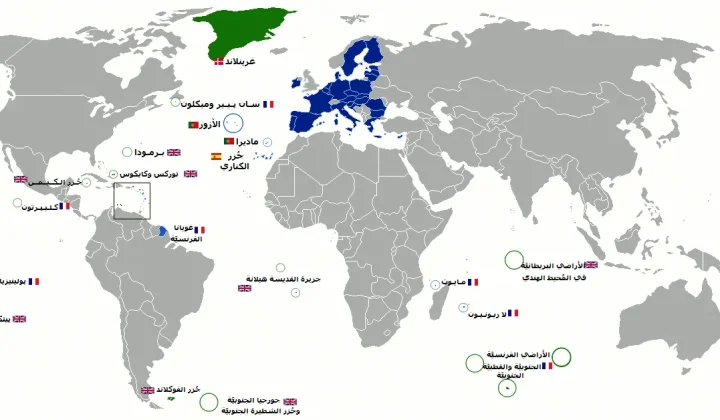
Mayotte fiber dispute does not meet ReviewArticle’s AI news brief
Le Monde reports that France’s competition authority has ordered Orange to suspend part of its fiber-optic rollout in Mayotte. The dispute is…
Read article
DiffEEG Model Uses Diffusion Pre-Training to Improve Seizure Detection from Minimal Labeled Data
Researchers have introduced DiffEEG, a 9.6-million-parameter foundation model that combines denoising diffusion pre-training with reinforcement learning fine-tuning to detect seizure events from…
Read article
The Technology Trap: Why AI Cannot Escape the Unchanging Fundamentals of War
A new Foreign Affairs essay by former Pentagon official Mara Karlin warns that over-reliance on AI and advanced tech in military planning…
Read articleWiki relacionada

AI Model API Pricing and Context Window Comparison: Current Rates and Limits
Compare the latest API pricing, context windows, and capabilities of leading AI model providers including OpenAI, Anthropic, Google, and Mistral. Practical guidance…
Read article
AI Agent Evaluation Frameworks: How to Benchmark Agentic Systems
A practical guide to evaluating AI agents — from task completion metrics to safety, cost, and robustness. Covers major frameworks, primary sources,…
Read article
LLM Benchmarks Decoded: What MMLU, HumanEval, and GSM8K Actually Measure for Developers
A developer-focused breakdown of the most-cited LLM benchmarks — MMLU, HumanEval, GSM8K, MATH, Chatbot Arena — including what they test, their hidden…
Read article
What Is RAG? A Practical Guide to Retrieval-Augmented Generation in 2025
Retrieval-Augmented Generation (RAG) grounds LLM outputs in external data, reducing hallucinations and enabling enterprise use cases. This guide covers how RAG works,…
Read article