
Ozempic Shows Promising Results in Reducing Alcohol Consumption, New Study Suggests
Research indicates that semaglutide, the active compound in Ozempic, may significantly decrease days of intense alcohol consumption, offering a new avenue for addiction treatment.
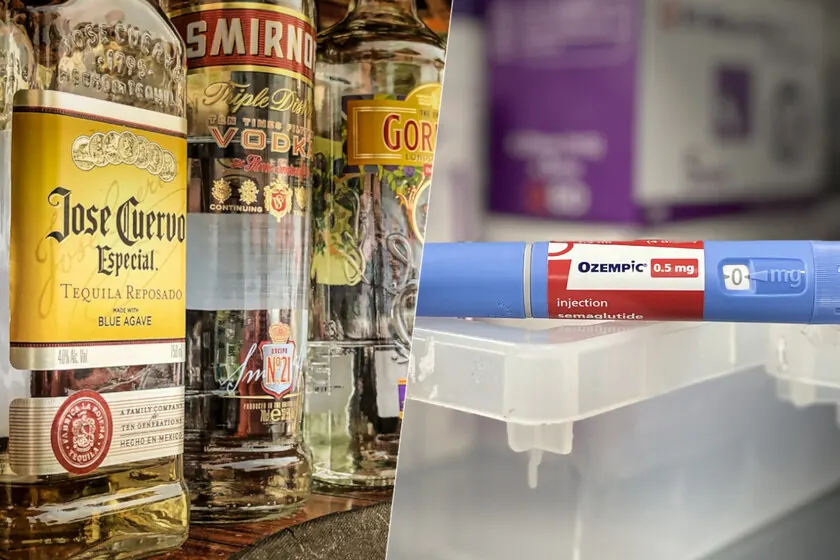
A new study is shedding light on a potential secondary benefit of popular GLP-1 agonist drugs like Ozempic: their ability to reduce alcohol consumption. While initially developed for diabetes management and later for weight loss, semaglutide, the active ingredient in Ozempic and Wegovy, has shown promising results in an early-stage clinical trial for treating alcohol use disorder.
The research, published in JAMA Psychiatry, indicates that participants taking semaglutide experienced a significant reduction in days of intense alcohol consumption compared to a placebo group. This finding opens up a new frontier for the application of these widely used medications, potentially offering a much-needed treatment option for individuals struggling with alcohol addiction.
Key facts
| Fact | Detail |
|---|---|
| Drug investigated | Semaglutide (active compound in Ozempic, Wegovy) |
| Condition studied | Alcohol use disorder |
| Key finding | Reduced days of intense alcohol consumption by 41.1% compared to 26.4% in the placebo group. |
| Study publication | JAMA Psychiatry |
| Promising but early stage | Larger studies are needed to confirm safety and efficacy. |
How Semaglutide Might Affect Alcohol Intake
The GLP-1 hormone plays a crucial role in regulating appetite by signaling satiety. Drugs like Ozempic mimic this hormone, leading to reduced food intake and weight loss. Researchers hypothesize that similar mechanisms may influence cravings and consumption of alcohol. Some users have anecdotally reported a diminished desire for alcoholic beverages while on these medications.
Additionally, common side effects associated with semaglutide, such as nausea and vomiting, could contribute to making alcoholic beverages less appealing. While not the primary focus, these physiological responses may indirectly curb alcohol intake.
Study Design and Results
The clinical trial involved 108 participants over a 26-week period. Participants were randomly assigned to receive either semaglutide or a placebo. The results showed that the group treated with semaglutide reduced their days of intense alcohol consumption by 41.1%, significantly outperforming the placebo group, which saw a 26.4% reduction.
While the study did not necessarily reduce the number of days participants drank alcohol, it did lead to a lower volume of consumption on those days. This suggests semaglutide could be a valuable tool in managing heavy drinking episodes.
Expert Commentary and Future Research
Klara Klein, a member of the research team, stated in a press release that these findings suggest “the potential of semaglutide and similar drugs to address an existing need for a treatment for alcohol use disorder.” However, she emphasized the need for larger studies to fully understand the safety and efficacy of semaglutide for this specific application.
The current study’s relatively small sample size highlights the need for extensive further investigation. Future research will likely focus on larger, more diverse patient populations to confirm these initial promising results. Understanding the underlying biological mechanisms and potential long-term risks associated with using semaglutide for alcohol use disorder will also be critical.
Broader Implications for GLP-1 Agonists
The exploration of semaglutide’s impact on alcohol consumption is part of a broader investigation into the multifaceted effects of GLP-1 agonists. Beyond weight management and potential addiction treatment, researchers are also examining their influence on cardiovascular health and other conditions. As the understanding of these drugs expands, so too does their potential therapeutic scope, though cautious, evidence-based progression remains paramount.
Source: Xataka IA – https://www.xataka.com/medicina-y-salud/industria-alcohol-no-tuviera-suficientes-problemas-ahora-se-ha-encontrado-uno-ozempic
Source
Xataka IA Publicacion original: 2026-07-03T07:31:54+00:00
Related articles

Nepal’s “Flood-Proof” Google Maps Landmark Is Not a Verified Safety Rating
A house that survived a destructive Himalayan flood reportedly appeared on Google Maps as a “flood-proof” attraction. The viral label should not…
Read article
Perplexity Deploys GPT-6 Astra for End-to-End Production and Communication Systems
Perplexity has integrated OpenAI’s GPT-6 Astra to handle communications, software changes, and production monitoring, reducing the need for frequent human check-ins compared…
Read article
Privacy Reports Put AI Smart Glasses Under Scrutiny in France
French association e-Enfance says it has received more than 20 reports involving women allegedly recorded without their knowledge by connected glasses, bringing…
Read article
Snowflake Publishes GTM Blueprint for Closing the AI-to-Revenue Gap
Snowflake’s sales and marketing teams share a repeatable RAMP framework and four revenue leaks they fixed to turn AI pilots into measurable…
Read articleWiki relacionada

AI Model API Pricing and Context Window Comparison: Current Rates and Limits
Compare the latest API pricing, context windows, and capabilities of leading AI model providers including OpenAI, Anthropic, Google, and Mistral. Practical guidance…
Read article
AI Agent Evaluation Frameworks: How to Benchmark Agentic Systems
A practical guide to evaluating AI agents — from task completion metrics to safety, cost, and robustness. Covers major frameworks, primary sources,…
Read article
LLM Benchmarks Decoded: What MMLU, HumanEval, and GSM8K Actually Measure for Developers
A developer-focused breakdown of the most-cited LLM benchmarks — MMLU, HumanEval, GSM8K, MATH, Chatbot Arena — including what they test, their hidden…
Read article
What Is RAG? A Practical Guide to Retrieval-Augmented Generation in 2025
Retrieval-Augmented Generation (RAG) grounds LLM outputs in external data, reducing hallucinations and enabling enterprise use cases. This guide covers how RAG works,…
Read article