
Apple’s Chinese RAM Hunt: Strategic Maneuver or Risky Gamble?
Bank of America suggests Apple's pursuit of RAM from Chinese manufacturer CXMT is a negotiation tactic, while geopolitical risks loom.
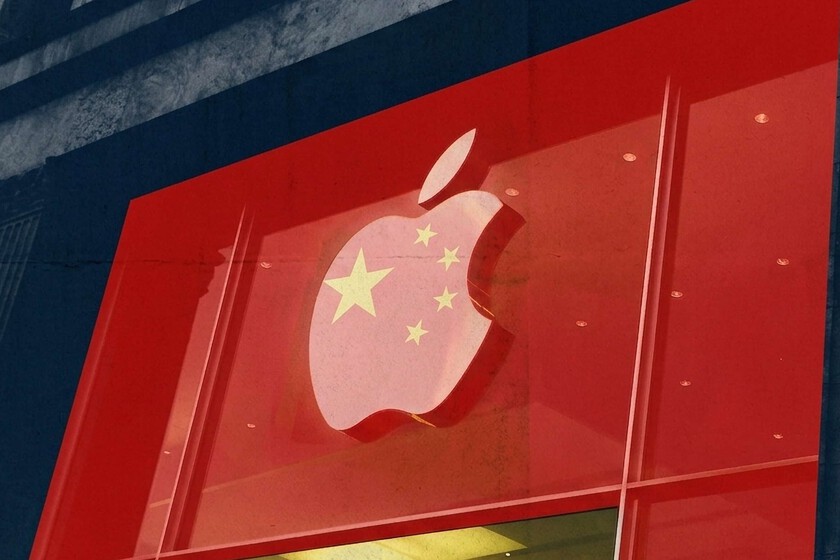
Apple’s recent overtures to Chinese memory manufacturer ChangXin Memory Technologies (CXMT) for DRAM supply are being interpreted by some analysts as a strategic play to enhance negotiation leverage with established suppliers. However, this move is not without significant geopolitical and technical considerations, according to a report by Bank of America.
The tech giant, like many in the consumer electronics sector, is navigating a challenging memory market. While Apple initially appeared resilient to RAM and storage price hikes, the reality of dwindling stock and the need to secure components for upcoming product launches, including the anticipated iPhone 18 Pro and a foldable iPhone, has intensified its search for new supply avenues. China, specifically CXMT, has emerged as a potential source.
Strategic Negotiation Tactic
Bank of America suggests that Apple’s reported engagement with CXMT is primarily a tactic to gain better pricing and terms from its long-standing suppliers such as Samsung, SK Hynix, and Micron. By signaling interest in an alternative, albeit potentially less advanced, supplier, Apple could pressure its current partners, who may be prioritizing AI-related chip production over consumer-grade memory.
“The bank sees Apple’s recent efforts as merely a move, a theatrics, to gain bargaining power against usual suppliers,” the report states, implying that Apple, a major consumer hardware buyer, is leveraging its scale to influence market dynamics.
The analysis posits that if Apple were to strike a deal with CXMT, it would have a ripple effect on the financial standing of major memory manufacturers. This strategy aligns with the understanding that larger entities often wield more significant negotiation power in component procurement.
Technical Limitations and Geopolitical Risks
However, the Bank of America’s assessment also highlights potential limitations concerning CXMT’s technology. The bank reportedly believes that the memory produced by Chinese manufacturers is currently only suitable for more modest devices, such as a hypothetical “iPhone 18e,” rather than Apple’s flagship products like the iPhone 18 Pro, M-series iPad, or Macs.
Adding a layer of complexity, CXMT is reportedly on a list maintained by the U.S. Department of Commerce. This places Apple’s pursuit of its memory in a sensitive geopolitical context. Reports indicate that Apple has been lobbying the U.S. government to permit purchases from CXMT without repercussions. Yet, the possibility exists that CXMT could be added to further restrictive U.S. government lists, which would create significant complications for Apple’s supply chain.
Market Impact and Consumer Consequences
The broader implications of these market dynamics could translate to increased costs for consumers. The article notes that similar pressures on component pricing have affected various consumer electronics, from gaming consoles like the anticipated PlayStation 6 and Nintendo Switch 2 to lower-end mobile devices and single-board computers like the Raspberry Pi. The potential for a “very much upward” trend in prices for these devices is a likely outcome.
Key Facts
| Aspect | Details |
|---|---|
| Company Involved | Apple |
| Potential Supplier | ChangXin Memory Technologies (CXMT), a Chinese DRAM manufacturer |
| Reported Concern | Apple seeking RAM supply from CXMT |
| Bank of America View | Primarily a negotiation tactic to gain leverage with existing suppliers |
| Geopolitical Risk | CXMT’s presence on U.S. Commerce Department lists; potential for further sanctions |
Ultimately, Apple’s strategy, whether a calculated negotiation tactic or a move fraught with risk, underscores the complex interplay of market forces, technological capabilities, and international relations in the global technology supply chain. The long-term consequences for both Apple and consumers remain to be seen.
Source: Apple está llamando a puertas chinas buscando RAM. Según el Banco de América, es puro teatrillo, Xataka, https://www.xataka.com/componentes/apple-esta-llamando-a-puertas-chinas-buscando-ram-banco-america-puro-teatrillo
Source
Xataka IA Publicacion original: 2026-07-06T15:30:54+00:00
Related articles

Nepal’s “Flood-Proof” Google Maps Landmark Is Not a Verified Safety Rating
A house that survived a destructive Himalayan flood reportedly appeared on Google Maps as a “flood-proof” attraction. The viral label should not…
Read article
Perplexity Deploys GPT-6 Astra for End-to-End Production and Communication Systems
Perplexity has integrated OpenAI’s GPT-6 Astra to handle communications, software changes, and production monitoring, reducing the need for frequent human check-ins compared…
Read article
Privacy Reports Put AI Smart Glasses Under Scrutiny in France
French association e-Enfance says it has received more than 20 reports involving women allegedly recorded without their knowledge by connected glasses, bringing…
Read article
Snowflake Publishes GTM Blueprint for Closing the AI-to-Revenue Gap
Snowflake’s sales and marketing teams share a repeatable RAMP framework and four revenue leaks they fixed to turn AI pilots into measurable…
Read articleWiki relacionada

AI Model API Pricing and Context Window Comparison: Current Rates and Limits
Compare the latest API pricing, context windows, and capabilities of leading AI model providers including OpenAI, Anthropic, Google, and Mistral. Practical guidance…
Read article
AI Agent Evaluation Frameworks: How to Benchmark Agentic Systems
A practical guide to evaluating AI agents — from task completion metrics to safety, cost, and robustness. Covers major frameworks, primary sources,…
Read article
LLM Benchmarks Decoded: What MMLU, HumanEval, and GSM8K Actually Measure for Developers
A developer-focused breakdown of the most-cited LLM benchmarks — MMLU, HumanEval, GSM8K, MATH, Chatbot Arena — including what they test, their hidden…
Read article
What Is RAG? A Practical Guide to Retrieval-Augmented Generation in 2025
Retrieval-Augmented Generation (RAG) grounds LLM outputs in external data, reducing hallucinations and enabling enterprise use cases. This guide covers how RAG works,…
Read article