Deteriorating Radioactive Barrels in Atlantic Pose Dilemma for Researchers
Decades-old radioactive waste buried deep in the Atlantic is showing critical signs of decay, raising concerns about potential environmental impacts and the feasibility of cleanup efforts.
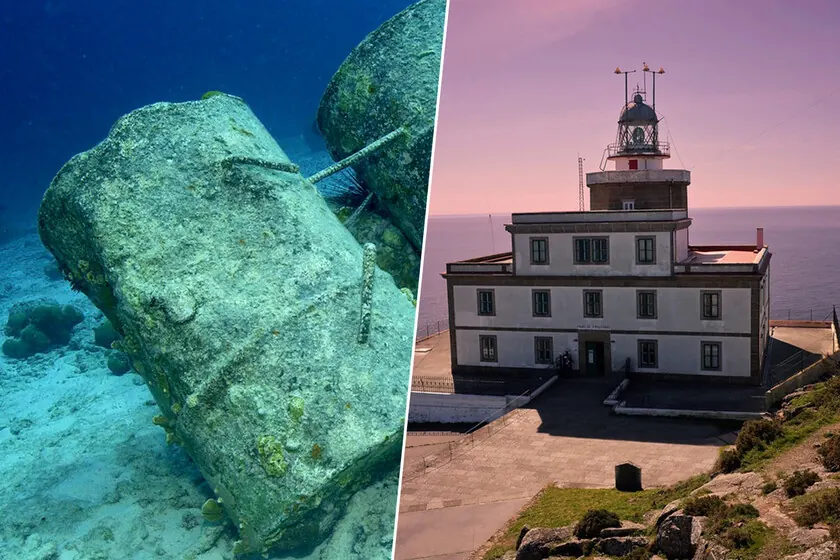
A decade-long research project has revealed that hundreds of thousands of radioactive waste barrels, dumped in the Atlantic Ocean off the coast of Galicia, Spain, are in a critical state of deterioration. The findings from the NODSSUM project, a collaboration involving French scientific missions, highlight a growing environmental concern with no easy solutions.
Deep Sea Dumping Grounds
From 1946 to the early 1990s, several European countries, including the UK, Netherlands, Belgium, and France, disposed of low and medium-activity radioactive waste in a designated area of the Atlantic seabed, approximately 500 kilometers off Cape Finisterre. This vast underwater “graveyard” covers about 10,000 square kilometers at depths of 4,000 to 5,000 meters. It is considered the third-largest known repository of canned nuclear waste globally.
The waste consists of civilian and military radioactive materials, including sludge, laboratory equipment, medical waste, resins, and contaminated scrap metal, encapsulated in cement or tar. Initial documentation of these disposals was minimal, with less than 1% of the total waste cataloged.
Alarm Raised by Fishermen and Activists
The issue first came to public attention in 1981 when a Galician fishing vessel, the Xurelo, reported suspicious dumping activities. Environmental groups, including Greenpeace, actively protested these practices, leading to a moratorium on further waste disposal, which remains in effect.
The NODSSUM project, initiated a decade ago, has been systematically mapping the dumping site. Their expeditions have identified approximately 3,350 barrels within a mapped area of 140 square kilometers, indicating a density of about 20 barrels per square kilometer.
Critical State of Deterioration
Recent missions, utilizing the manned submersible Nautile, have provided direct visual evidence of the barrels’ condition at great depths. Researchers from the Centre National de la Recherche Scientifique (CNRS) have concluded that the barrels are in an “advanced state of deterioration.” Observations include corroded surfaces, colonization by deep-sea anemones, visible cracks in the metal, and leakage of encapsulating material like tar and cement.
While laboratory analysis of sediment and water samples has not yet revealed significant anomalies, radionuclide levels detected in some samples exceed previous estimations, despite remaining below legal limits.
The Dilemma of Retrieval
The primary objective of current research is to understand and contain the potential threat posed by these decaying barrels. The question of whether to retrieve the estimated 200,000 barrels from the seabed presents significant challenges. Technically feasible, the process is fraught with political, economic, and safety risks.
The Spanish Nuclear Safety Council (Consejo de Seguridad Nuclear) has stated that radioactivity levels in Spanish coastal waters remain below regulatory limits. Furthermore, Spain bears no responsibility for the dumping, as it did not contribute waste to this specific site.
A significant concern is that many barrels are so degraded that they might disintegrate during the retrieval process, potentially releasing their contents. Researchers are actively investigating the long-term implications of this ongoing decay, including potential bioaccumulation in the deep-sea food chain and its impact on the unique abyssal ecosystem.
Key Facts
| Aspect | Details |
|---|---|
| Location | Atlantic Ocean, approx. 500 km off Galicia, Spain |
| Depth | 4,000–5,000 meters |
| Estimated Barrels | Up to 200,000 (partially documented) |
| Waste Type | Low and medium-activity civil and military radioactive waste |
| Dumping Period | 1946 – early 1990s |
| Current Condition | Advanced state of deterioration, evidence of leaks |
| Research Project | NODSSUM (ongoing for a decade) |
| Responsible Authority | Centre National de la Recherche Scientifique (CNRS), France |
The findings underscore the long-term environmental consequences of historical waste disposal practices. For AI and technology audiences, this situation highlights the complexities of managing legacy industrial waste and the critical role of advanced robotics and deep-sea monitoring technologies in assessing and potentially mitigating environmental risks. The ongoing research, utilizing sophisticated submersibles and analytical tools, pushes the boundaries of our understanding of deep-sea environments and the challenges of addressing human-made contamination in these remote locations.
Source: Tras 40 años en el mar gallego, los bidones radioactivos sufren un estado crítico de deterioro. La solución puede ser peor que dejarlo estar – Xataka: https://www.xataka.com/magnet/40-anos-mar-gallego-bidones-radioactivos-sufren-estado-critico-deterioro-solucion-puede-ser-peor-que-dejarlo-estar
Source
Xataka IA Publicacion original: 2026-07-09T08:31:19+00:00
Related articles

Blizzard Unveils WoW Forever, a Third World of Warcraft Built on the 2004 Classic
At BlizzCon 2026, Blizzard announced WoW Forever, a third standalone version of World of Warcraft. Set to launch November 5, Forever reuses…
Read article
Nepal’s “Flood-Proof” Google Maps Landmark Is Not a Verified Safety Rating
A house that survived a destructive Himalayan flood reportedly appeared on Google Maps as a “flood-proof” attraction. The viral label should not…
Read article
Perplexity Deploys GPT-6 Astra for End-to-End Production and Communication Systems
Perplexity has integrated OpenAI’s GPT-6 Astra to handle communications, software changes, and production monitoring, reducing the need for frequent human check-ins compared…
Read article
Privacy Reports Put AI Smart Glasses Under Scrutiny in France
French association e-Enfance says it has received more than 20 reports involving women allegedly recorded without their knowledge by connected glasses, bringing…
Read articleWiki relacionada

AI Model API Pricing and Context Window Comparison: Current Rates and Limits
Compare the latest API pricing, context windows, and capabilities of leading AI model providers including OpenAI, Anthropic, Google, and Mistral. Practical guidance…
Read article
AI Agent Evaluation Frameworks: How to Benchmark Agentic Systems
A practical guide to evaluating AI agents — from task completion metrics to safety, cost, and robustness. Covers major frameworks, primary sources,…
Read article
LLM Benchmarks Decoded: What MMLU, HumanEval, and GSM8K Actually Measure for Developers
A developer-focused breakdown of the most-cited LLM benchmarks — MMLU, HumanEval, GSM8K, MATH, Chatbot Arena — including what they test, their hidden…
Read article
What Is RAG? A Practical Guide to Retrieval-Augmented Generation in 2025
Retrieval-Augmented Generation (RAG) grounds LLM outputs in external data, reducing hallucinations and enabling enterprise use cases. This guide covers how RAG works,…
Read article