
Zagreb Launches Europe’s First Commercial Robotaxi Service with Chinese Autonomous Driving Tech
Croatian startup Verne, in partnership with Chinese autonomous driving firm Pony.ai and Uber, has rolled out a commercial robotaxi service in Zagreb, marking a significant step for autonomous mobility in Europe.
Zagreb Launches Europe’s First Commercial Robotaxi Service with Chinese Autonomous Driving Tech
SLUG: zagreb-first-european-robotaxi-service-pony-ai
EXCERPT: Croatian startup Verne, in partnership with Chinese autonomous driving firm Pony.ai and Uber, has rolled out a commercial robotaxi service in Zagreb, marking a significant step for autonomous mobility in Europe.
CATEGORY: ai-news
TAGS: autonomous vehicles, robotaxi, AI, Europe, Zagreb, Croatia, Pony.ai, Verne, Uber, BAIC, Arcfox Alpha T5, urban mobility
SEO_TITLE: Zagreb Debuts Europe’s First Commercial Robotaxi Service Powered by Pony.ai Technology
SEO_DESCRIPTION: ReviewArticle covers the launch of Verne’s robotaxi service in Zagreb, Croatia, the first of its kind in Europe, highlighting the collaboration with Pony.ai and the implications for autonomous vehicle deployment.
MEDIA_QUERY: Robotaxi operating on a city street in Zagreb, Croatia, with autonomous vehicle sensors visible.
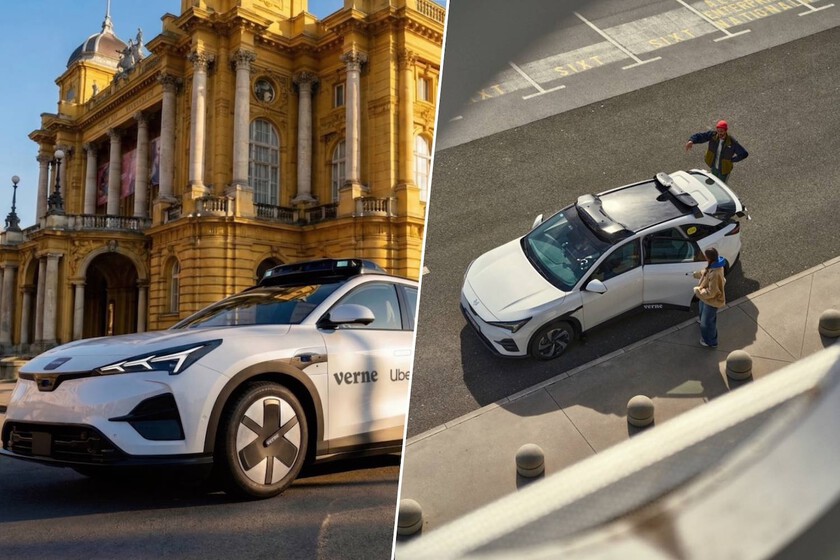
IMAGE_ALT: A white Arcfox Alpha T5 electric vehicle, equipped with autonomous driving sensors, operates as a robotaxi on a street in Zagreb.
Zagreb, Croatia has become the first European city to host a commercial robotaxi service, signaling a new era for autonomous mobility on the continent. The service is operated by Verne, a Croatian startup that emerged from the Rimac Group ecosystem, in collaboration with Chinese autonomous driving technology company Pony.ai and ride-sharing giant Uber.
The initiative, currently featuring a fleet of 10 electric Arcfox Alpha T5 vehicles manufactured by China’s BAIC, utilizes Pony.ai’s seventh-generation autonomous driving system. This system is equipped with an extensive sensor suite, including 14 cameras, nine LiDAR units, and four radar sensors, enabling the vehicles to detect objects up to 650 meters away and adapt to real-time urban traffic conditions.
Key facts
- Service Operator: Verne (Croatian startup)
- Technology Partner: Pony.ai (China)
- Vehicle Manufacturer: BAIC (China)
- Vehicle Model: Arcfox Alpha T5 (Electric)
- Service Area: Central Zagreb, Novi Zagreb, and Zagreb Airport
- Operating Hours: 07:00 to 21:00
- Passenger App: Verne app (Uber app integration planned)
Breaking European Barriers
This launch addresses a long-standing gap in Europe’s autonomous vehicle landscape. While cities in the United States, such as those served by Waymo, and in China, with extensive robotaxi fleets in Shanghai and Guangzhou, have advanced deployments, Europe has been hampered by fragmented regulatory frameworks, diverse infrastructure, and a generally more cautious approach to autonomous vehicle regulation. Zagreb’s move is seen as a pivotal moment that could reshape this dynamic.
Verne’s ambition extends beyond Zagreb. The company is reportedly in discussions for operational permits in 11 other cities across the European Union, the United Kingdom, and the Middle East, with an additional 30 locations under consideration. The success and scalability of the Zagreb service are expected to serve as a crucial reference point for regulatory and operational standards across the continent. However, a notable aspect of this deployment is the reliance on Chinese core technology for autonomous driving.
Context of Autonomous Driving Development
The development and deployment of autonomous driving technology have been ongoing for over a decade, with significant regional variations in progress. Alphabet’s Waymo is a leading player in the U.S., with expansion plans to London by late 2026. Europe has seen various initiatives, including autonomous bus trials by WeRide in Leuven, Belgium, and Level 4 taxi services by Volkswagen MOIA in Berlin. Norway has also progressed with autonomous bus deployments. Verne’s service in Zagreb represents a more direct step towards publicly accessible, commercial robotaxis.
Verne was established in 2019 as part of Rimac Group, aiming to create an urban mobility ecosystem based on autonomous electric taxis. The project has received substantial funding, including nearly €180 million through Croatia’s National Recovery and Resilience Plan, and has worked closely with authorities to establish a favorable regulatory environment.
Operational Model and Future Production
The Verne robotaxi service operates on a three-pillar model: Pony.ai provides its mature autonomous driving technology, honed through extensive testing in Asia; Verne manages the fleet operations and local regulatory navigation; and Uber facilitates customer access and distribution. This division of labor allows each partner to focus on its core competencies.
Looking ahead, Verne is developing its own two-seater autonomous vehicle specifically designed for urban transport, which will omit traditional driving controls like steering wheels and pedals. This strategic move aims to reduce reliance on Chinese hardware and establish Europe’s own production capabilities for autonomous vehicles.
Challenges and Considerations
Despite the groundbreaking nature of the launch, the reliance on Chinese technology from Pony.ai for driving systems and BAIC for vehicle manufacturing is a significant point. While this pattern is not unique to Verne—many European initiatives depend on external technology providers, with exceptions like Wayve in the UK and Mobileye (an Intel subsidiary) originating from Israel—it highlights a broader dependency.
Regulatory hurdles remain a key area of focus. Currently, the robotaxis operate with a safety operator on board who does not actively drive but is present to intervene if the system fails. The complete removal of the human operator hinges on approval from European authorities, for which definitive timelines are not yet established. Verne has indicated its intention to proceed with this step “as soon as possible.”
The practical implications for real-world workflows include the potential for more efficient urban logistics, reduced traffic congestion, and increased accessibility for individuals who cannot drive. For AI developers and engineers, this deployment offers a large-scale testbed for autonomous driving algorithms in a complex European urban environment, providing valuable data for refinement and future development. For consumers, it represents an accessible new mode of transport, albeit with current limitations regarding human operator presence.
Source: Xataka, https://www.xataka.com/movilidad/diez-coches-ciudad-ningun-conductor-al-volante-primer-taxi-autonomo-europa-esta-zagreb-tiene-cerebro-chino
Source
Xataka IA Publicacion original: 2026-05-23T08:31:35+00:00
Related articles

Archaeologists Uncover Hidden Maya City ‘Minanbé’ Using LiDAR Technology
A team of archaeologists has discovered a previously unknown Maya city, named Minanbé, deep within Mexico's Calakmul Biosphere Reserve, utilizing advanced LiDAR…
Read article
ASML’s Near-Death Journey to Global Semiconductor Monopoly
The story of ASML's rise from a struggling joint venture to the indispensable linchpin of global advanced chip manufacturing, detailing its strategic…
Read article
AI Tools Help Preserve Produce: New Methods for Extending Vegetable Shelf Life
While not directly AI-driven, advanced preservation techniques for vegetables like zucchini highlight the intersection of technology and food science, offering insights into…
Read article
Deteriorating Radioactive Barrels in Atlantic Pose Dilemma for Researchers
Decades-old radioactive waste buried deep in the Atlantic is showing critical signs of decay, raising concerns about potential environmental impacts and the…
Read articleWiki relacionada

Understanding Large Language Models (LLMs)
An introduction to Large Language Models (LLMs), their architecture, capabilities, limitations, and real-world applications in AI.
Read article
Understanding LLM Context Windows
An in-depth look at Large Language Model context windows, their importance, limitations, and how they impact AI applications.
Read article
Comprendiendo los Modelos Llama 3: Una Visión Integral
Explore la familia de modelos Llama 3, detallando su arquitectura, capacidades, limitaciones y aplicaciones prácticas en el desarrollo de IA.
Read article
Comprensión de los Modelos de Lenguaje Grandes (LLM)
Una mirada en profundidad a los Modelos de Lenguaje Grandes (LLM), su arquitectura, capacidades, limitaciones e impacto en el desarrollo de la…
Read article