
Spanish Scientists Propose Draining Aral Sea to Capture CO2
A novel proposal from Spanish researchers suggests refilling the Aral Sea to mitigate its significant carbon emissions, turning a historical ecological disaster into a potential climate solution.

A team of Spanish scientists has put forth an ambitious and unconventional plan to address a significant source of greenhouse gas emissions: the dried-up Aral Sea. Their proposal involves refilling the colossal basin with water, not merely to restore a lost ecosystem, but to actively capture atmospheric carbon dioxide.
The Aral Sea, once the fourth-largest lake in the world, situated between Kazakhstan and Uzbekistan, suffered a catastrophic decline starting in the 1960s. The diversion of its feeder rivers for intensive Soviet cotton agriculture transformed the vast inland sea into a desolate, saline desert. This ecological disaster is well-documented, but a recent Spanish-led study has quantified a less-discussed consequence: the Aral Sea’s dry bed has become a massive emitter of greenhouse gases.
Climate Impact of a Dry Lakebed
The research highlights that the desiccated seabed of the Aral Sea has released an estimated 748 million tons of CO2 since its drying began. This figure is comparable to the annual combined emissions of Spain, France, and Belgium. Historically, arid regions converted to irrigated farmland were often considered carbon sinks. However, the study reveals that when the water source for these irrigation systems is a lake that has itself dried up, the net balance shifts dramatically towards greenhouse gas emission.
Lakes and wetlands naturally act as carbon sinks, trapping atmospheric carbon absorbed by vegetation during photosynthesis, which then settles in the bottom sediments. The critical element is the water column, which physically isolates these carbon-rich sediments from atmospheric oxygen.
The Problem of Oxygen Exposure
When the water disappears, this isolating “cap” is removed. Atmospheric oxygen rapidly penetrates the exposed sediment layers, triggering a biological response. Dormant microorganisms awaken and begin to degrade the organic matter that has accumulated over centuries. This aerobic microbial degradation process is the primary driver behind the massive release of stored carbon dioxide into the atmosphere.
Measurements taken by the Spanish research team support this mechanism. By analyzing sediments across the former seabed, they observed that areas dried more recently still contain significant amounts of organic carbon compared to those exposed in the 1960s, indicating an ongoing release process.
A New Approach to Mitigation
The study’s conclusions are stark: current mitigation strategies in the Aral Sea region, such as planting vegetation on the dry bed, are largely ineffective. These arid ecosystems offer minimal CO2 absorption capacity, failing to provide a real solution to the emissions problem.
The researchers argue that the only viable method to halt this microbial degradation and curb CO2 emissions is to re-establish the physical isolation by covering the area with water once more.
Technical and Financial Viability
Scientists estimate that without intervention, approximately 605 million tons of CO2 remain to be released from the Aral Sea’s bed. Preventing this massive emission requires a monumental, yet technically feasible, undertaking. A significant challenge is the region’s outdated irrigation network, which wastes up to 90% of the water it transports.
Modernizing this infrastructure is estimated to cost €8.5 billion. Such an investment, however, could potentially restore around 50% of the lake’s original 1960 surface area, yielding global climate benefits.
Financing the Ambitious Project
To fund this large-scale hydrological engineering feat, the research authors propose a novel financial mechanism: leveraging the avoided emissions themselves. If the Aral Sea is refilled and its CO2 emissions are halted, the prevented release of 605 million tons of CO2 could be converted into marketable carbon credits. Preliminary calculations suggest this could generate approximately 323 million tons in equivalent credits, valued on the international market between €3.1 billion and €15.8 billion.
This proposal offers a unique perspective, transforming a symbol of environmental devastation into a potential climate mitigation tool, driven by scientific research and innovative financing. The practical implications for global climate efforts could be substantial if the plan moves beyond theory.
Key facts
| Aspect | Detail |
|---|---|
| Problem | Dried Aral Sea bed emitting significant CO2 |
| Estimated CO2 Release | 748 million tons to date; 605 million tons remaining |
| Proposed Solution | Refill the Aral Sea with water |
| Estimated Cost of Infrastructure Modernization | €8.5 billion |
| Potential Carbon Credit Generation | 323 million tons equivalent |
| Potential Carbon Credit Value | €3.1 – €15.8 billion |
The practical impact of this proposal lies in its potential to actively remove a significant source of greenhouse gas emissions while simultaneously addressing the legacy of a major ecological disaster. For readers interested in climate technology and environmental solutions, this research offers a novel, albeit complex, pathway toward carbon reduction.
Source: Unos científicos españoles quieren salvar al planeta con un plan alocado: rellenar de agua el mar de Aral para capturar CO2 – Xataka (https://www.xataka.com/ecologia-y-naturaleza/unos-cientificos-espanoles-quieren-salvar-al-planeta-plan-alocado-rellenar-agua-mar-aral-para-capturar-co2)
Source
Xataka IA Publicacion original: 2026-07-17T18:30:08+00:00
Related articles
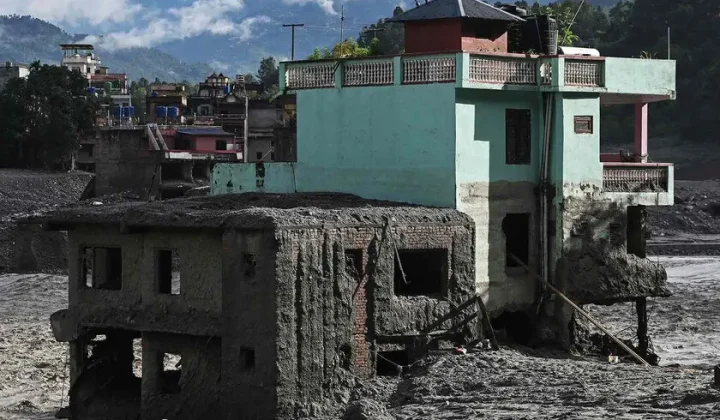
Nepal’s “Flood-Proof” Google Maps Landmark Is Not a Verified Safety Rating
A house that survived a destructive Himalayan flood reportedly appeared on Google Maps as a “flood-proof” attraction. The viral label should not…
Read article
Perplexity Deploys GPT-6 Astra for End-to-End Production and Communication Systems
Perplexity has integrated OpenAI’s GPT-6 Astra to handle communications, software changes, and production monitoring, reducing the need for frequent human check-ins compared…
Read article
Privacy Reports Put AI Smart Glasses Under Scrutiny in France
French association e-Enfance says it has received more than 20 reports involving women allegedly recorded without their knowledge by connected glasses, bringing…
Read article
Snowflake Publishes GTM Blueprint for Closing the AI-to-Revenue Gap
Snowflake’s sales and marketing teams share a repeatable RAMP framework and four revenue leaks they fixed to turn AI pilots into measurable…
Read articleWiki relacionada

AI Model API Pricing and Context Window Comparison: Current Rates and Limits
Compare the latest API pricing, context windows, and capabilities of leading AI model providers including OpenAI, Anthropic, Google, and Mistral. Practical guidance…
Read article
AI Agent Evaluation Frameworks: How to Benchmark Agentic Systems
A practical guide to evaluating AI agents — from task completion metrics to safety, cost, and robustness. Covers major frameworks, primary sources,…
Read article
LLM Benchmarks Decoded: What MMLU, HumanEval, and GSM8K Actually Measure for Developers
A developer-focused breakdown of the most-cited LLM benchmarks — MMLU, HumanEval, GSM8K, MATH, Chatbot Arena — including what they test, their hidden…
Read article
What Is RAG? A Practical Guide to Retrieval-Augmented Generation in 2025
Retrieval-Augmented Generation (RAG) grounds LLM outputs in external data, reducing hallucinations and enabling enterprise use cases. This guide covers how RAG works,…
Read article