
Cities Explore Innovative Pavements to Combat Extreme Heat and Manage Rainfall
Spanish cities are turning to permeable and reflective paving solutions as an urban planning strategy to mitigate the effects of rising temperatures and intense rainfall, moving beyond traditional asphalt.

ARTICLE:
Spanish cities are increasingly implementing innovative paving solutions to combat the growing challenges of extreme heat and heavy rainfall. Faced with rising temperatures and the urban heat island effect, urban planners are exploring alternatives to traditional asphalt that can help cool streets and manage water runoff more effectively.
Two primary families of “cool pavements” are gaining traction: permeable or porous pavements and reflective pavements. Permeable pavements feature interconnected voids that allow rainwater to pass through to the ground, reducing surface runoff and mitigating the risk of flash floods. The retained water then evaporates gradually, contributing to ambient cooling. Reflective pavements, also known as “cool pavements,” are designed to reflect a larger portion of solar radiation back into the atmosphere, rather than absorbing and re-emitting it as heat, which is characteristic of conventional dark asphalt.
The Problem of Urban Heat Islands
Dark surfaces like asphalt and concrete absorb significant solar radiation during the day and release it slowly at night. This phenomenon, known as the urban heat island effect, causes cities to experience substantially higher temperatures than surrounding rural areas, particularly after sunset. With increasingly frequent extreme heat events, any measure that can lower street-level temperatures offers a significant benefit to urban environments.
City Initiatives and Examples
Barcelona has recently experimented with a reflective aggregate on a section of Martí i Franquès street. This initiative, supported by the Polytechnic University of Catalonia, involved a direct comparison with a conventional asphalt section to measure the temperature difference. According to the city council, this new pavement reflects more solar radiation, helping to reduce both surface and ambient temperatures. This trial is part of the city’s broader Climate Plan, which has previously included pilot projects like painting rooftops with reflective white pigments.
Seville, a city frequently affected by heatwaves, is also adopting similar strategies. Over recent years, the city council has prioritized planting shade trees, replacing dark pavements with lighter materials in various areas, installing awnings in commercial streets, implementing sustainable drainage systems, and establishing “climate refuges” throughout neighborhoods to provide relief during peak heat.
Contextualizing Solutions: A Study’s Findings
While these paving solutions offer promising benefits, a recent study by the University of Granada highlights that there is no single solution for cooling a city. The research analyzed the thermal behavior of eight Andalusian capitals and found that the effectiveness of different strategies varies by location. For cities like Seville and Málaga, material albedo (reflectivity) is a key factor. In Córdoba, building density and soil impermeability play a larger role, while in Granada, urban geometry and street openness to the sky are more critical.
The study also reaffirms the effectiveness of dense canopy trees, which can reduce temperatures by 3 to 5 degrees Celsius in well-designed parks. Reflective and porous pavements are seen as valuable complements to these broader urban planning initiatives rather than standalone solutions.
Key Facts
| Feature | Description |
|---|---|
| Pavement Types | Permeable/porous pavements, reflective/cool pavements. |
| Functionality | Permeable: Water infiltration, reduced runoff, evaporative cooling. Reflective: Increased solar radiation reflection. |
| Urban Impact | Mitigates urban heat island effect, reduces flash floods, lowers ambient temperatures. |
| City Examples | Barcelona (reflective aggregate), Seville (lighter materials, shade trees, climate refuges). |
| Research Context | University of Granada study indicates varying effectiveness based on urban geography and material properties. |
The adoption of these advanced paving materials is crucial for cities aiming to enhance their resilience against the escalating impacts of climate change. By strategically integrating permeable and reflective surfaces, alongside other green infrastructure, urban areas can create more comfortable and sustainable environments for their residents.
Source: Pavimento que filtra la lluvia y frena el calor extremo: las alternativas al asfalto que ya manejan las ciudades españolas, Xataka, https://www.xataka.com/materiales/suelos-que-sudan-agua-a-pavimentos-que-reflejan-sol-remedios-ciudades-espanolas-para-combatir-calor
Source
Xataka IA Publicacion original: 2026-07-19T08:30:08+00:00
Related articles
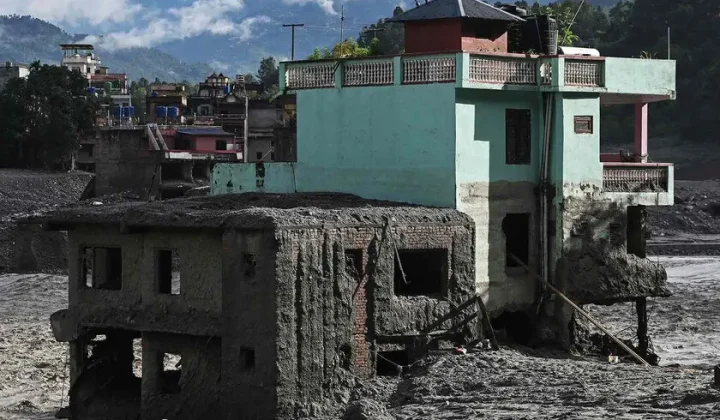
Nepal’s “Flood-Proof” Google Maps Landmark Is Not a Verified Safety Rating
A house that survived a destructive Himalayan flood reportedly appeared on Google Maps as a “flood-proof” attraction. The viral label should not…
Read article
Perplexity Deploys GPT-6 Astra for End-to-End Production and Communication Systems
Perplexity has integrated OpenAI’s GPT-6 Astra to handle communications, software changes, and production monitoring, reducing the need for frequent human check-ins compared…
Read article
Privacy Reports Put AI Smart Glasses Under Scrutiny in France
French association e-Enfance says it has received more than 20 reports involving women allegedly recorded without their knowledge by connected glasses, bringing…
Read article
Snowflake Publishes GTM Blueprint for Closing the AI-to-Revenue Gap
Snowflake’s sales and marketing teams share a repeatable RAMP framework and four revenue leaks they fixed to turn AI pilots into measurable…
Read articleWiki relacionada

AI Model API Pricing and Context Window Comparison: Current Rates and Limits
Compare the latest API pricing, context windows, and capabilities of leading AI model providers including OpenAI, Anthropic, Google, and Mistral. Practical guidance…
Read article
AI Agent Evaluation Frameworks: How to Benchmark Agentic Systems
A practical guide to evaluating AI agents — from task completion metrics to safety, cost, and robustness. Covers major frameworks, primary sources,…
Read article
LLM Benchmarks Decoded: What MMLU, HumanEval, and GSM8K Actually Measure for Developers
A developer-focused breakdown of the most-cited LLM benchmarks — MMLU, HumanEval, GSM8K, MATH, Chatbot Arena — including what they test, their hidden…
Read article
What Is RAG? A Practical Guide to Retrieval-Augmented Generation in 2025
Retrieval-Augmented Generation (RAG) grounds LLM outputs in external data, reducing hallucinations and enabling enterprise use cases. This guide covers how RAG works,…
Read article