
Understanding Retrieval Augmented Generation (RAG) in AI Systems
Explore Retrieval Augmented Generation (RAG), an AI architecture combining retrieval and generation to enhance large language model outputs with external, verifiable information.
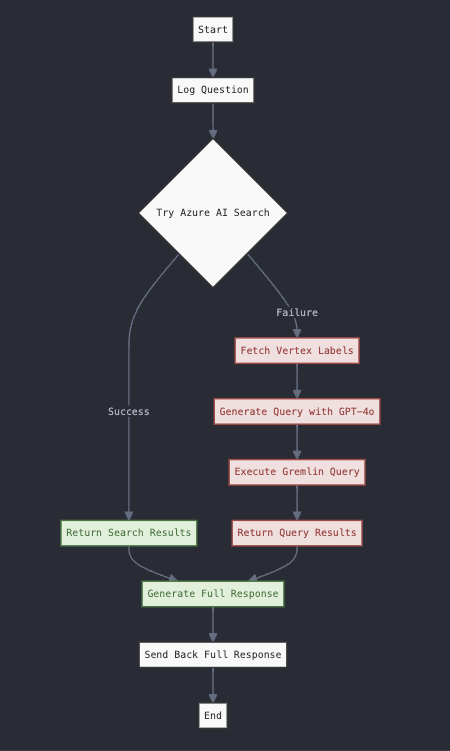
RAG (Retrieval Augmented Generation) is an AI framework designed to enhance the capabilities of large language models (LLMs) by providing them with access to external, up-to-date, and domain-specific information. Unlike traditional LLMs that rely solely on their pre-trained knowledge, RAG systems can retrieve relevant data from a knowledge base and use it to inform their generated responses. This approach aims to reduce hallucinations, improve factual accuracy, and enable LLMs to provide more relevant and contextual answers.
Last checked: October 26, 2023
What RAG Is
Retrieval Augmented Generation integrates two core components: a retrieval mechanism and a generation mechanism. The retrieval component identifies relevant documents or data snippets from a specified knowledge source (e.g., a database, a collection of documents, or the internet) based on a user’s query. This retrieved information is then passed to the generation component, typically a large language model, which uses it as additional context to formulate a more informed and accurate response. This process allows LLMs to go beyond their pre-trained parameters, accessing real-time or proprietary data.
Why RAG Matters
RAG addresses several key limitations of standalone LLMs. Primarily, it helps mitigate the problem of “hallucinations” – instances where LLMs generate plausible but factually incorrect information. By grounding responses in verifiable external data, RAG increases the trustworthiness and accuracy of AI outputs. It also enables LLMs to stay current with information that was not part of their original training data and to access private or domain-specific knowledge, making them more useful for specialized applications where data freshness and accuracy are critical.
Who RAG Is For
RAG is primarily for developers, data scientists, and AI engineers building applications with large language models. It is also highly relevant for enterprises and organizations that need to deploy accurate, up-to-date, and domain-specific AI solutions, such as customer support chatbots, knowledge management systems, and research tools. Technical editors and AI power users who critically evaluate AI outputs will find RAG an essential concept for understanding the provenance and reliability of AI-generated content.
How RAG Is Used in Real Workflows
In real-world applications, RAG is deployed to power intelligent chatbots that can answer questions based on an organization’s internal documentation, provide up-to-date product information, or summarize research papers with verifiable citations. For example, a legal firm might use RAG to build an AI assistant that can quickly pull relevant clauses from a vast legal database to answer client queries. Developers use RAG to build more robust question-answering systems by integrating vector databases and embedding models to efficiently retrieve context from large document collections.
Capabilities and Limits
RAG systems excel at providing accurate, source-backed answers to specific questions, reducing factual errors common in pure generative models. They can incorporate real-time data and proprietary information. However, the effectiveness of a RAG system heavily depends on the quality and comprehensiveness of its retrieval index and the underlying knowledge base. Poorly indexed or incomplete data can lead to irrelevant retrievals, impacting the quality of the generated response. The latency introduced by the retrieval step can also be a consideration for real-time applications.
Access, Pricing, or Availability Caveats
Implementing RAG typically involves integrating several components: an LLM (either hosted via API or self-deployed), an embedding model, and a vector database or similar retrieval mechanism. Many cloud providers offer managed services for these components, and open-source libraries (e.g., LangChain, LlamaIndex) simplify integration. Costs vary based on the scale of the knowledge base, LLM usage, and infrastructure choices.
Privacy, Data, Copyright, Security, or Enterprise Caveats
When deploying RAG, organizations must carefully consider data privacy and security. The external knowledge base often contains sensitive or proprietary information, requiring robust access controls and encryption. Copyright implications of using external data for generation also need review, especially for publicly accessible knowledge bases. Enterprise deployments require careful management of data governance, auditing, and compliance with relevant regulations.
Alternatives or Close Comparisons
While RAG enhances LLMs, other approaches exist. Fine-tuning an LLM on a specific dataset can inject domain-specific knowledge directly into the model’s parameters, but this process is resource-intensive and doesn’t allow for real-time updates. Prompt engineering can guide LLMs toward better answers but lacks the verifiable grounding of RAG. Hybrid approaches combining RAG with fine-tuning are also emerging to leverage the strengths of both.
Practical Checklist for Implementing RAG
- Define Knowledge Base: Identify and prepare the external data sources (documents, databases, APIs) that the RAG system will query.
- Choose Embedding Model: Select an appropriate embedding model to convert queries and documents into vector representations for efficient retrieval.
- Select Vector Database: Implement a vector database (e.g., Pinecone, Weaviate, FAISS) to store and search document embeddings.
- Integrate LLM: Choose a suitable large language model (e.g., GPT-4, Llama 2) for the generation component.
- Develop Retrieval Strategy: Design chunking, indexing, and ranking mechanisms to ensure relevant document snippets are retrieved.
- Evaluate Performance: Establish metrics to assess the factual accuracy, relevance, and coherence of RAG-generated responses.
- Monitor and Update: Implement processes for continuously updating the knowledge base and monitoring system performance.
Related ReviewArticle Pages or Internal Link Suggestions
- Generative AI Models: An Overview
- Introduction to Large Language Models (LLMs)
- Vector Databases for AI Applications
- Prompt Engineering Best Practices
Sources and Caveats
The core concept of Retrieval Augmented Generation was introduced in the paper “Retrieval-Augmented Generation for Knowledge-Intensive NLP Tasks” by Patrick Lewis et al. (2020), available on arXiv. Further practical implementations and discussions are widely available in documentation from AI platforms like OpenAI, Hugging Face, and major cloud providers (AWS, Google Cloud, Azure). Specific performance metrics and implementation details may vary based on the chosen models, data sources, and system architecture.
Update Log
- October 26, 2023: Initial draft covering RAG definition, benefits, use cases, components, and practical considerations.
Historial de cambios
Ultima revision y actualizacion: 22 July 2026.
Latest related articles

OpenAI GPT-4 Turbo with Vision: A Deep Dive into Multimodal Capabilities and Developer Implications
An in-depth look at OpenAI's GPT-4 Turbo with Vision model, examining its multimodal capabilities, developer implications, and key considerations for integration and…
Read article
Samsung Unveils Three New Foldable Phones, Offers Google AI Pro Subscription
Samsung has introduced three new foldable phones—the Galaxy Z Fold8, Fold8 Ultra, and Flip8—each targeting different user needs, with purchases including a…
Read article
Roborock Unveils New F25 Series Mop Vacuums in Spain with Steam Disinfection and FlatReach Design
Roborock has launched its new F25 Steam and F25 GT Gen 2 mop vacuums in Spain, featuring steam disinfection and a flat-recline…
Read article
Is Google’s Free AI Essentials Course a Good Starting Point for Developers?
An in-depth review of Google's AI Essentials course, evaluating its curriculum, target audience, and practical value for developers seeking an introduction to…
Read article